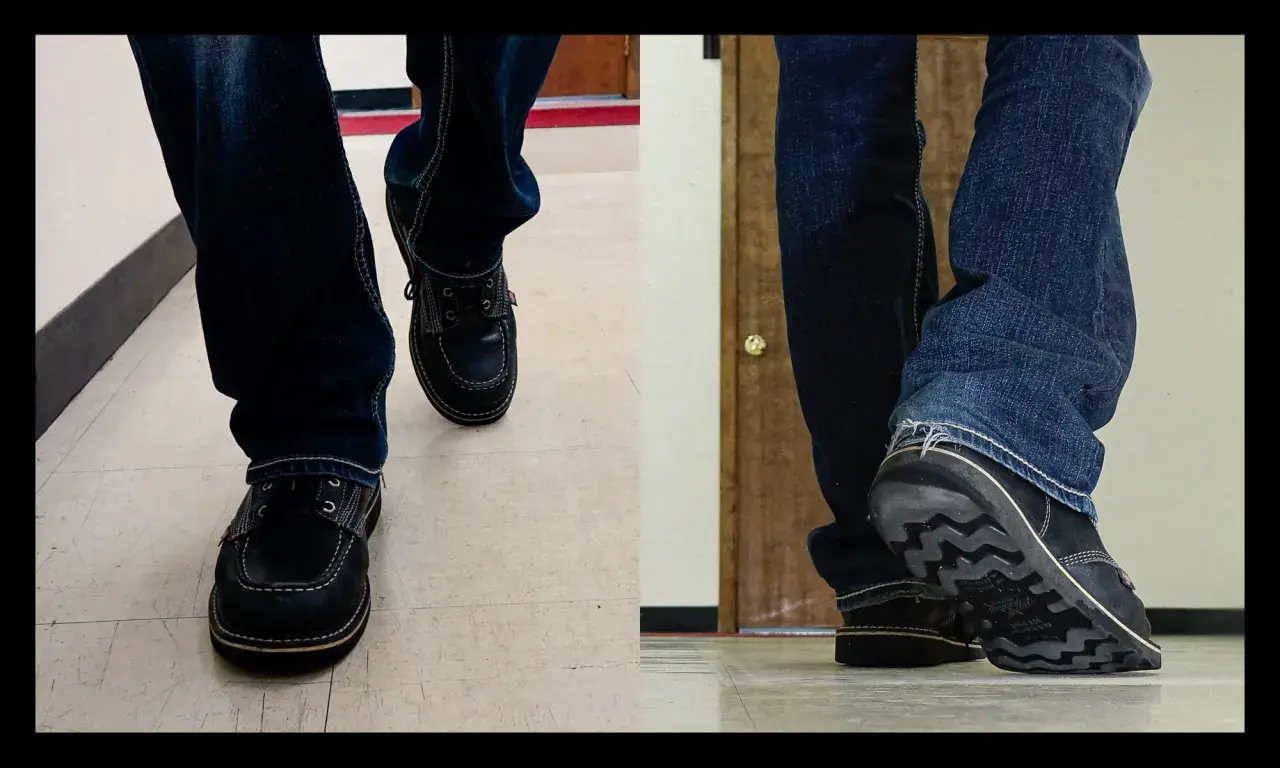
The sound usually points to friction, dryness, or fit
- Leather itself is not the only suspect. The tongue, insole, heel counter, and outsole can all make noise.
- Dry leather creaks more. Stiff fibers and poor flex make the boot sound louder with every step.
- Heel slip is a common culprit. If your foot moves inside the boot, squeaks usually follow.
- A brand-new interior squeak deserves attention. That can point to a loose component or a bonding issue.
- Quiet boots come from fit first. Conditioning helps, but a stable fit matters more on long hikes.
Why genuine leather squeaks in hiking boots
When I hear a boot squeak, I think about movement before material. Genuine leather is flexible, but it still rubs against liners, laces, eyelets, insoles, and the foot itself. In hiking footwear, that rubbing can become more noticeable because you are flexing the boot thousands of times on uneven ground.
The leather is often only part of the problem. A squeak may come from the upper, but it may also come from the footbed, a shifting insole, or the outsole against a hard surface. That is why two boots made from similar leather can behave very differently on the trail.
| Where the sound starts | What it usually means | What I would try first |
|---|---|---|
| Upper near the tongue or eyelets | Leather or lining rubbing as the boot bends | Relace the boot and condition the flex points lightly |
| Inside under the foot | Insole movement or friction between layers | Remove the insole, dry the boot, and use a little talc |
| Heel area | Heel lift or movement in the counter | Try thicker socks or a more secure lacing pattern |
| Outsole on smooth floors | Rubber gripping and releasing on tile, wood, or concrete | Check whether the sound disappears on dirt or gravel |
That last point matters more than most people think. A boot can sound noisy in a kitchen or trailhead restroom and go almost silent on dirt. In that case, the leather is not the real issue.
When the noise is normal and when it points to trouble
I do not treat every squeak as a warning sign. New hiking boots often need time to soften, and a little noise during break-in is common. What I listen for is pattern: does the sound fade as the boot loosens up, or does it stay sharp and consistent no matter how much you wear it?
Usually harmless
- The squeak appears only during the first few wears.
- The sound is louder on tile, wood, or smooth concrete than on trail.
- The boot feels comfortable, with no heel lift or hot spots.
- The noise fades after the leather softens and the footbed settles.
Read Also: What to Wear With Hiking Boots - Stylish Outfit Guide
Worth checking immediately
- A brand-new boot squeaks from the inside on every step.
- One boot is much louder than the other.
- The sound is paired with heel slip, blisters, or pressure points.
- You hear movement that feels like layers shifting, not just leather flexing.
My rule is simple: if a new pair squeaks from the inside before it has even had a proper break-in, I treat that as a construction or return issue, not a leather personality trait. That distinction saves time and keeps you from over-treating a boot that needs to be repaired or exchanged.
A careful way to quiet the boot without ruining it
Most squeaks can be reduced if you work methodically. I start by finding the source, because leather care only helps when the leather is actually the source.
- Walk on both a soft surface and a hard surface to locate the noise.
- Brush off dirt and let the boots dry fully if they are damp.
- Use a small amount of conditioner or wax on dry flex points, especially the tongue and upper folds.
- If the sound seems to come from inside, lift the insole and use a light dusting of talc or cornstarch between the footbed and the insole.
- Try thicker socks or a more secure lacing pattern if your heel is moving.
- Replace a worn or shifting insole if the squeak keeps coming back.
I avoid soaking boots with oil. Too much product can make the leather overly soft, change the structure of the boot, and sometimes create a different kind of problem. A light, targeted treatment is usually better than a heavy one. If the boot is new and the squeak is internal, I would rather return it or take it to a cobbler than keep experimenting.
What to look for if you want quieter hiking footwear
If silence matters to you, do not assume leather is automatically the noisy choice. A well-fitted leather hiker can be quiet, and a badly fitted synthetic boot can squeak just as badly. For hiking, fit and construction usually matter more than the label on the upper.| Feature | What usually feels quieter | Why it helps |
|---|---|---|
| Heel hold | Snug, locked-in heel | Less lift means less rubbing and fewer squeaks |
| Upper material | Conditioned leather or softer nubuck | More supple materials flex with less noise |
| Footbed | Stable, removable insole | Easy to adjust if the boot starts to shift |
| Tongue design | Gusseted or well-centered tongue | Reduces rubbing at the lace line |
| Outsole | Grip that suits the surface you walk on most | Some rubber compounds are louder on smooth ground |
For long hikes, I also pay attention to whether the boot is overbuilt for the route. A stiff leather boot can be the right choice on rocky, wet, or rough terrain, but for easier trails a lighter synthetic hiker or trail shoe may stay quieter with less effort. In practice, the quietest boot is the one that fits your foot and your route instead of fighting both.
Why weather and terrain change the sound
Leather does not behave the same way in every climate. Dry air makes it stiffer, which can sharpen creaks. Moisture can soften the upper for a while, but it can also create temporary rubbing if the insole or lining shifts as the boot gets wet and then dries unevenly. I notice this most on multi-day trips, where the same pair can sound different every morning.
Terrain matters too. Dirt trails absorb sound. Stone steps, boardwalks, lodge floors, and airport tiles do the opposite. A boot that sounds quiet on a mountain path may suddenly make itself known the moment you step indoors. That is not always a defect; sometimes it is just a surface issue amplified by a hard rubber sole.
On longer hikes, fatigue can also change the way you walk. When your heel starts lifting more than it did at mile one, a boot that felt silent at the trailhead may begin to squeak later in the day. I see that as a useful clue: the problem may be fit under load, not the leather alone.
The quick pre-hike check I rely on for quiet miles
Before I trust a leather boot for a long day on the trail, I run a short check that takes less than five minutes. It is simple, but it catches most squeaks before they become a distraction.
- Walk indoors on a hard floor and listen for the source.
- Flex the boot by hand at the toe, instep, and ankle.
- Press around the insole and footbed to see whether anything shifts.
- Test the boot with the same hiking socks you plan to wear outside.
- Check heel lock by walking briskly for a minute or two.
If the boot is still noisy after that test, I do not keep guessing. I either condition the dry leather lightly, adjust the fit, or treat the shoe as a repair or return candidate. For hiking, that is the practical answer: a little squeak is normal, but persistent noise is usually your footwear telling you something useful.