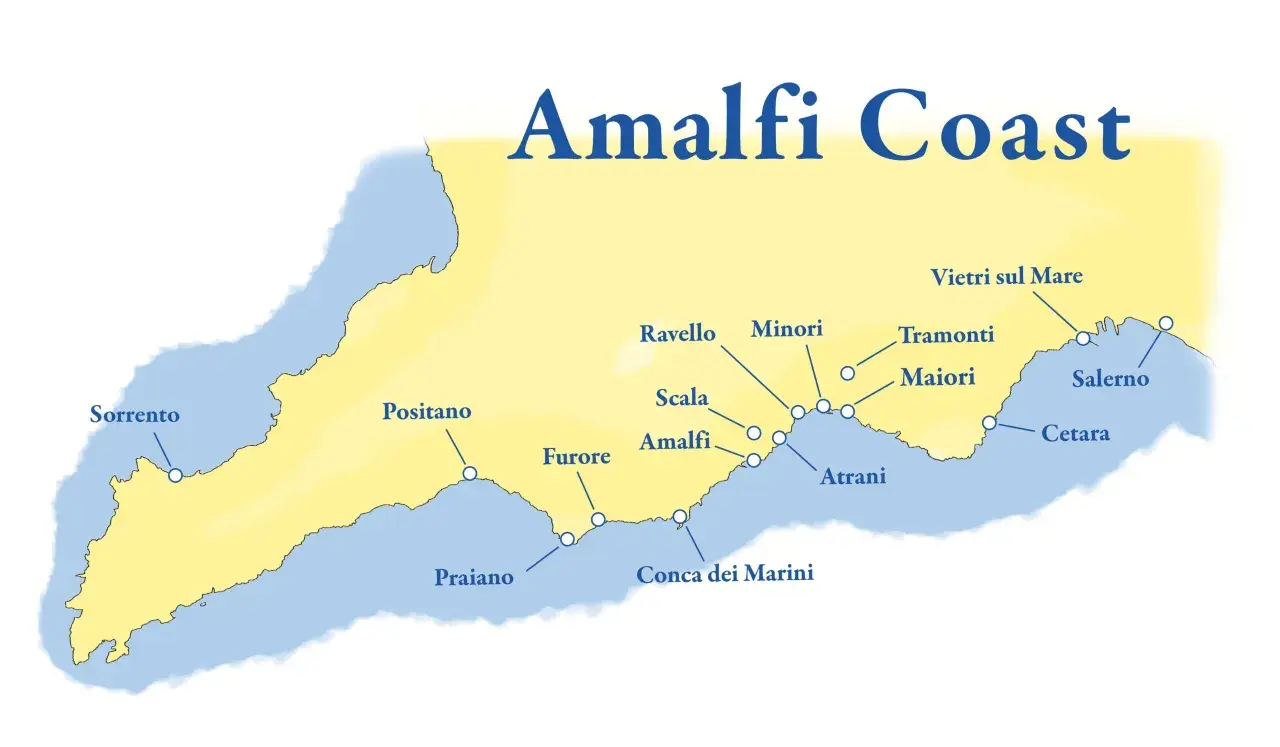
The Amalfi Coast is short on paper and slow in real travel time
- Geography first: the coast sits in Campania, between the Gulf of Naples and the Gulf of Salerno.
- Officially broader than the postcard strip: the full area includes 16 municipalities, but most visitors plan around the coastal towns and a few hill villages above them.
- The SS163 is the spine: the Amalfi Drive is the road most people use to read the coastline from west to east.
- Ferries often save time: for waterfront towns, sea connections are usually less stressful than road travel.
- Map distance is deceptive: short hops can still take real time because the coast is steep, narrow, and layered.
- Outdoor planning matters: if you want hikes, include inland trailheads like Agerola, not just seaside villages.
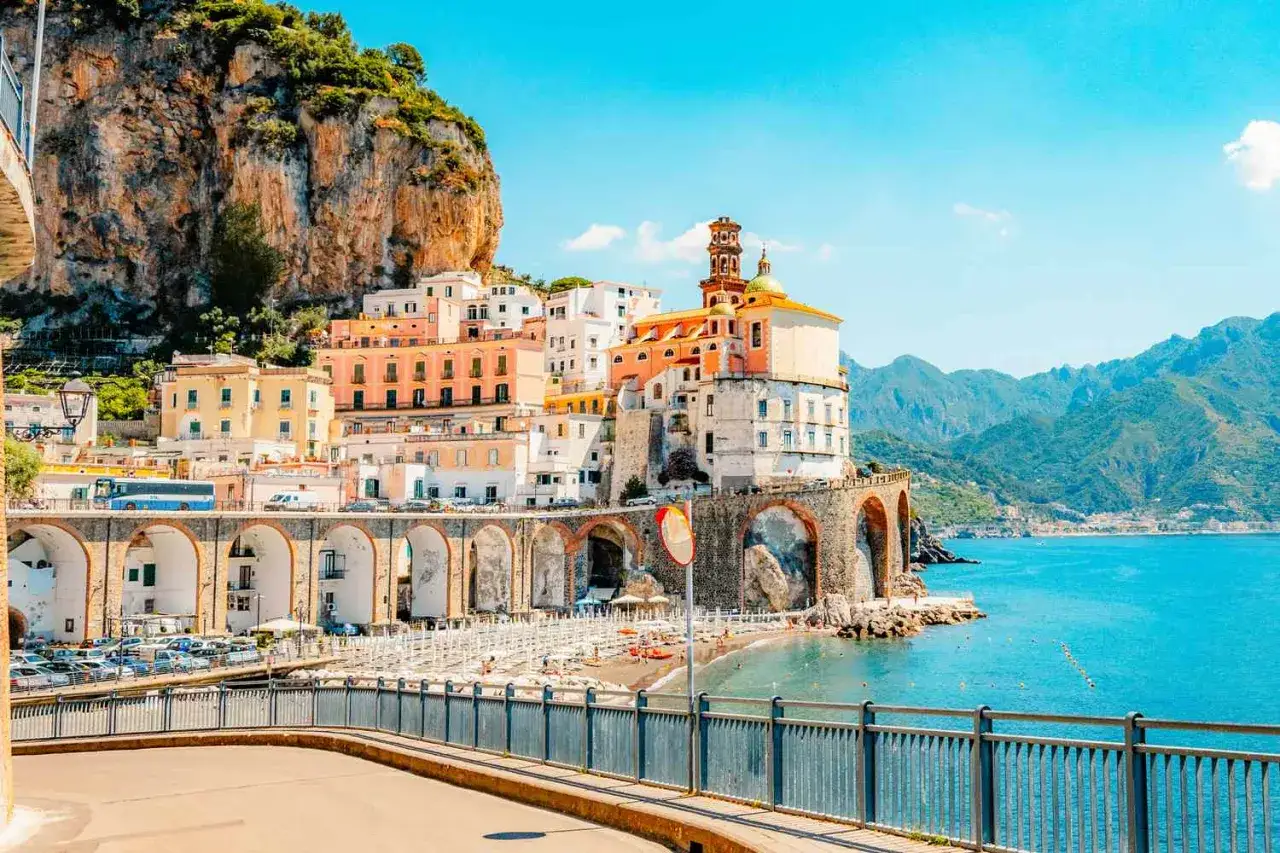
How the coast sits between Naples and Salerno
I like to read this coastline in three layers: the water, the road, and the hills above it. Officially, the Amalfi Coast sits between the Gulf of Naples and the Gulf of Salerno in Campania, and the broader area includes 16 municipalities, but for trip planning I usually zoom in on the stretch most visitors actually use.
That practical stretch follows the SS163 Amalfitana, with names like Vietri sul Mare, Cetara, Maiori, Minori, Amalfi, Atrani, Praiano, and Positano appearing again and again on any useful map. Above the shoreline, towns such as Ravello and Scala remind you that this is not a flat beach destination; it is a stacked landscape where altitude matters as much as distance. That is also why the beaches tend to be narrow pebble coves rather than long sandy runs.
The biggest mistake I see is treating the coast like a straight line on a flat map. It is better thought of as a narrow coastal ribbon with vertical layers attached to it, which is why a small distance can still feel like a full excursion. Once that shape clicks, the next step is figuring out which towns deserve your first pins.
The towns I pin first on the map
If I had to reduce the coast to a first-trip shortlist, I would start with the places that shape logistics, not just the places that photograph well. Some towns are famous, some are practical, and the best trip usually combines both.
| Town | Where it sits | Why I care about it |
|---|---|---|
| Positano | Western end of the main coastal arc | Iconic views, steep streets, and a strong visual anchor for the whole coast |
| Praiano | Between Positano and Amalfi | Quieter base with a good balance of access and atmosphere |
| Amalfi | Central coastal hub | Best all-around logistics for ferries, buses, and easy day planning |
| Atrani | Right next to Amalfi | Tiny, walkable, and useful if you want to stay close to Amalfi without the same level of activity |
| Ravello | Above the coast on the hillside | Best for views, gardens, and calmer evenings rather than beach access |
| Maiori and Minori | East of Amalfi | Flatter, easier walking, and often more relaxed for longer stays |
| Vietri sul Mare | Eastern gateway near Salerno | Useful if you are entering from Salerno or the train side of the region |
| Cetara | Small fishing town east of Maiori | Worth a stop for food and local character, even if it is not your main base |
For a first visit, I usually think in terms of one anchor town and two or three supporting stops. Amalfi is the most logical hub, Positano is the headline name, and Ravello is the best reminder that the coast is as much about height as shoreline. From there, transport choices become much easier to judge.
The best ways to move without wasting the day
The coast rewards the right mode of movement more than the fastest one. I would never plan it as if I were crossing a normal highway corridor, because the road, the sea, and the bus network all behave differently.
| Way to move | Best for | Tradeoff |
|---|---|---|
| Ferry | Town-to-town travel between waterfront stops | Depends on weather, schedules, and seasonality |
| Bus | Budget travel and simple point-to-point links | Can feel crowded and slow when the coast is busy |
| Private transfer or taxi | Door-to-door convenience and luggage-heavy arrivals | Costs more, especially for longer or late-day rides |
| Car | Maximum flexibility for rural stops and off-peak road trips | Parking stress and traffic can erase the freedom quickly |
| On foot | Short scenic links and hiking trails | Not realistic for long coastal jumps because the terrain is steep |
For most U.S. itineraries, I think of Naples as the classic gateway and Salerno as the more convenient arrival point when the trip starts on the eastern side of the coast. If you are only moving between seaside towns, ferries usually reduce stress; if you try to do everything by car in high season, the road can dominate the whole day. That is why your base matters more than the prettiest postcard view.
How to choose a base that fits your itinerary
I do not choose a base here just because it looks beautiful. I choose it based on how much moving around I want to do, whether I care more about views or convenience, and how tolerant I am of stairs, transfers, and parking pressure.
| Base | Best for | What to watch out for |
|---|---|---|
| Positano | Big views and a classic Amalfi Coast feel | Steep streets, higher prices, and a layout that can tire you out fast |
| Amalfi | First-time visitors who want the strongest logistics | Busier center and more foot traffic than quieter towns |
| Praiano | Calmer stays with easy access to both ends of the coast | Fewer nightlife and shopping options |
| Maiori or Minori | Longer stays and a more relaxed, walkable rhythm | Less dramatic vertical scenery right at the doorstep |
| Ravello | Views, gardens, and a quieter atmosphere above the shoreline | No direct beach access and extra transfers to reach the water |
My default rule is simple: if I want the easiest first trip, I base myself in Amalfi; if I want a softer pace, I look at Praiano or Maiori/Minori; if I want the clearest sense of height and panorama, Ravello is the better bet. For a short stay, one well-chosen base is usually better than bouncing between too many towns. The map becomes even more useful once you start adding hikes and scenic detours above the shoreline.
Scenic detours that deserve a place on the map
This is the part most first-time visitors miss. The Amalfi Coast is not just a string of seaside villages; it is also a landscape of trails, cliffs, hidden coves, and villages perched above the road.
- Path of the Gods - I would mark this first if hiking matters to you. The classic route runs from Bomerano in Agerola toward Nocelle above Positano, and it gives you the kind of clifftop perspective that the road alone never will.
- Valle delle Ferriere - This is one of the smartest inland walks near Amalfi if you want shade, greenery, and a break from the busier waterfront feel.
- Fiordo di Furore - A dramatic cut in the coastline that is small on a map but memorable in person, especially if you want a quick scenic stop rather than a half-day excursion.
- Emerald Grotto - Near Conca dei Marini, this works well when you want a sea-cave stop that fits naturally into a coastal day rather than a separate outing.
If you are building an outdoor-focused trip, I would also keep inland access points on your radar, not just the waterfront towns. A route that looks simple on paper can become much smarter when you add a trailhead, a ferry landing, or a viewpoint above the road. With those pins set, there are only a few practical checks I make before I book.
The pins I would never skip before booking a first trip
Before I commit to dates, I usually ask five questions. They sound basic, but they prevent most of the planning mistakes I see on this coast.
- Where am I arriving from, and do I want to start on the Naples side or the Salerno side?
- Am I planning to rely on ferries, buses, or a car for the main moves?
- Is my hotel close to the water, the bus stop, or the trailhead I actually care about?
- Do I want this trip to feel coastal, hiking-focused, or balanced between both?
- Have I chosen a base that matches my pace instead of just my favorite photo?