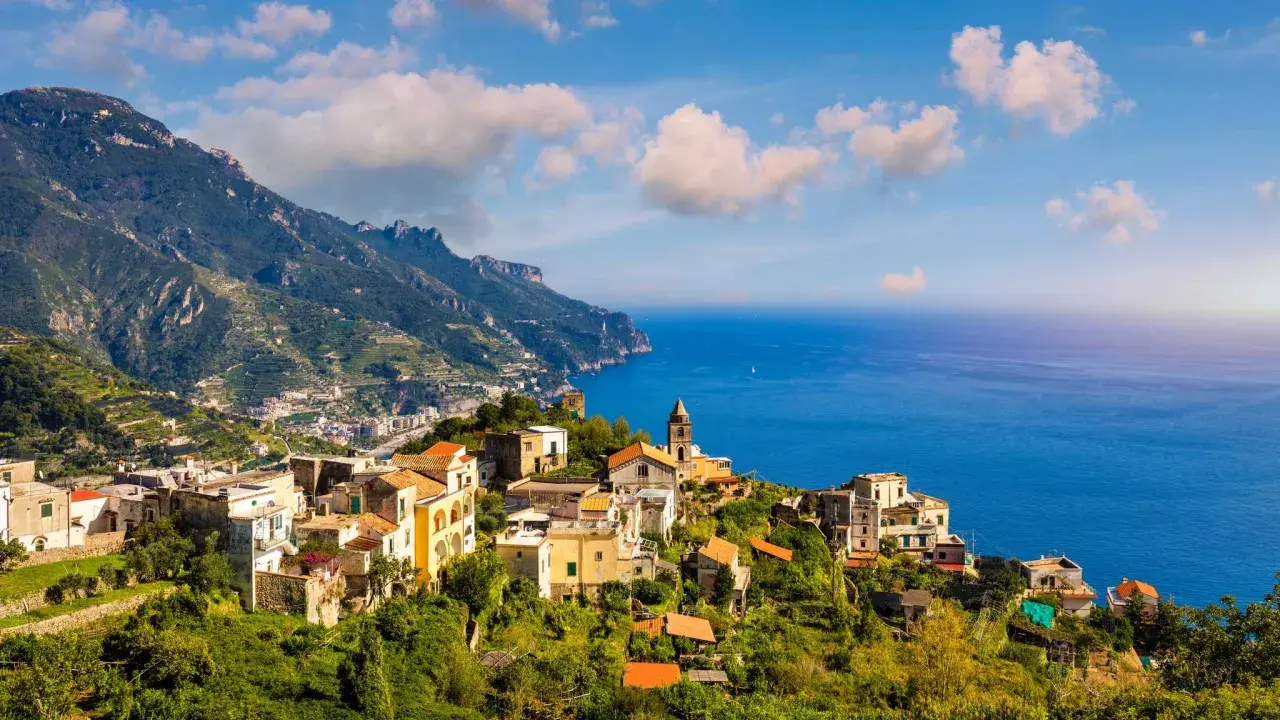
Traveling from Naples to Ravello is simple once you decide what matters most: speed, scenery, or price. In 2026, the route is really about choosing the right connection, because Ravello sits uphill from Amalfi and does not have its own train station or ferry port. This guide explains how to get from Naples to Ravello without wasting time on awkward changes, what each option costs, and which route I would actually pick in different travel scenarios.
What matters most on this route
- Fastest: a private transfer or taxi, usually door to door in about 1 hour 15 minutes to 1 hour 45 minutes.
- Most scenic: a ferry to Amalfi, then a short bus or taxi uphill to Ravello.
- Cheapest: public transport, usually a train to Salerno plus a bus or ferry connection.
- Most comfortable with luggage: a private car service, especially if you land late or are traveling as a family.
- Main trap: tight bus connections on the Amalfi Coast, especially in peak season.
The quickest way is a private transfer or taxi
If I had to reduce the decision to one sentence, I would say this: book a car if you want the least friction. A private transfer from Naples to Ravello usually takes about 1 hour 15 minutes to 1 hour 45 minutes, depending on traffic and the exact pickup and drop-off points. The price is typically around €100 to €150 per car, and it can climb higher in peak season or if you need a larger vehicle.
That price sounds high until you compare it with the value of a direct, door-to-door ride. You avoid train platforms, ferry queues, bus changes, and the uphill climb from Amalfi. For an airport arrival, a car service is especially efficient because it removes all the uncertainty from the first day of the trip. A taxi can work too, but in practice the total cost is often similar once you factor in convenience, and it is not usually the option I would choose if I wanted to lock in the price in advance.
| Option | Typical time | Approximate cost | Best for | Main drawback |
|---|---|---|---|---|
| Private transfer or taxi | 1h15-1h45 | €100-€150+ per car | Luggage, families, late arrivals | Highest cost |
| Ferry to Amalfi + bus or taxi | 2h30-4h | About €29-€40 per person | Scenery and daytime travel | Seasonal ferries and one extra connection |
| Train to Salerno + bus or ferry | 2h30-4h | About €8-€20 plus local tickets | Budget-conscious travelers | Multiple changes |
| Bus-only route | 3h-4h30 | About €5-€10 | The lowest budget | Least predictable |
| Drive yourself | 1h15-2h on paper | Variable, plus tolls and parking | Road trips with several stops | Traffic and parking stress |
That is why the right answer is less about mileage and more about friction. If you want the trip to feel effortless, a private car wins. If you want the journey to feel like part of the holiday, the sea route is the one to look at next.
The ferry to Amalfi is the scenic middle of the trip
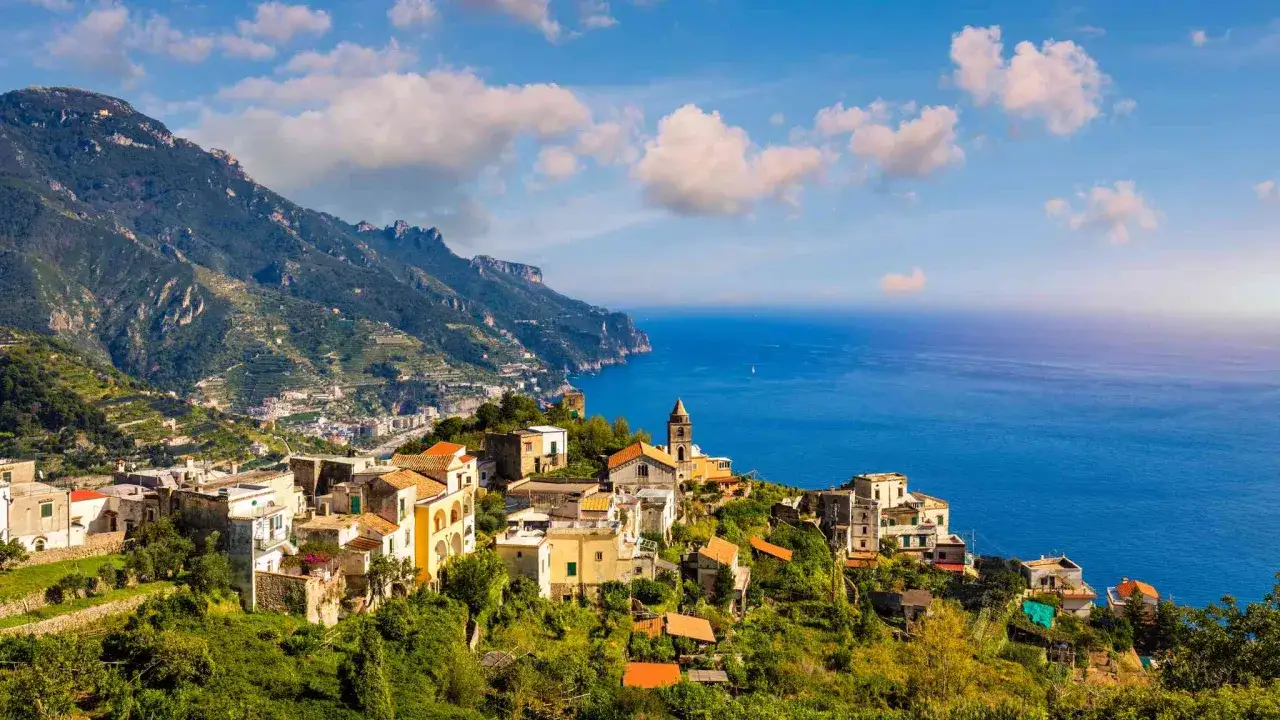
For daylight travel, the ferry is the option I would recommend to anyone who values the view. One of the main operators currently lists Naples Beverello to Amalfi sailings for the 2026 season from 1 April to 3 November, with several departures on busy days. The crossing usually takes about 1 hour 50 minutes to 3 hours, and fares are generally around €28 or more per person, depending on the operator and time of day.
From Amalfi, Ravello is still not the end of the journey. The final leg is uphill by road, usually by local bus, taxi, or a short private transfer. The bus is the cheapest continuation and normally costs about €1.50 for the local hop, with travel time around 20 to 30 minutes. That sounds easy, and it often is, but the catch is the same one that affects most Amalfi Coast buses: summer crowding can turn a short ride into a wait.
- Choose the ferry if you care more about the journey than shaving off the last half hour.
- Book earlier in high season, because the popular sailings fill first.
- Keep luggage light, since you still need one last road connection up to Ravello.
- Use a taxi from Amalfi if you are arriving late, carrying heavy bags, or simply do not want to wait for a bus.
If you want the trip to feel like part of the holiday rather than a logistics exercise, this is the route I would put at the top of the list. The tradeoff is simple: the view is better, but the connection management is less forgiving than a direct car.
Public transport works, but only if you plan the transfers
Public transport is the budget-friendly answer, but it only works well when you accept that the trip is a chain of legs rather than one clean ride. The most useful rail move is Napoli Centrale to Salerno, which usually takes about 34 to 45 minutes, with advance fares often starting near €6. From there, you can continue by ferry to Amalfi when the sailing times line up, or by bus if the day is built around road travel anyway.Train to Salerno
This is the public option I trust most because the rail segment is fast, frequent, and predictable compared with road traffic. If you are traveling in daylight and do not mind one or two changes, the Salerno connection is often the cleanest compromise between cost and comfort. The total door-to-door trip to Ravello is still usually somewhere around 2.5 to 4 hours, but the first leg is efficient enough that the rest of the journey feels manageable.
Bus-only from Naples
A bus-only plan is the cheapest version, but it is also the one most likely to be derailed by crowding or traffic. On the Amalfi Coast, tickets are generally bought before boarding, not on the bus, so I would not rely on a last-minute purchase at the stop. If you expect to make more than one bus hop, a day ticket can be better value than buying separate singles. That matters more than people expect when the route is split between the coast road and the uphill leg into Ravello.Read Also: Amalfi Coast: Drive or Not? Your Car Rental Dilemma Solved
Airport shuttle to Sorrento
If you land at Naples airport and already plan to spend time in Sorrento, a shuttle to the peninsula can fit into the broader itinerary. For a direct trip to Ravello, though, it adds another transfer and only makes sense when budget matters more than convenience. I would use it for a longer coast trip, not as my first choice for a simple arrival day.- Leave at least 60 to 90 minutes of buffer if you need to connect to a train or ferry.
- Do not expect buses to behave like airport shuttles; they are slower and more variable.
- Buy tickets before boarding and keep them ready for validation.
Once you understand the budget routes, the remaining question is whether driving yourself is actually an advantage or just a different kind of stress.
Driving yourself is possible, but it is not the easy win it looks like
On paper, a rental car looks efficient. In practice, the Amalfi Coast road is where the simplicity ends. The final stretch toward Ravello is narrow, busy in peak season, and not especially forgiving if you are arriving tired after a flight. Parking is another weak point: even when a hotel can help, the process is usually less convenient than travelers imagine before they arrive.
I would only rent a car if the rest of the trip justifies it, such as a broader road trip through Campania or several inland stops that are genuinely hard to reach otherwise. If Ravello is simply your base, a driver usually gives you the flexibility of a car without the headache of parking, wrong turns, or having to manage the same road twice. That is why I rarely treat self-driving as the best answer for this specific journey.
- Use a car if you need it for several days after Ravello.
- Avoid it if your main goal is a simple arrival and a relaxed stay.
- Confirm parking and drop-off details with your accommodation before you leave Naples.
If I were choosing purely for comfort, I would take a private transfer instead of self-driving almost every time. From there, the real decision becomes a matter of travel style rather than logistics alone.
Which option I would choose in different trip scenarios
Once the route is broken into real travel situations, the choice gets much easier. I usually think about Naples-to-Ravello travel this way:
- Late arrival or jet lag - book a private transfer. The value is not speed alone; it is eliminating every change between the airport, the port, and the hilltop village.
- Daytime trip with good weather - take the ferry to Amalfi, then continue uphill by bus. This is the version I would pick if the view matters and I am not rushing.
- Budget trip - take the train to Salerno and continue by bus. It takes more planning, but it keeps the cost down without becoming absurdly complicated.
- Traveling with children or heavy bags - choose a private car service again. The uphill arrival is much easier when somebody else is doing the driving.
- Trying to fit Pompeii or another stop en route - use a driver. A stitched-together public route is possible, but it usually eats the time you wanted to save.
The common mistake is choosing the cheapest route and then paying for it with missed connections, tired legs, or a wasted afternoon. When the whole trip is only a few hours long, that tradeoff matters more than most travelers expect. The last thing I want on this coastline is a plan that looks efficient on paper but leaves the day feeling fragmented.
The last mile into Ravello is where most plans succeed or fail
Ravello itself is the reason this journey needs a little respect. It sits above Amalfi, so every sea or rail arrival still ends with a road climb. That final uphill stretch is what turns a simple transfer into a real decision, especially if you are arriving in peak season, carrying luggage, or hoping to connect cleanly with a train or ferry.
- Book ferry seats early if you are traveling between spring and early autumn.
- Do not build a tight connection around a bus unless you can absorb a delay.
- Use the Amalfi-to-Ravello bus for value, but keep a taxi budget in reserve.
- If you have time and decent shoes, the walk between Amalfi and Ravello is a scenic hike, not just a transfer.
- Ask your hotel where the best drop-off point is before you arrive, especially if you are coming by private car.
My practical default is simple: private transfer for arrival day, ferry plus bus for a scenic daylight move, and train to Salerno when keeping the fare low matters most. That combination covers almost every Naples-to-Ravello itinerary without overcomplicating the day, and it leaves you with enough energy to enjoy the view once you get there.