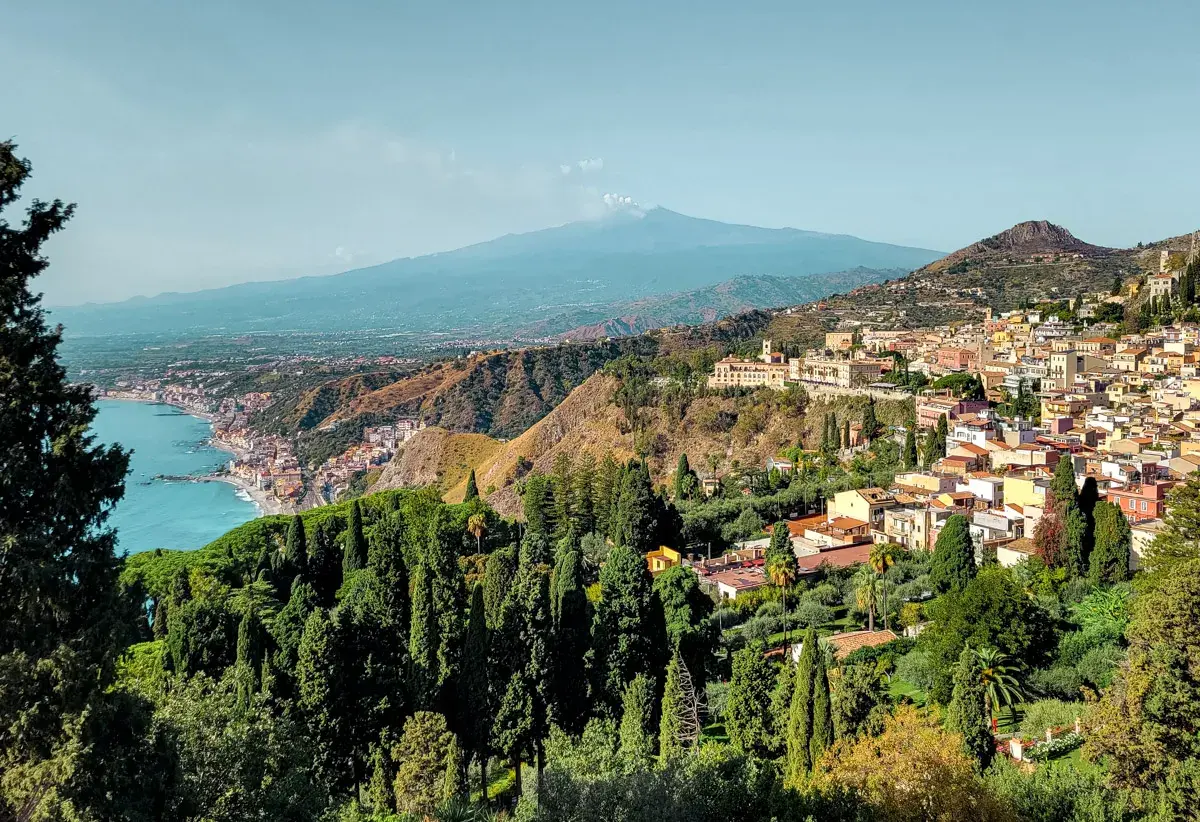
Two weeks in Sicily is enough time to see the island properly, but only if the route is paced with care. The best version mixes Palermo’s energy, western ruins and sea views, the archaeological south, and a slower finish on the east side where Etna and the baroque towns sit close together. I’m focusing here on the decisions that actually matter: where to start and end, how many bases to use, what to drive, what to skip, and how to keep the trip scenic instead of rushed.
What a practical two-week Sicily route should cover
- Best routing: fly into Palermo and out of Catania if you can, so you move west to east without backtracking.
- Best pace: 5 to 6 bases is the sweet spot for most travelers; fewer moves usually means a better trip.
- Best transport: a rental car is worth it for the full island loop, even though trains work well on the main city corridor.
- Best season: April to June and September to early October give the most balanced weather for ruins, hikes, and coastal stops.
- Biggest mistake: packing in too many towns and turning a scenic island into a transfer marathon.
How I would structure a 14-day Sicily trip
The cleanest plan is an open-jaw itinerary, which simply means flying into one city and out of another. For Sicily, that usually means Palermo on the west side and Catania on the east, so you can move across the island in one direction instead of looping back over the same roads. If you are building a Sicily itinerary for 14 days, that one choice makes almost everything else easier.| Trip style | Best for | Why it works | Tradeoff |
|---|---|---|---|
| Open-jaw road trip | First-time visitors who want the full island | Less backtracking, cleaner pacing, easy to connect west, south, and east Sicily | You need flexible flight bookings |
| Full loop by car | Travelers with fixed flights in and out of the same airport | Works well if you like the logic of a round trip and do not mind a longer transfer or two | More driving and less efficient than an open-jaw route |
| Train-centered trip | People who want to avoid driving | Good on the Palermo-Cefalù-Catania-Syracuse axis | Less useful for Erice, Agrigento, Etna, and smaller inland stops |
I usually recommend the open-jaw option because it lets the itinerary breathe. The island is large enough that even “short” drives can eat half a day once you add parking, lunches, and the occasional detour for a viewpoint or an old town. Once you accept that rhythm, the rest of the trip becomes a lot easier to shape, and the next step is deciding what the actual route should look like.
A day-by-day route that keeps the pace realistic
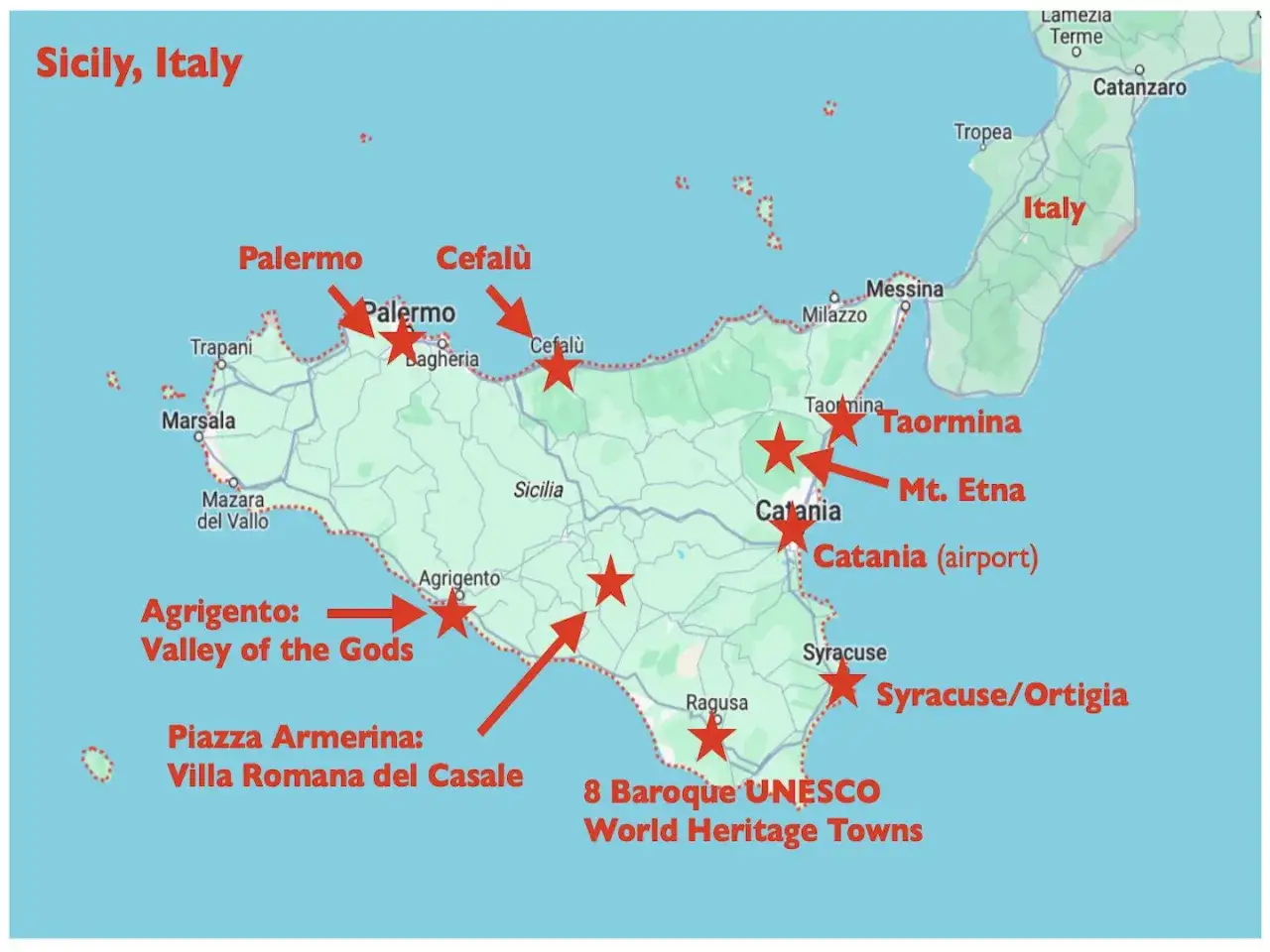
- Days 1-2, Palermo: Start with the historic center, street food, markets, and a relaxed first evening. I would not try to “do” Palermo in one pass; it is better as a city you absorb slowly.
- Day 3, Monreale and Cefalù: Use the morning for Monreale’s cathedral and the afternoon for Cefalù’s seafront. Cefalù is a good reminder that Sicily can shift from urban to coastal in less than an hour.
- Days 4-5, Trapani and Erice: Head west for the hill town of Erice, then use Trapani or nearby coastline as a base for salt pans, sunset walks, and a slower dinner. This is one of the most scenic corners of the island.
- Day 6, Segesta or Zingaro: Pick one outdoor-focused stop, not both. Segesta is better for archaeology, while the Zingaro Nature Reserve gives you hiking, coves, and open sea views.
- Day 7, Agrigento: Make the Valley of the Temples the main event and visit late in the day if you can. The site feels larger and more atmospheric when the heat drops and the light softens.
- Day 8, Piazza Armerina or Enna, then Ragusa: If mosaics interest you, stop at Villa Romana del Casale in Piazza Armerina; if not, keep the inland pause short and continue toward Ragusa. I would not try to overload this transfer day.
- Day 9, Ragusa and Modica: Spend the day in the baroque southeast, with Ragusa Ibla for atmosphere and Modica for chocolate, backstreets, and a slower pace. This is the part of Sicily where wandering matters more than checking off sights.
- Day 10, Noto and the coast: Noto is worth the stop for its architecture alone, but I would pair it with a coastal break, such as Vendicari, so the day does not become too church-and-square heavy.
- Day 11, Syracuse and Ortigia: Stay in Ortigia if possible. It is one of the easiest places in Sicily to enjoy without a plan, which is exactly why it works so well as a base.
- Day 12, a slower southeast day: Use this for Cavagrande, a boat trip, beach time, or even just a lighter day in Syracuse. Two weeks sounds long until you realize how good Sicily is at filling a day without warning.
- Day 13, Mount Etna and Taormina: Spend the morning on Etna if weather and energy allow, then move to Taormina for the evening. This pairing works because the mountain landscape and the polished resort feel are very different, and the contrast is part of the appeal.
- Day 14, Catania and departure: Keep this final day light, especially if your flight is later in the day. A short Catania morning works well as a buffer, and it is far better than forcing one more full excursion.
If you want a more beach-heavy trip, I would borrow one day from the inland section and add it to the southeast coast instead. If you want more ruins and less beach time, do the opposite. The route works because it has a spine, not because every stop is mandatory. Once the route is set, the next job is choosing bases that keep the movement sensible.
Where to stay so you are not repacking every night
I prefer a small number of bases with at least two nights each. That keeps the trip calm, gives you room for weather changes, and makes Sicily feel like a sequence of places rather than a string of hotel check-ins. For most travelers, the best compromise is one city-heavy start, one western base, one inland overnight, and two longer stays on the east side.| Base | Suggested nights | Why I would choose it | Watch-outs |
|---|---|---|---|
| Palermo | 3 | Best launch point for food, markets, Monreale, and the first day of the trip | Traffic and parking can be frustrating if you stay too far from the center |
| Trapani or Erice | 2 | Ideal for western Sicily, salt pans, Segesta, and Zingaro | Choose carefully if you want convenience versus atmosphere |
| Agrigento | 1 | Enough time for the Valley of the Temples without stretching the rest of the route | One night is fine here; I would not force a second unless you are unusually archaeology-focused |
| Ragusa or Modica | 2 | Great for baroque towns, inland scenery, and a slower dinner-heavy pace | Modica is more characterful; Ragusa is often more convenient |
| Ortigia | 3 | Best east-coast base for walking, dining, and easy access to Syracuse | Book early if you want a central stay in high season |
| Taormina or Catania area | 3 | Good final base for Etna, Taormina, and the departure airport | Taormina is prettier; Catania is more practical |
If you prefer fewer hotel changes, I would compress the southeast into two bases: one in Ragusa or Modica and one in Ortigia. That slightly reduces the number of stops, but it gives you more time on the ground and less time living out of a suitcase. Those base choices only pay off if the driving plan is equally realistic.
How to get around without wasting time
Trenitalia is useful for the main rail corridor, especially between Palermo, Cefalù, Catania, and Syracuse, but I would not build the full island trip around trains alone. Sicily is at its best when you can stop for a hill town, a viewpoint, or a lunch that is nowhere near a station. For that reason, a rental car is usually the better choice for a two-week loop.
| Leg | Typical time | Best way to do it | Why it matters |
|---|---|---|---|
| Palermo to Cefalù | About 1 hour | Train or car | A simple first move if you want a coastal reset |
| Palermo to Trapani | About 1.5 to 2 hours | Car | Useful for western sites and hill towns |
| Trapani to Agrigento | Roughly 3 hours | Car | This is one of the longer transfers, so keep the rest of the day light |
| Agrigento to Ragusa | About 2.5 hours | Car | Long enough to feel like a transfer, short enough to pair with one inland stop |
| Ragusa to Syracuse | About 1.5 hours | Car | An easy move that still leaves room for a scenic lunch |
| Syracuse to Taormina | About 1.5 to 2 hours | Car | Clean transition from the southeast to the east coast |
| Taormina to Catania | About 1 hour | Car or transfer | Good final hop before departure |
There are two details I always flag for U.S. travelers. First, book an automatic early if you need one, because availability is usually tighter than people expect. Second, learn the term ZTL, which means restricted traffic zone; if you drive into one by mistake, cameras can record your plate and the fine may arrive later. That is the kind of avoidable annoyance that can color an otherwise good trip, so I would keep the car outside old-town cores whenever possible.
What a realistic 2026 budget looks like
Sicily is not cheap in the way it used to be, but it is still good value if you compare it with much of mainland Italy. The main cost drivers are how often you move, whether you need a car, and whether you stay in places like Taormina in peak season. I usually budget in U.S. dollars, because that gives travelers a clearer picture before they start booking.| Item | Typical range | What pushes it up |
|---|---|---|
| Midrange hotel or agriturismo | $120-$250 per night | Summer dates, central locations, sea views, and boutique properties |
| Rental car | $45-$110 per day | Automatic transmission, peak season, and one-way drop-off fees |
| Fuel and parking | $120-$250 total | Longer drives, city parking, and detours to rural sites |
| Meals | $35-$75 per person per day | Seafood dinners, wine, and tourist-heavy town centers |
| Site entries and local tours | $10-$35 per stop | Temple sites, archaeology, guided access, and seasonal pricing |
| Extra experiences | $50-$150 per person | Boat days, guided Etna access, or small-group tastings |
For a midrange couple, I would expect a two-week Sicily trip to land somewhere around $4,000 to $6,500 before transatlantic flights, depending on season and how many paid experiences you add. A more restrained trip can absolutely come in lower, especially if you travel outside peak summer, keep the car simple, and choose a few practical inland stays instead of chasing the fanciest addresses. The budget shifts quickly with the calendar, which is why timing matters almost as much as the route.
When to go and how the season changes the route
Visit Sicily makes the point clearly enough: spring and fall are ideal for inland exploring, while the sea season runs roughly from May to October. That matches what I would choose for most travelers. The island can work year-round, but the route should change with the weather instead of pretending every month feels the same.| Season | What it feels like | Best use of the itinerary |
|---|---|---|
| April to June | Comfortable temperatures, good light, and manageable crowds | Best overall balance for cities, ruins, and light hiking |
| July to August | Hot, busy, and very beach-friendly | Prioritize coast, early starts, and shorter inland sightseeing blocks |
| September to October | Warm sea, softer light, and easier driving conditions | My favorite window for a full island route |
| November to March | Quieter, cooler, and more local in feel | Better for cities, food, museums, and archaeology than for beach time |
If you are traveling in high summer, I would keep the longest drives as pure transfer days and avoid stacking them with a major hike or a packed museum schedule. If you are traveling in shoulder season, you can mix inland and coastal days much more comfortably, and the whole trip feels smoother. The season sets the mood, but the final check is whether the trip matches your priorities.
What I would trim or add before booking
The strongest 14-day route is not the one with the most famous names. It is the one that leaves enough room for actual travel, not just movement. Before I book anything, I ask a simple question: which parts of Sicily are non-negotiable for this trip, and which ones are just nice to have?
- Trim western Sicily if your real interest is the baroque southeast, Etna, and Ortigia.
- Add the Aeolian Islands only if you can spare extra nights and you are comfortable trading road time for ferry time.
- Keep one outdoors-heavy stop, such as Etna, Zingaro, Vendicari, or Cavagrande, so the trip has more than museum energy.
- Use an agriturismo for one inland base if you want quieter nights and a more rural feel; it is a farmhouse stay, and it suits Sicily well.
- Leave a buffer on the final day if your flight is early or you dislike airport stress.
My rule is simple: choose six or seven real destinations, then let the island do the rest. Sicily is at its best when you have time to linger over a granita, watch the light change on the temples, and still reach your next base without feeling like the car was the main character.