
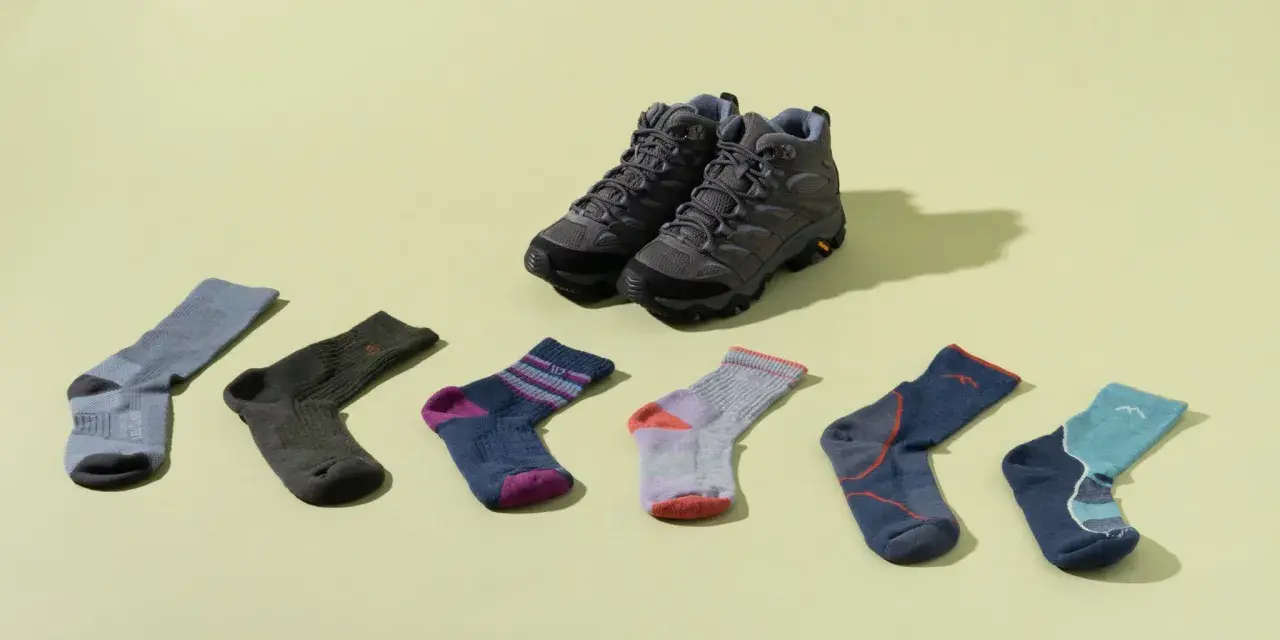
The three factors that decide whether extra socks help or hurt
- Fit comes first - if the boot is already snug, another sock usually makes things worse.
- Moisture changes everything - drier fabric lowers friction; damp fabric raises it.
- Layering only works when the layers move well - the goal is sock-to-sock movement, not sock-to-skin rubbing.
- Thin liner socks are different from two thick socks - one is a system, the other is often just extra bulk.
- Most hikers do better with one good sock - especially on warmer or more technical trails.
The short answer is more nuanced than a yes or no
So, is wearing two pairs of socks bad? In hiking, my answer is usually: not automatically, but often unnecessary. A thin liner sock under a proper hiking sock can work well when the boot has room and the foot is prone to rubbing. Two thick socks, on the other hand, usually make the boot tighter, warmer, and more likely to bunch.
I care less about the number of layers and more about three things: fit, moisture, and movement. If the extra layer keeps the skin drier and lets the friction happen between fabrics instead of against your foot, it may help. If it compresses the toes or changes the way your heel sits in the boot, it is solving one problem by creating another.
| Setup | Best for | Main risk | My take |
|---|---|---|---|
| One well-fitting hiking sock | Most day hikes | Very little if the fit is right | The best default for most people |
| Thin liner + outer hiking sock | Blister-prone feet, long days, roomy boots | Can feel tight if boot volume is limited | Worth testing if hot spots are a pattern |
| Two thick socks | Rarely useful | Heat, bunching, cramped toe box | Usually a bad trade-off |
| Double-layer hiking sock | People who want the layered effect with less guesswork | Still depends on boot fit | Better than random layering from the drawer |
That distinction leads directly to the reason some hikers swear by layering while others get blisters the moment they try it.
Why layering can help on the trail
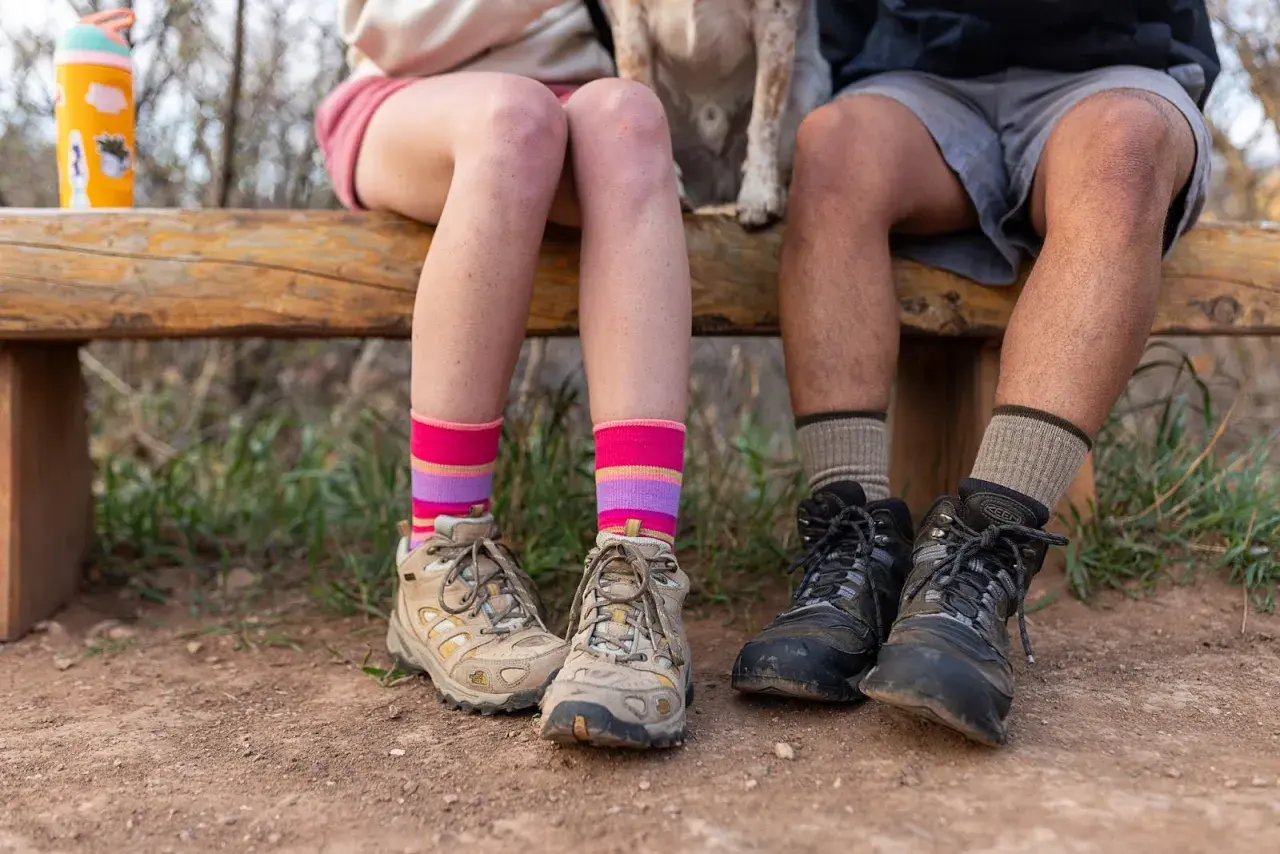
It can reduce skin-on-sock rubbing
When the inner layer fits closely, movement shifts away from the skin surface. That matters on long descents, where repeated micro-sliding can turn a small heel rub into a real blister. The win is not magic; it is simply better separation between your skin and the friction point.
It can improve moisture control
Moisture is the part most hikers underestimate. Once a foot gets damp, the skin softens and friction climbs fast. A liner made from merino or synthetic fibers can help move sweat away from the skin so the outer sock and boot are dealing with a drier surface.
It can add just enough warmth in cold starts
On early starts, shoulder-season ridge walks, or colder mountain mornings, a layered system can add warmth without forcing you into a heavily cushioned sock. That is useful on some U.S. trails where the first hour feels chilly and the afternoon turns warm. The trick is to gain warmth without overfilling the boot.
The key is that layering works best as a system, not as a random extra sock thrown into the boot. Once the layers stop moving smoothly, the advantage disappears fast, which is why fit matters so much.
When extra socks make hiking shoes worse
In the wrong boot, a second pair of socks can make a good walk feel sloppy from the first mile. The most common failure mode is simple: there is less internal volume, so the foot is squeezed, overheats, and starts rubbing in new places.
Boot volume gets eaten first
Hiking footwear is built around a specific amount of interior space. Add a second thick sock and that space disappears quickly, especially in low-volume trail runners or already snug boots. If your toes are touching the front or the sidewalls feel more restrictive, the extra layer is not helping.
Heat and sweat start a feedback loop
More fabric usually means more warmth. In humid conditions or on steep climbs, that can turn into a damp, sticky interior that raises friction instead of lowering it. Once sweat builds, the sock has less ability to glide and the skin has less protection.
Read Also: How to Clean Terrex Free Hiker Shoes - The Right Way
Downhill miles expose bad fit quickly
On descents, the foot naturally wants to slide forward. If the boot is already tight, extra socks can increase toe bang and compress the forefoot just enough to make every step feel worse. That is why a setup that seems fine on flat ground can fail as soon as the trail tilts down.
- Toes touch the front on descents
- Heel lift gets worse instead of better
- Seams or folds appear under the ball of the foot
- Feet feel hotter within the first hour
- Your laces need to be loosened so much that support drops
If you notice any of those signs, the setup is not protecting your feet; it is asking them to compensate for a shoe that no longer fits the way it should. That is why I test the full system before trusting it on a real hike.
How I test a double-sock setup before a long hike
- Wear the exact boots, socks, and insoles you plan to use for 20 to 30 minutes indoors.
- Walk stairs, a hill, or a treadmill incline for 10 to 15 minutes so you can feel how the foot moves on climbs and descents.
- Check whether the toes touch the front, whether the heel slides, and whether the second layer wrinkles.
- Stop and retie the laces if the foot feels numb, overheated, or squeezed across the midfoot.
- If the setup only works when the boot feels loose enough to lose heel hold, reject it.
I like this test because it exposes problems early. If the socks already feel wrong at home, they will not suddenly become a smart choice on a rocky ridge, a wet coastal path, or a long switchback climb. A short test walk tells you more than a full bag of assumptions.
Better fixes when the problem is blisters, not sock count
If the real goal is fewer blisters, I usually get more mileage from fit and fabric than from adding thickness. A single quality hiking sock made from merino or synthetic fibers is often enough, and it is usually easier to tune than a second bulky layer.- Choose merino or synthetic socks; avoid cotton because it holds moisture and slows drying.
- Use heel-lock lacing if your heel lifts inside the boot.
- Try a thin liner sock before jumping to two thick pairs.
- Protect hot spots early with tape or a blister patch instead of waiting for a full blister.
- Replace worn insoles if your foot slides more than it used to.
- Carry a dry spare pair for wet grass, rain, or sweaty climbs.
If you still need a second sock to make the boot work, the boot fit is probably the problem, not your feet. I would rather adjust the footwear than keep stacking layers and hoping the issue disappears.
The rule I trust after testing hiking footwear on real miles
My rule is simple: one sock is the default, a thin liner plus hiking sock is the exception, and two thick socks are the red flag. The more technical the trail gets, the more important it becomes to preserve toe room, heel lock, and dry fabric against the skin.
- Use one sock when the boot already fits well.
- Use liner plus outer sock when you have extra volume and a real blister history.
- Skip the extra layer when your toes feel cramped, your heel slips, or your feet run hot.
On most hikes, the cleanest answer is not more fabric. It is a better-fitting boot, a sock that manages moisture well, and enough room for your foot to swell without changing the way the shoe moves. If I were packing for a mixed trail day, I would trust that setup long before I trusted two thick socks.
