
The choice between leather and synthetic hiking boots is really about matching the boot to the trip, not about picking a universal winner. In the leather vs synthetic hiking boots debate, I focus on three things first: how much abuse the trail will throw at the boot, how quickly I need it to dry, and how much weight I want on my feet by the end of the day. Get those three right, and the rest becomes much easier.
The best material depends on terrain, weather, pack weight, and how much upkeep you want
- Leather usually gives you better abrasion resistance, structure, and long-term durability.
- Synthetic uppers are lighter, breathe better, break in faster, and often cost less.
- Waterproof membranes matter more than many shoppers realize, but they also reduce airflow.
- Fit beats material almost every time if the boot will be worn for real mileage.
- Maintenance is part of the decision: leather asks more of you, but it can return more years of use.
- Hybrid boots can be the smartest middle ground for mixed weather and mixed terrain.
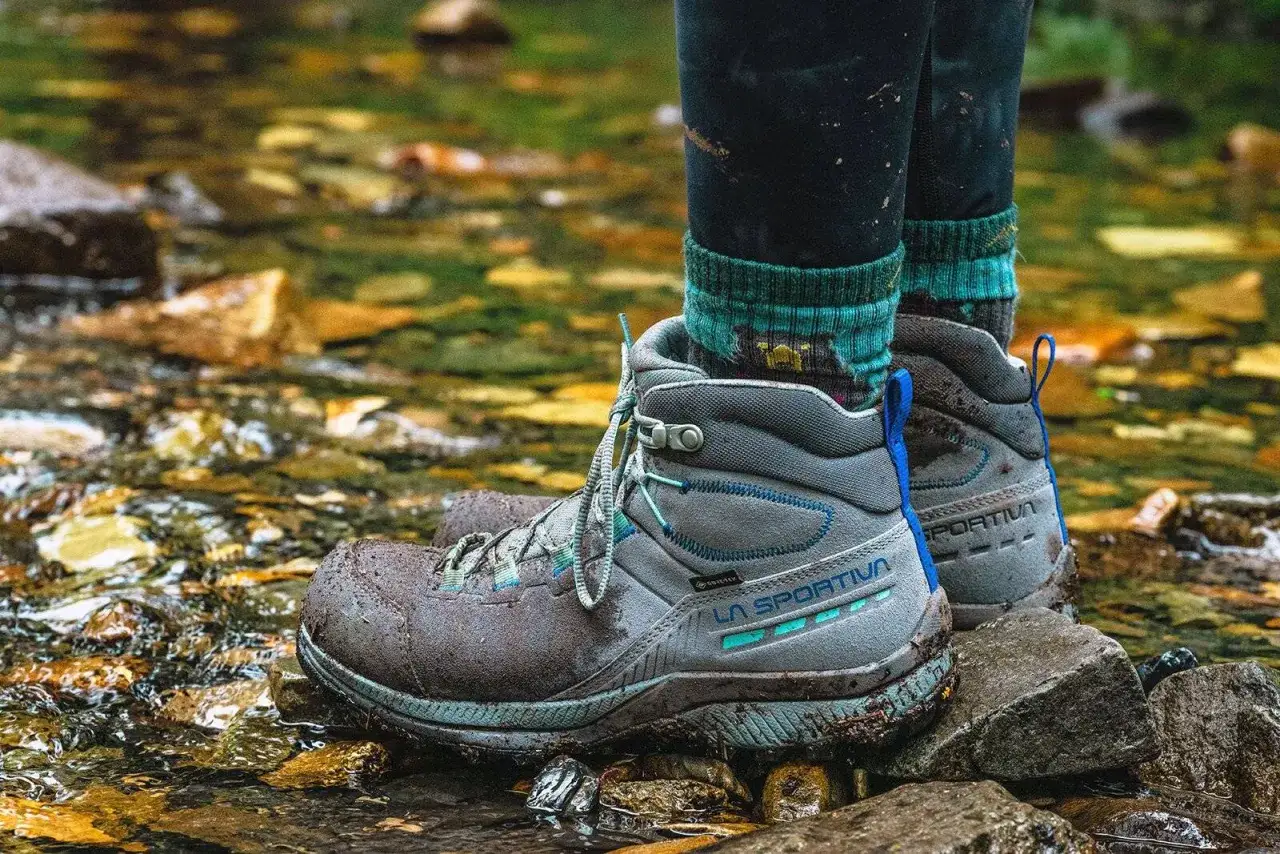
How the two materials behave on the trail
REI's current boot guidance mirrors what I see on the trail: synthetics breathe better and weigh less, while leather brings durability and support. That sounds simple until you spend a full day on rough ground, because the upper material affects more than just comfort. It changes how the boot flexes, how fast it dries, how much punishment it takes from rock and brush, and how tired your feet feel after the second climb of the day.
One thing I always remind readers: not all leather boots behave the same. Full-grain and nubuck leather sit at the heavy-duty end, while split-grain leather with nylon panels feels closer to a hybrid and gives up some durability for lower weight and better airflow. Synthetic boots vary too, but in practice they usually feel more flexible out of the box and less demanding on day one.
| Criterion | Leather boots | Synthetic boots | What it means in practice |
|---|---|---|---|
| Weight | Often about 2 lb 4 oz to 3 lb+ per pair | Often about 1 lb 8 oz to 2 lb per pair | Weight savings are noticeable after several hours on foot |
| Break-in | Usually needs a few outings to a couple of weeks | Usually easier out of the box | Leather asks more patience before a big trip |
| Durability | Excellent abrasion resistance and strong long-term support | Good, but usually shorter service life under hard use | Leather is better for rocky, brushy, high-mileage use |
| Breathability | Moderate to lower | Better airflow | Synthetic is nicer in heat and on dry climbs |
| Drying time | Slower | Faster | Important for stream crossings and wet weather |
| Typical price | About $250-$390 for many premium models | About $130-$240 for many current models | Upfront cost favors synthetic, long-term value often favors leather |
What matters most is the trade-off underneath the label. Leather tends to win when the trail is rough enough that scuffs, rock strikes, and pack weight start adding up; synthetics tend to win when hot weather, long mileage, and quick drying are the bigger problem. That is why the next question is not whether one material is "better," but when each one earns its place.
When leather earns its place
I reach for leather when I want the boot to feel like a piece of gear I can trust, not a piece I will worry about. That usually means rough terrain, loaded backpacks, cold mornings, steep descents, and travel where the route can change from smooth to ugly in one hour. On rocky alpine tracks, wet shoulder-season hikes, and multi-day routes with repeated abrasion from scree or brush, leather makes a real difference.
- Better abrasion resistance matters when rocks, roots, and brush are constant.
- More structure helps when you are carrying a heavier pack or covering long days.
- Longer service life can offset the higher upfront cost if you keep the boots in rotation.
- Better shape retention is useful when you want the boot to feel stable over time instead of floppy.
- Repairability is often stronger, especially on models that can be resoled or recrafted.
If I am carrying a heavier pack or spending several days on sharp, abrasive terrain, leather is still the more reassuring choice. It feels more planted, it resists punishment better, and it is easier to trust when the route keeps getting rougher than expected. The trade-off is obvious: more weight, more break-in, and more upkeep, which is exactly why the synthetic side deserves a serious look next.
When synthetic is the smarter buy
Synthetic boots make sense when comfort, ventilation, and quick drying matter more than absolute toughness. That is why they work so well for day hikes, warm-weather travel, fastpacking, and lighter backpacking loads. If I am moving fast, hiking in heat, or building a trip around one pair that needs to be worn in town and on trail, synthetics are easier to live with.
- Lighter weight reduces fatigue on long days and steep climbs.
- Faster drying is a big advantage after rain, mud, or shallow stream crossings.
- Less break-in time makes them friendlier for first-time buyers.
- Lower upfront cost helps if you replace boots more often or hike seasonally.
- Better airflow makes a noticeable difference in hot, humid conditions.
That lighter, quicker-drying feel is not a small detail. On a ten-mile day, or on a warm route where your feet already work hard, the savings show up in comfort before they show up on a scale. The catch is that you usually give up some long-term toughness, so the next step is to look at fit, break-in, and waterproofing before the material choice tricks you into the wrong boot.
Fit, break-in, and waterproofing decide more than the label
Material gets too much credit when people talk about hiking boots. In real use, the shape of the last, the quality of the fit, and the waterproofing setup often decide whether a boot feels great or miserable. A leather boot with the wrong heel hold is still a bad boot. A synthetic boot with a dialed-in fit can outperform something far more expensive if the trip is short, warm, and dry.
- Toe room: Leave about a thumb's width in front of the longest toe so descents do not smash the front of the boot.
- Heel hold: Your heel should stay locked down with only minimal lift; if it slips a lot, blisters are coming.
- Downhill test: Try a slope or stairs in the shop if you can, because fit changes under pressure.
- Break-in: Leather usually needs real time; synthetics often feel closer to ready immediately, but both still need a proper test walk.
- Waterproofing: A membrane can keep rain out, but it also makes the boot warmer and less airy on hot days.
When I fit boots, I care about the downhill test more than the showroom walk. A boot that feels fine standing still can still punish your toes after 1,000 feet of descent if the heel slips or the toe box is too short, and that problem has nothing to do with leather versus synthetic. Waterproofing matters too: a membrane can keep rain out, but it also makes the boot warmer and less airy, which is why I skip it more often for hot-summer trips than most people expect. That leads directly to the question of what all of this costs over time.
What the boots will cost you over time
On current U.S. retail shelves, lighter synthetic mids often sit around $130-$240, while leather or leather-heavy backpacking boots are commonly $250-$390. The gap is real, but it is not the whole story, because a leather boot that can be cleaned, conditioned, and eventually resoled may outlast two or even three cheaper synthetic pairs if you actually keep it in service.
Some makers, including Danner, back that idea with recrafting services, which is a reminder that a good leather boot is often a platform you keep rebuilding rather than a disposable purchase. That matters if you hike often, because the outsole is usually the first part to wear out, not the upper.
My maintenance rule is simple. After muddy or wet hikes, I brush off grit, let the boots dry at room temperature, and never rush them with direct heat. For leather, I condition a few times a year if I am using the boots regularly, and I refresh waterproofing when water stops beading. REI notes that cleaning and conditioning work best on clean, damp leather, and that the wrong treatment can get in the way of future resoling. That is one reason long-life leather boots are less about buying once and more about keeping a routine.
- Brush dirt off after every muddy hike.
- Dry naturally at room temperature, away from heaters and direct sun.
- Condition leather a few times a year if you hike regularly.
- Refresh waterproofing when water no longer beads on the surface.
- Clean seams and overlays on synthetic boots so grit does not chew through stitching.
If you hate maintenance, synthetic is easier to live with. If you do not mind a little care and want a boot that can stay in rotation for years, leather starts to make stronger financial sense the longer you use it. The final filter is not the budget alone, though; it is the type of hiking you actually do.
Which material fits your actual trips
For dry, fast day hikes, synthetic is usually the practical answer. For wet shoulder-season routes, rocky alpine paths, or loaded multi-day treks, leather or a sturdy hybrid tends to feel more trustworthy. If I were choosing for a trip list that included a rainy coastal walk in Asturias, a summer climb in the Alps, and a few packed weekends in the Rockies, I would probably split the decision the same way: synthetic for warm, light, and fast; leather for rough, wet, and long.
- Choose synthetic if your hikes are short to moderate, your pack is light, and heat matters more than abrasion.
- Choose leather if you want one boot for heavier loads, rough terrain, and years of use.
- Choose a hybrid if you want a middle ground that can handle mixed weather without feeling bulky.
- Choose non-waterproof synthetics if you hike mostly in warm, dry conditions and value ventilation over storm protection.
This is the part many buyers skip: they choose a material for the trip they imagine, not the trip they keep doing. If your real hiking life is a mix of damp mornings, rocky descents, and long travel days, you will be happier with the boot that fits that pattern instead of the one that sounds toughest on paper. That leaves one last rule I use before buying.
The simplest rule I use before buying a pair
If I want the boot to take abuse, carry weight, and stay useful for years, I buy leather. If I want lighter feet, quicker drying, and less hassle, I buy synthetic. If the two options are close, I look at the outsole, the midsole, and the fit before I let the upper material decide for me, because those details are what you actually feel on the trail.
For most hikers, the smartest choice is not a loyalty to one material but a honest match between the boot and the conditions. Once that match is right, the leather boot feels like a workhorse and the synthetic boot feels like a relief, and both can be the correct answer depending on where the trail is taking you.