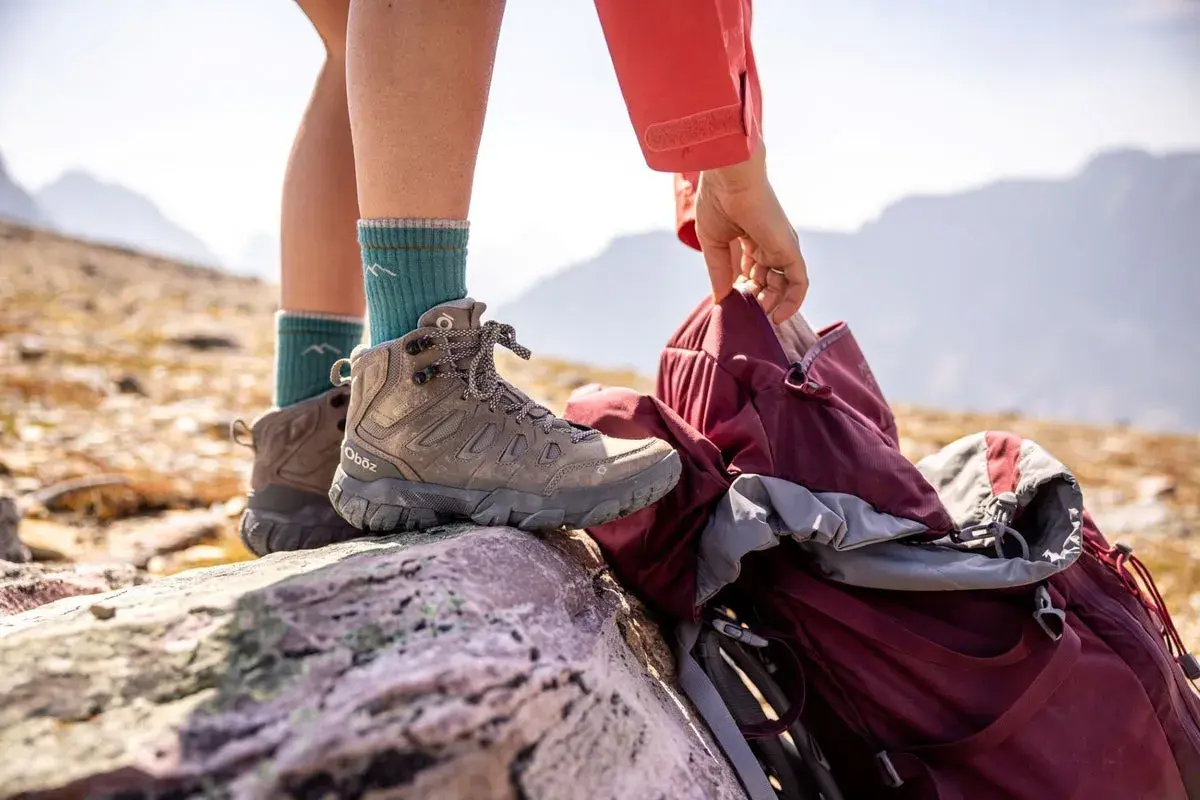
Hiking boots can be the right size on paper and still feel wrong the moment you lace them up. The difference usually comes from boot shape, volume, ankle height, and the socks you plan to wear, not from some separate sizing system reserved for boots. For anyone planning long climbs, wet trails, or steep descents, the real test is fit under hiking conditions, not the number printed on the box.
This guide breaks down what changes between boots and shoes, how to check fit the right way, and when to change length or width instead of forcing a pair to work. That matters whether you are heading into a local day hike or a bigger mountain route where a bad fit turns into a long problem fast.
The quickest way to choose the right boot is to check fit, not just size
- Most boots do not use a separate sizing scale, but they often fit very differently from everyday shoes.
- The biggest variables are the last, toe box, heel hold, width, sock thickness, and break-in.
- A good hiking boot should feel snug in the heel and midfoot, with room to wiggle your toes.
- If length is fine but the sides pinch, try a different width or model before going longer.
- Try boots late in the day and use the same hiking socks you plan to wear on the trail.
Are boots sized differently than shoes?
The short answer is usually no: there is not a separate universal sizing language for boots. A men's 10 or a women's 8 still means something roughly consistent on the label, but hiking boots are built on different shapes, with different levels of support and different volume inside the shoe. That is why two pairs with the same number can feel completely different once you stand, walk, and descend.
I treat boot sizing as a fit problem, not a label problem. The important questions are simple: is the length right, is the width right, and does the boot hold the heel and midfoot securely without squeezing the forefoot. If any of those are off, the size number stops telling the whole story.
That is the part many hikers miss. The printed size is only the starting point, and the way the boot behaves on foot is what decides whether it works.
Why hiking boots feel different on foot
Hiking boots usually have stiffer uppers, thicker midsoles, and more structure than a sneaker or trail shoe. That extra structure can make the same size feel shorter, narrower, or heavier even when the length is technically correct. If the boot is built on a narrower last - the mold the boot is built around - the same size can feel especially tight through the toes or forefoot.
REI notes that hiking footwear should fit snug everywhere but tight nowhere, with room to wiggle your toes. That is a useful standard because it captures the real tradeoff: you want control on uneven ground, but you do not want pressure points that turn into blisters or numbness halfway through a hike.
| Fit factor | What changes | What you feel | What usually helps |
|---|---|---|---|
| Last | The overall shape of the boot | Same size feels narrow or roomy in different brands | Try another model before changing length |
| Toe box | Space at the front and sides of the forefoot | Toes hit the front on descents or feel cramped | Seek more toe room or a wider fit |
| Heel pocket | How well the heel is locked in place | Lift, rubbing, and hot spots | Try a different size, lacing pattern, or last |
| Upper stiffness | How much the boot resists bending | Pressure points early on, especially in leather boots | Allow a short break-in, but do not expect miracles |
| Sock system | Thickness and cushioning underfoot | A boot that felt fine barefoot feels tight with hiking socks | Fit with the socks you will actually hike in |
KEEN makes the same point from another angle: different brands or styles can fit differently even when labeled the same size. That is why the number on the box matters less than the boot's actual shape and volume once it is on your foot.
Once you understand that, the next step is checking the fit the way a hiker actually uses the boot, not the way a showroom tries to make it feel.
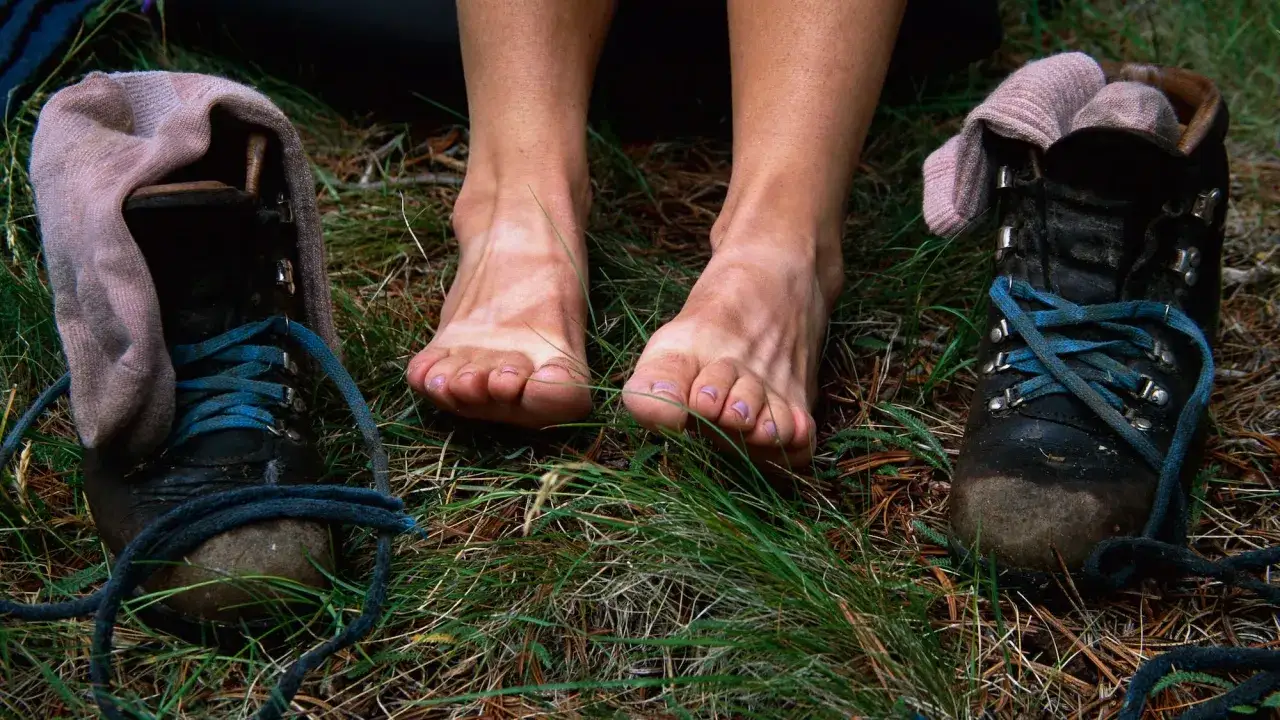
How I check hiking boot fit before buying
I try hiking boots late in the day, in the socks I will actually wear on the trail. Feet swell after hours on them, and that matters more on long mountain days than most people expect. A boot that feels perfect at 10 a.m. can feel cramped by the afternoon.
- Stand on the insole and look for about a thumb's width in front of your longest toe.
- Lace the boots firmly and check the heel. It should stay planted when you walk.
- Walk on an incline if the store has one, because downhill pressure exposes toe-box problems fast.
- Flex your ankles and bend your knees. The boot should feel supportive, not restrictive.
- Wiggle your toes. You want room to spread, not slack that lets the foot slide around.
REI also recommends trying boots toward the end of the day and measuring in the socks you plan to hike in, which is exactly the habit I would keep. It is a small change, but it catches bad fits before they become trail problems.
This process sounds a little fussy, but it saves a lot of regret. Once you know how the fit should behave, the real question becomes whether you need a different size, a different width, or simply a different boot altogether.
When to size up, size down, or change width instead
Many hikers reach for the next half size first, but that is not always the cleanest fix. If the boot is fine in length and only pinches across the forefoot, a different width or a roomier last is usually the smarter move. If the heel slips while the toes already have enough room, going longer usually makes the problem worse.
| What you notice | What it usually means | Best move |
|---|---|---|
| Toes hit the front on descents | The boot is too short or too low in volume | Try a half size up or a roomier model |
| Heel lifts as you walk | The boot is too long, too shallow, or the wrong shape | Try a smaller size or a better heel lock |
| Sides feel pinched, but length is fine | The width is wrong | Choose a wide option or another last |
| Boot feels okay at first, then tight later | Foot swelling, sock thickness, or too little volume | Test later in the day and with your actual hiking socks |
| Boot feels roomy but not secure | Too much volume for your foot | Try a different fit platform rather than just sizing down |
In the US market, many brands also offer regular and wide options, but the label system varies enough that I would not buy based on width letters alone. I would buy based on whether the boot lets my foot sit naturally without movement that turns into rubbing on hour three.
That is especially important on longer routes, where a little swelling and a little downhill abuse quickly reveal whether the fit was actually right.
Boots, shoes, and what matters for hiking fit
For easy day hikes, lightweight hiking shoes can feel closer to your regular shoe size and require less adjustment. For backpacking, rocky terrain, wet conditions, or long descents, boots usually need a little more forefoot room and a more secure heel. That is not because they belong to a different size class, but because the job they do is different.
| Feature | Hiking boots | Hiking shoes |
|---|---|---|
| Structure | More support and stiffness | Usually lighter and more flexible |
| Heel feel | Should feel locked in | Can feel a bit more sneaker-like |
| Toe room | Often needs more room for descents and swelling | Still needs room, but usually less volume overall |
| Best use | Longer hikes, rough terrain, backpacking, wetter conditions | Faster day hikes, lighter loads, warmer weather |
| Sizing effect | Same number can feel more rigid and more demanding | Often closer to casual shoe fit, but still brand-dependent |
If you are switching from trail runners to boots, expect the same size number to feel more protective and less forgiving. That can be a good thing on rough ground, as long as the boot still gives your toes space and your heel a stable home.
The other way around is true too: if you move from boots to hiking shoes, the fit may feel suddenly easier, but you still need to check the same three things - length, width, and heel hold - before you trust them on trail.
The fit cues I trust before I commit to a pair
When I am deciding whether a boot is worth buying, I care less about the number on the box and more about five cues: the heel stays locked, the toes can splay, the midfoot feels secure, the boot does not create pressure points, and the pair still feels comfortable after a few minutes of walking. If all five are true, the size label is doing its job.
- Try the boots with the socks you will actually hike in.
- Test them later in the day, not right after sitting down.
- Make sure the toe box gives you room on downhills.
- Do not confuse break-in with a bad fit; a little softening is normal, but pain is not.
- If length feels right but the sides pinch, change width or model first.
The cleanest answer is this: boots are not usually sized on a completely different scale, but they often fit differently enough that you should never assume your regular shoe size will work automatically. If you remember only one thing, make it this - the right boot is the one that keeps your heel steady and your toes relaxed after the trail has already started to do its work.