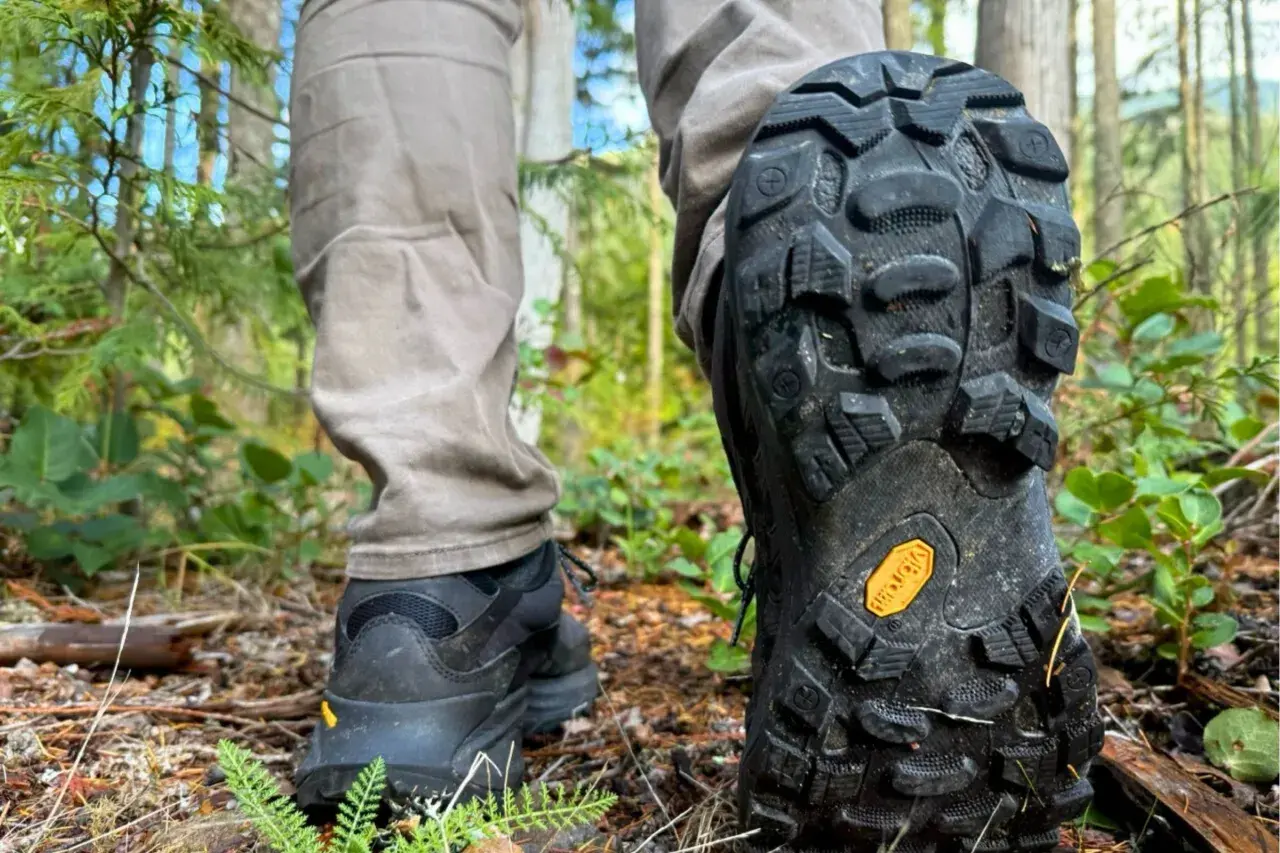
The right hiking outsole can change how a boot feels more than almost any other part of the build. Among the many Vibram sole types, the real question is not which one is “best” in the abstract, but which one matches the terrain, season, and load on your feet. I want to separate the branding from the practical performance so you can read a boot spec sheet and know what actually matters on the trail.
The practical difference is usually in grip, weight, and terrain fit
- Some Vibram names describe rubber compounds, while others describe tread geometry or weight-saving tech.
- Megagrip is the most versatile all-around hiking choice when wet and dry traction both matter.
- Litebase trims weight, but that benefit comes with a durability trade-off for some hikers.
- MONT is more alpine and cold-weather oriented than a typical three-season hiking sole.
- Arctic Grip is a winter specialist, not a general-purpose trail outsole.
- The midsole, fit, and stiffness of the boot still matter as much as the outsole name.
What the label on a Vibram outsole actually tells you
When I look at a hiking shoe, I never treat the sole name as a single score. Some labels refer to the rubber compound, some refer to the lug design, and some describe a whole sole platform or system. That means a boot can combine several technologies at once, and the name on the outsole is only part of the story.
In practice, the easiest way to read the label is to split it into three buckets:
| Label type | What it describes | Why it matters |
|---|---|---|
| Rubber compound | The formula of the outsole material, such as Megagrip, MONT, or XS Trek | This influences grip, abrasion resistance, and how the sole behaves in wet or cold conditions |
| Lug or geometry tech | The shape, spacing, and layout of the tread, such as Traction Lug | This changes bite, braking, mud shedding, and stability on steep ground |
| Weight or platform tech | Design systems such as Litebase or a classic heritage pattern like Carrarmato | This affects how light, slim, or rugged the finished sole feels underfoot |
That distinction matters because a lot of hikers assume one Vibram badge means one performance profile. It does not. A boot with a grippy compound can still feel clumsy if the lug shape is wrong, and a lightweight sole can still perform well if the terrain and pack weight fit the design. Once the label is decoded, the next question is which outsole families deserve attention for hiking in the first place.
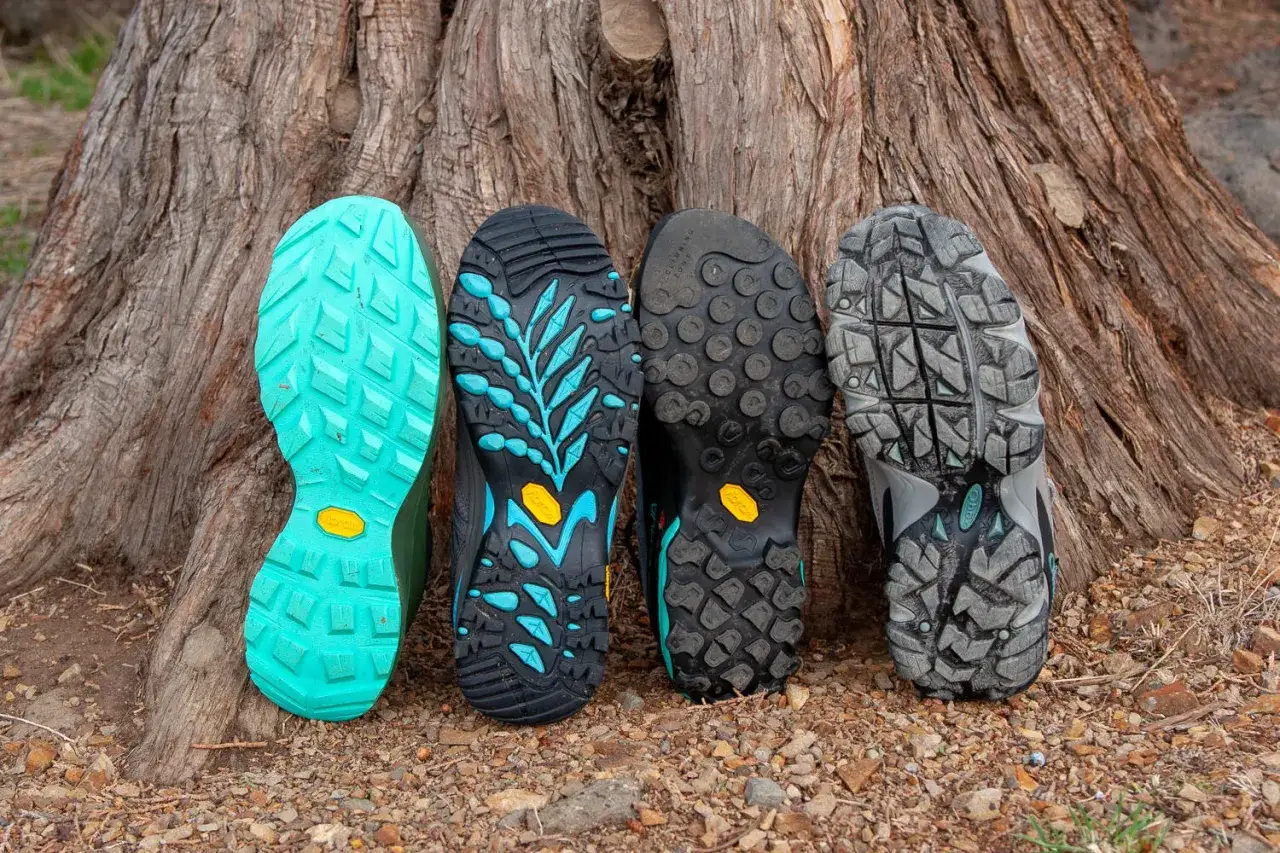
The main Vibram sole families you are likely to see on hiking footwear
For hiking, a few sole families show up again and again because they solve real trail problems. The table below is the quickest way I know to compare them without getting lost in brand language.
| Vibram family | Best for | What it does well | Trade-off |
|---|---|---|---|
| Carrarmato | Classic mountaineering and rugged hiking | Deep, purposeful lugs with a long mountain heritage; strong all-round traction on rough ground | Can feel old-school and less refined than newer performance designs |
| Megagrip | Three-season hiking, wet rock, mixed mountain trails | Strong grip on both dry and wet terrain, which is why I see it as the safest all-rounder | Excellent versatility, but it is not a magic answer for mud or ice |
| Megagrip with Litebase | Fast hiking, thru-hiking, light backpacking | Vibram says Litebase cuts sole weight by up to 30% and thickness by 50%, which helps reduce fatigue over long days | Less rubber underfoot can mean less long-term abuse tolerance on sharp scree and abrasive rock |
| Traction Lug | Steep, variable, or loose terrain | Vibram says the design can increase traction by up to 25% and surface area by 50%, which helps on slopes and when braking matters | The gain depends on the rest of the sole package; it does not compensate for a poor fit or weak midsole |
| MONT | Mountaineering, alpine trekking, cold-weather hiking | Very dependable in low temperatures, durable, and compatible with crampons in the right boot constructions | More specialized than most hikers need on ordinary trails |
| Arctic Grip | Wet ice and winter approach use | Designed for cold, slick, icy conditions where ordinary trail rubber starts to lose confidence fast | Specialist winter traction, not a general four-season hiking sole |
| XS Trek or XS Trek Evo | Light hiking, travel, approach shoes, mixed casual outdoor use | Flexible feel with good wet traction and broad usability | Usually less aggressive on steep loose terrain than the mountain-oriented options |
The useful pattern here is simple: the more technical the terrain, the more the sole becomes a targeted tool instead of a generic hiking outsole. For wet limestone in the Picos de Europa, polished granite in the Alps, or rooty forest trails after rain, I would read these families as different answers to different traction problems. That naturally leads to the bigger question of how to match the right sole to the trails you actually hike.
How I would match a sole to the trail you actually hike
In real hiking, the outsole choice should follow the ground under your feet, not the marketing copy. If I were narrowing the field quickly, I would use terrain and season as the first filter.
| Trail situation | Best match | Why I would choose it |
|---|---|---|
| Wet rock, rain-soaked roots, mixed mountain trails | Megagrip or Megagrip with Traction Lug | These are the strongest all-round options when you need dependable grip on both dry and wet surfaces |
| Long mileage with a light pack | Megagrip with Litebase | Weight savings matter more over 15 to 25 miles than they do on a short walk, especially if you are trying to reduce leg fatigue |
| Loose scree, steep climbs, technical descents | Traction Lug or MONT | More deliberate lug geometry and a more stable mountain-focused build help when braking and edging matter |
| Snowfields, frozen approaches, winter mountain travel | MONT or Arctic Grip, depending on the exact boot | These are the names I look for when temperature and surface ice become the main problem |
| Easy trails, travel, casual outdoor use | XS Trek or a lighter Megagrip build | Flexibility and comfort are often more useful here than deep mountaineering bite |
If you hike mostly in the shoulder seasons, I would pay special attention to wet stone and cold mornings. That is where the difference between a general trail outsole and a more technical Vibram build becomes obvious very quickly. Even then, there are trade-offs that can make one sole feel perfect on paper and merely adequate on the trail.
The trade-offs that matter more than the logo
I see the same buying mistakes over and over: hikers focus on the name of the sole and ignore the compromises built into it. The better approach is to decide which compromise you are willing to live with.
- Grip versus durability is the most common trade-off. Softer rubber often bites better on wet or polished stone, but it can wear faster on abrasive trails.
- Weight versus protection matters more the longer the day gets. Lightweight outsoles save energy, but a more substantial sole can feel calmer on rough descents and sharp talus.
- Lug depth versus precision changes how the boot handles. Deep, aggressive lugs can be excellent in mud and loose ground, while lower-profile soles often feel more stable on rock.
- Specialization versus versatility is where winter soles often lose to all-rounders. Arctic-focused traction can be brilliant in one narrow scenario and merely average everywhere else.
- Outsole versus boot system is the mistake I correct most often. The midsole, shank, upper support, and last shape all influence how the sole actually works on your foot.
That is why I never recommend buying a hiking boot just because it says Vibram on the bottom. A great outsole on the wrong boot still feels wrong after ten miles, and a sensible outsole on the right boot can feel better than a more exotic setup. With that in mind, here is the checklist I would use before I bought a hiking boot this year.
What I would check before buying a hiking boot in 2026
If I were choosing a hiking boot now, I would make the outsole decision in this order: terrain first, season second, weight third. That keeps the purchase grounded in actual use instead of brand mythology.
- Choose Megagrip if you want one dependable option for wet and dry hiking without leaning too far into specialization.
- Choose Litebase if you care about long-distance efficiency and are willing to trade away some rubber mass.
- Choose MONT if your hikes move toward alpine routes, colder conditions, or crampon-ready mountain travel.
- Choose Arctic Grip only when winter traction on wet ice is a real need, not a theoretical one.
- Choose a lighter, more flexible compound such as XS Trek when the boot is closer to an approach shoe or travel shoe than an expedition tool.
For European hiking in particular, that last step matters because the terrain can shift fast from wet stone to muddy forest to loose scree in a single day. The outsole should reflect the trail you are actually planning, not the most extreme climb you hope to do someday. If you shop that way, the sole stops being a logo and starts being a useful piece of equipment, which is exactly what I want from any hiking boot.