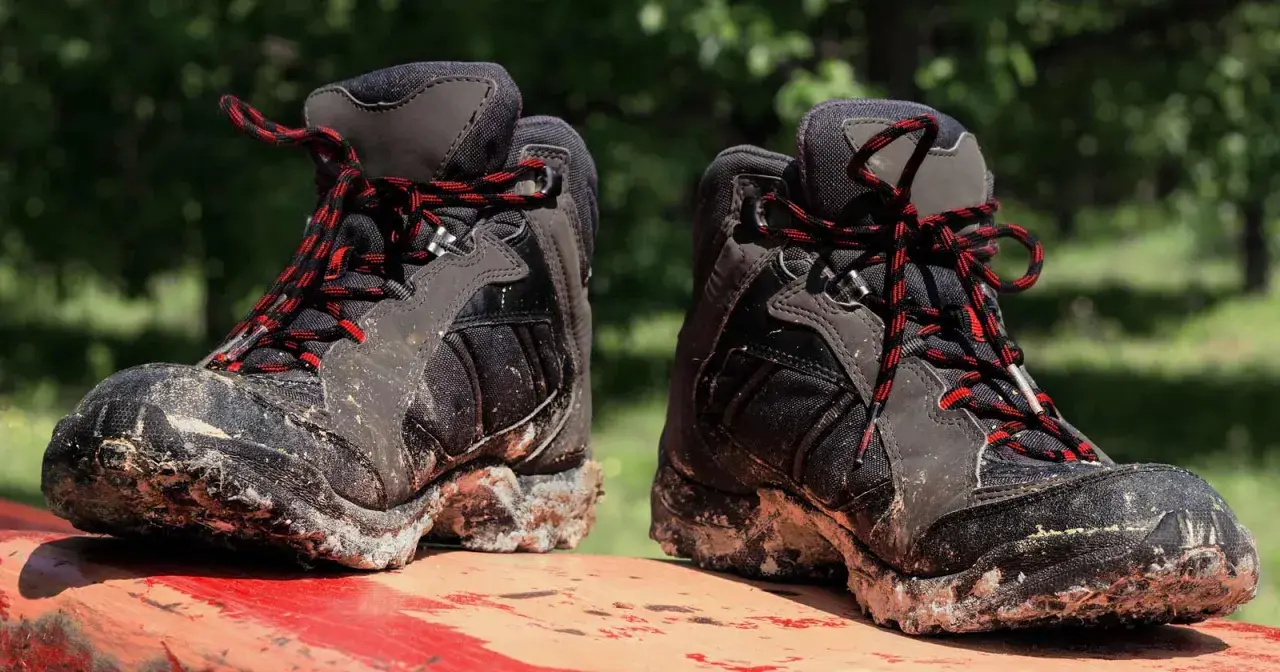
The useful lifespan depends more on miles than on the calendar
- Most hiking boots land in a rough 500 to 1,000-mile range.
- Light weekend use can stretch a pair into several years, while hard use can shorten it to one season or two.
- The midsole usually gets tired before the outsole looks completely worn down.
- Waterproofing, stitching, and upper material often fail before the tread is gone.
- Cleaning, room-temperature drying, and proper storage make a real difference.
The mileage range that actually matters
When I look at boot lifespan, I start with mileage, not age. REI’s gear advice points to roughly 500 miles for many hiking boots, and the wider outdoor consensus usually places a durable pair somewhere in the 500 to 1,000-mile zone. That sounds broad because it is broad, and that is the honest answer: a boot that sees dry, occasional day hikes can stay useful for years, while the same model on rocky descents, wet roots, and loaded backpacking trips may feel tired much sooner.
Calendar time still matters, but mostly as a secondary limit. Foam compresses, adhesives age, waterproof membranes break down, and leather dries out if you ignore it. I usually think of lifespan in two layers: how many trail miles the boot can handle and how long the materials can stay healthy if the boot is stored and cleaned properly.
| Use pattern | Approximate trail miles per year | Realistic lifespan |
|---|---|---|
| Casual weekend hiking | 30 to 75 miles | Often 4 to 10+ years, especially with sturdier leather models |
| Regular local hiking | 75 to 200 miles | Usually 2 to 5 years |
| Frequent backpacking or rough terrain | 200 to 400+ miles | Often 1 to 3 years |
| Heavy use on wet, abrasive, or rocky trails | 400+ miles | Can be less than a year for lightweight boots |
The table is only a planning tool, not a promise. A lightweight boot may hit its limit early even if the outsole still looks fine, while a well-made leather boot can keep going after a few cosmetic scars. That difference makes the failure points more important than the marketing claims, which is what I look at next.
What wears out first on a hiking boot
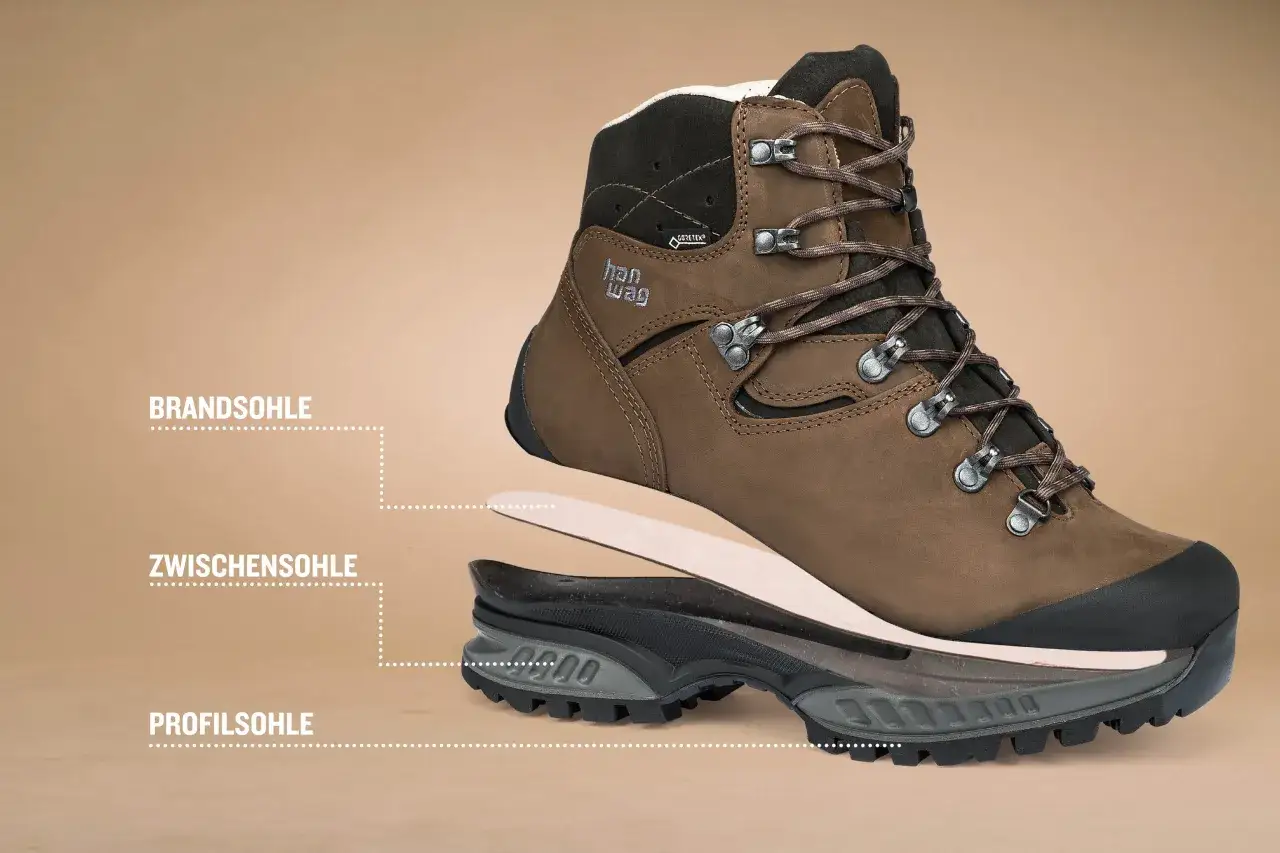
Boots rarely die all at once. Usually one part quietly gives up first, and the whole shoe starts to feel off even if it still looks passable from a distance. The most common weak points are the midsole, the outsole, the upper, and any waterproofing layer or membrane.
The midsole loses its support
The midsole is the cushioning layer between the insole and outsole. When it compresses, the boot starts to feel flat, less stable, and less protective on rocky ground. This is the failure I trust most, because a boot can still look decent while the support underfoot is already gone.
The outsole stops gripping
The outsole is the rubber tread on the bottom. Once the lugs round off or wear unevenly, traction drops on loose dirt, wet stone, and mud. I care about this more than pure appearance because worn traction changes how confidently you move, especially on descents and sidehills.
The upper and seams start to break down
The upper is the part that wraps your foot and ankle. If leather cracks through, mesh tears, or stitching opens, the boot loses structure and can also start letting in water. Small cosmetic scuffs are normal; structural splits are not.
Read Also: Hiking Boots Guide - Choose Your Perfect Pair & Avoid Blisters
The waterproof layer stops doing its job
Waterproof boots do not stay waterproof forever. The finish wears off, membranes age, and flex points eventually leak, especially around the toe box and crease lines. Once water starts soaking in quickly even after you clean and reproof the boot, the practical life of that pair is usually close to over.
That is why mileage alone never tells the whole story. A boot can still have tread left and still be too tired to trust, which is exactly where the warning signs become useful.
Signs your boots are done before the tread is gone
Most hikers wait too long because the boot still looks respectable. I would rather use function as the test: if the boot no longer protects, supports, or keeps water out, it is finished even if the lugs still have some shape left. Here are the signs I watch for first.
| Warning sign | What it usually means | What to do |
|---|---|---|
| The boot feels flat or dead underfoot | The midsole has compressed | Retire or replace it if longer hikes still feel harsh |
| Your ankles feel less stable than they used to | Support has softened or the upper has lost structure | Inspect the heel counter, shank, and lacing points |
| Water comes in fast after reproofing | Membrane, seams, or upper material have failed | Treat it as a non-waterproof boot or replace it |
| The sole is separating from the upper | Adhesive failure or serious flex damage | Check whether repair is realistic |
| Uneven wear tilts your stride | Support and alignment are no longer balanced | Compare the pair side by side and test on firm ground |
One simple field test helps more than people expect: walk a few hundred yards on pavement, then on a firm trail, and pay attention to whether the boot still feels planted or just tired. If your feet notice the loss of support before your eyes notice the wear, that is usually the answer. Once you know what failure looks like, the maintenance routine becomes much easier to judge.
How to make them last longer
The boring habits work best here, and I say that as a compliment. Most boots die faster because they are left dirty, overheated, or stored badly, not because they were built badly. REI’s care advice is straightforward on this point, and Salomon says the same thing in a different way: clean off dirt, then dry boots at room temperature instead of blasting them with heat.
- Brush off mud after every real hike. Grit behaves like sandpaper around seams, stitching, and lacing hardware.
- Dry them slowly. Never park hiking boots beside a heater, inside a hot car, or in direct sun for long periods.
- Remove the insoles. This helps the inside dry faster and reduces odor and hidden moisture damage.
- Reproof waterproof boots when water stops beading. If rain starts soaking the upper instead of rolling off, the finish needs attention.
- Rotate pairs if you hike often. Letting one pair fully dry and recover between uses extends the life of the foam and adhesives.
- Replace insoles before the boot feels dead. A fresh insole can restore comfort, but only if the midsole and upper are still healthy.
- Store them cool, dry, and uncrushed. Long storage in garages, trunks, or damp basements is a quiet boot killer.
The part most hikers skip is drying discipline. A wet boot that gets heated hard enough may look fine the next day, but the materials age faster over time, and the damage accumulates. That matters even more once you start thinking about whether repair is worth it.
When repair is smarter than replacement
Not every tired boot belongs in the trash. If the upper is still sound and the problem is mostly the outsole, a resole can make sense, especially on sturdier leather boots. The key distinction is simple: repair works when the structure is still healthy, and replacement makes more sense when the core materials have broken down.
| Boot type | Typical lifespan tendency | Repair outlook | Best use case |
|---|---|---|---|
| Full-grain leather boots | Longest | Often the best candidate for resoling | Heavy loads, rough terrain, long trips |
| Synthetic or mesh-heavy boots | Moderate to shorter | Limited repair options | Lighter hiking and faster movement |
| Waterproof membrane boots | Moderate | Useful until the membrane or seams fail | Wet climates and shoulder seasons |
| Lightweight hiking shoes | Shortest on average | Usually not worth major repair | Day hikes, travel, and less abrasive trails |
Resoling only helps if the upper, stitching, and internal structure still have life left in them. Once the midsole is broken down or the upper is cracked through, the boot may still be technically repairable, but it is usually no longer a good value. That leaves one final question: when do I personally stop trying to save a pair?
The simple rule I use before I retire a pair
I retire hiking boots when the cost of trusting them is higher than the cost of replacing them. If the midsole feels dead, the waterproofing no longer works, and the upper is starting to split, I do not keep squeezing more miles out of the pair just because the tread still looks decent. On the other hand, if the outsole is worn but the upper is clean, supportive, and dry after treatment, I would seriously consider repair before buying again.
My practical rule is this: if a boot still supports my feet, keeps me stable on wet ground, and dries normally after a hike, I keep wearing it. If it no longer does those three things, it is done, no matter how good it looks on the shelf. That is the most reliable way I know to judge lifespan without guessing.