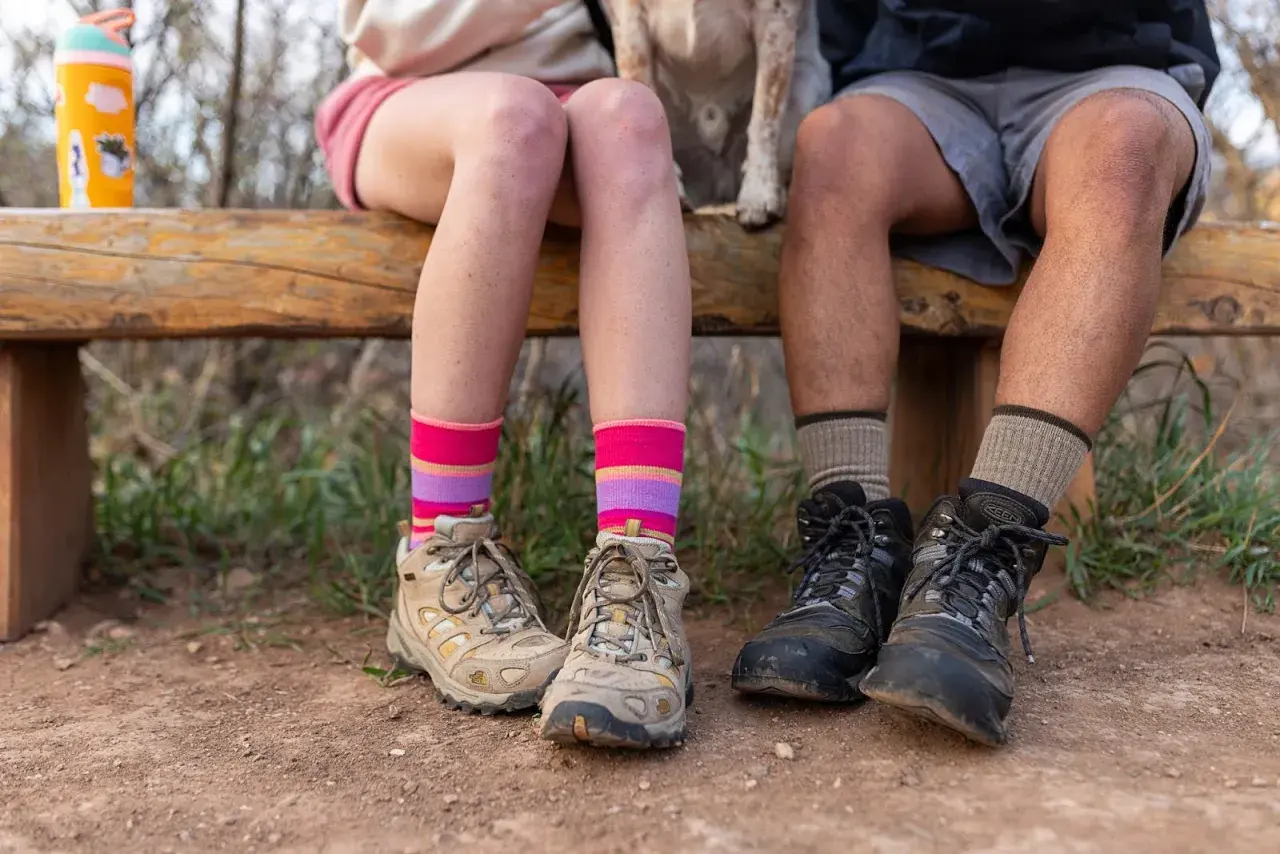
Hiking boots can be built for support and grip, but the wrong sock can still turn a good trail day into a lesson in hot spots and blisters. The real decision is not just about warmth; it is about moisture control, friction, cushioning, and how well the sock and boot work together. In this guide, I break down the best socks to wear with hiking boots, what materials actually perform on the trail, and how I would match sock weight to weather, mileage, and boot type.
The essentials for hiking boots
- Merino wool or wool-nylon blends are the safest default for most hikers.
- Crew-height socks are the most practical match for most hiking boots because they protect the ankle and clear the collar.
- Light cushioning works well in warm weather and with snug boots; medium cushioning is the best all-around choice for most people.
- Cotton is the wrong pick for serious hiking because it holds moisture and dries slowly.
- A snug heel cup and smooth fit matter as much as fabric when you want fewer blisters.
- Always test socks with your boots together; the best pair on paper can feel wrong once the laces are tightened.
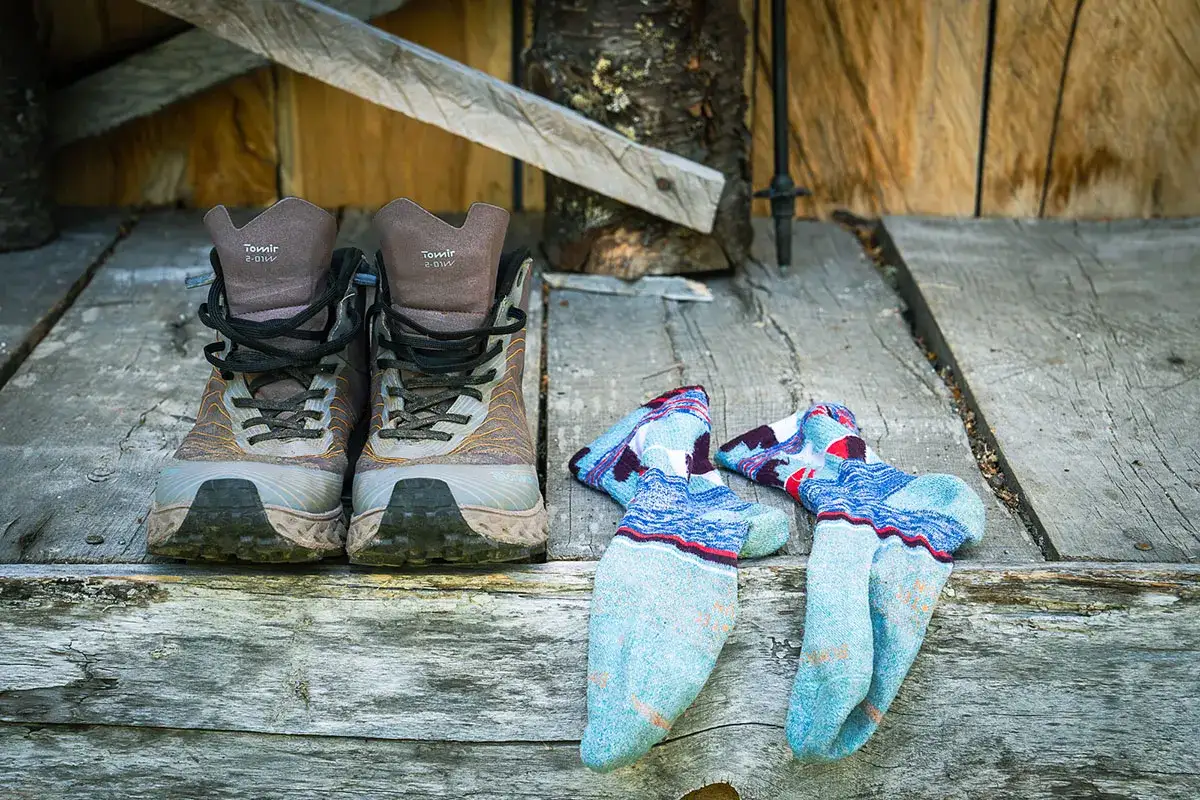
The sock types that work best under hiking boots
If I had to recommend one starting point for most hikers, I would choose a crew-height merino blend with light or medium cushioning. That combination solves the most common problems at once: it manages sweat, gives enough padding for long miles, and sits high enough to protect the ankle from the boot collar.
Here is the practical breakdown I use when someone wants a pair that will actually pull its weight on the trail.
| Sock type | Best for | Why it works | Tradeoff |
|---|---|---|---|
| Lightweight merino crew | Warm weather, day hikes, snug boots | Breathable, soft, and less bulky inside the boot | Less underfoot padding on rough descents |
| Midweight cushioned crew | Most general hiking, mixed terrain, longer days | Best balance of comfort, protection, and moisture control | Can feel too warm in hot climates if the boot already fits tightly |
| Synthetic quick-dry crew | Wet conditions, fast drying needs, budget-conscious buyers | Dries quickly and handles repeated washing well | Odor control is usually weaker than merino |
| Liner plus outer sock | Hikers who know liners help them, multi-day trips, foot-friction issues | Can reduce rubbing and dry faster when rotated properly | More complexity, and it is not necessary for most people |
| Heavyweight winter sock | Cold weather, stiff boots, load-bearing hikes | Extra warmth and cushioning for harsh conditions | Too bulky for summer or already-fitted boots |
That table is the short version. In real life, I think most hikers do best when they start simple, then only add thickness or liners if they have a reason. That leads straight into the part that matters most: what the sock is actually made from.
Material matters more than marketing
REI’s current guidance still points to merino wool as the most useful all-around hiking sock material, with polyester and nylon doing good work in blends when fast drying and durability matter. That matches what I see on the trail: the best hiking sock is usually not the thickest one, but the one that keeps moisture moving and the fit stable.
Here is how I think about the main materials:
- Merino wool is my default recommendation. It regulates temperature well, feels softer than old-style wool, and keeps odor down better than most synthetics. For a long day in hiking boots, that combination is hard to beat.
- Wool blends are often the sweet spot for durability. Nylon or similar fibers help the sock hold its shape, dry a bit faster, and resist wear in the heel and toe.
- Synthetics are useful when drying speed matters most. They can be excellent in humid weather, on stream-heavy routes, or for hikers who wash and reuse socks often on trips.
- Cotton is the easy mistake. It absorbs moisture, stays damp, and raises the odds of rubbing. For short casual walks it may be fine; for real hiking, I would leave it at home.
- Liner socks are a specialist tool. Some hikers like them, but they are not a universal upgrade. I only reach for them when I already know they solve a specific friction problem.
The important point is not that one fabric wins every time. It is that your socks should pull sweat away from the skin and stay comfortable even after the boot has warmed up and the miles have started to add up. Once that is in place, the next decision is thickness.
Thickness should follow your boot fit, not the other way around
Most problems begin when hikers buy thick socks first and then hope the boot will accommodate them. I prefer the opposite approach: fit the boot, then choose the sock weight that keeps the foot secure without squeezing the toes.
Here is the rule of thumb I use:
- Light cushioning is best when the boot already feels snug, the weather is warm, or you want the most breathability possible.
- Medium cushioning is the safest all-around choice for hiking boots because it adds comfort without turning the boot into a tight, cramped shell.
- Heavy cushioning makes sense in cold weather, on rough terrain, or with boots that have room to spare.
There is a limit to how much padding is helpful. If the sock makes the toe box feel crowded, the result is usually worse, not better. Your feet need enough room to swell a little during a long hike. If your boot already feels borderline tight, going thinner is often smarter than going thicker.
That same logic applies to terrain and weather, which is where the sock choice gets more specific.
Match the sock to the hike you are actually doing
I think a lot of hikers buy one pair and expect it to handle every outing. That is convenient, but it is not realistic. A dry summer ridge walk, a muddy coastal route, and a cold mountain approach all ask different things from your socks.
| Hiking situation | Best sock choice | Why I would pick it |
|---|---|---|
| Hot, dry day hike | Lightweight merino crew or light synthetic crew | Keeps bulk down and lets the boot breathe |
| Wet or humid trail | Merino blend or fast-dry synthetic crew | Handles moisture better and reduces clammy friction |
| Long rocky descent | Midweight cushioned crew | Extra underfoot protection helps on repeated impact |
| Cold-weather hike | Midweight to heavyweight merino blend | Warmer, more comfortable, and better for winter boots |
| Backpacking with a heavy pack | Midweight cushioned crew with a snug fit | Balancing support and padding matters more than going ultra-thick |
For Europe-style travel hikes, especially on damp Atlantic paths or in the Pyrenees, I tend to favor a merino blend with moderate cushioning because conditions can shift fast. That same logic also helps on U.S. mountain trails where the day starts cool, warms up, and ends with tired feet. The details that separate a good sock from a bad one are often less obvious than the label suggests.
Small construction details that prevent big problems
Darn Tough’s blister-prevention advice lines up with my own experience: a snug performance fit matters because movement inside the sock creates friction. The sock should stay in place, hug the foot, and cushion the spots that take the most abuse.
When I look at sock construction, these are the features I care about most:
- Crew height for most hiking boots. It helps protect the ankle and keeps the boot collar from rubbing bare skin.
- Targeted cushioning under the heel, ball of the foot, and Achilles. Padding should sit where impact and rubbing actually happen, not everywhere.
- Spandex or elastic support to keep the sock from sliding or wrinkling.
- A smooth toe seam so the front of the sock does not create a pressure point on descents.
- A heel cup that lines up correctly. If the heel is off-center, the sock is probably the wrong size.
If you want a simple height rule, choose a sock that rises above the boot collar far enough to protect the ankle from contact. In practice, that usually means crew or taller, not ankle socks and definitely not low-cut running socks. If the boot is high-cut, I prefer a sock that clears the top with some room to spare, because a bare gap there tends to become an irritation point by mile three or four.
Once the construction makes sense, the final step is avoiding the mistakes that undo all of that work.
The mistakes that ruin an otherwise good setup
Most foot pain on the trail comes from simple mismatches, not exotic gear failures. I see the same errors over and over, and they are avoidable.
- Wearing cotton because it feels soft in the store. Soft is not the same as trail-ready.
- Buying socks by shoe size instead of foot size. A sock that is technically “close” can still bunch in the wrong places.
- Going too thick for a snug boot. That often creates pressure on the toes and top of the foot.
- Choosing low socks with hiking boots. The boot collar and ankle bones will eventually notice.
- Ignoring the seam and heel fit. A good material cannot fully rescue a poor shape.
- Taking brand-new socks on a long hike. Even a good pair should be tested on shorter walks first.
- Skipping a spare pair when rain, stream crossings, or heavy sweat are likely.
I would add one more mistake that people underestimate: overcorrecting after one bad hike. If a sock caused rubbing, the answer is not always “thicker.” Sometimes the real fix is a better fit, a different fiber, or a cleaner heel cup. That is why it helps to keep your kit simple and deliberate.
The small sock kit I would actually pack
If I were building a practical hiking-sock rotation in the United States, I would keep it lean:
- One pair of lightweight merino crew socks for hot weather and low-bulk boots.
- One pair of midweight cushioned crew socks for most regular hikes.
- One spare dry pair in the pack for wet trips or long days.
- One liner pair only if I already knew liners solved a specific blister pattern for me.
That setup covers most trail conditions without turning your gear drawer into a sock museum. The real win is not owning more socks; it is knowing which pair belongs with which boot and which kind of day. If you treat socks as part of the hiking system, not an afterthought, your boots will feel better, your feet will stay drier, and the miles will go by with a lot less noise.