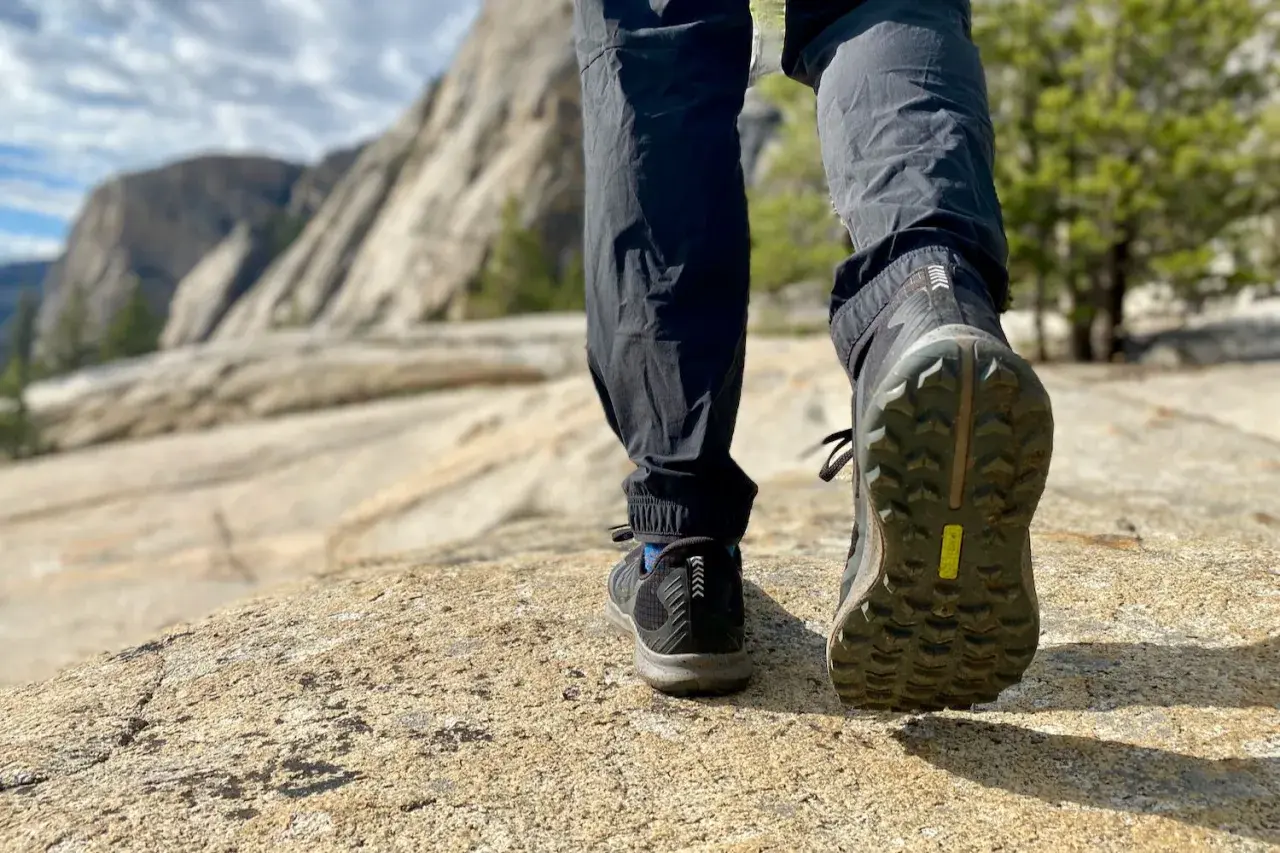
A shoe tread pattern is the part of hiking footwear that decides whether a step feels planted or uncertain. On the right trail, the difference between shallow, tightly packed lugs and deeper, more open ones can change how a shoe handles mud, wet stone, scree, and long descents. This guide breaks down what the tread is actually doing, how to match it to terrain, and where the outsole stops being the whole story.
The traction choices that matter most on the trail
- Deep, widely spaced lugs usually work best in mud, loose dirt, and steep terrain because they bite and shed debris.
- Shallower, tighter patterns feel smoother on hard-packed trails and dry forest roads, but they can slide sooner in soft ground.
- Wet rock is different: rubber compound and contact area matter as much as lug depth.
- Snow and ice need extra caution; tread helps, but persistent ice often calls for microspikes or crampons.
- Fit and platform geometry can make the same outsole feel stable in one shoe and sloppy in another.
What the tread is doing under your foot
When I look at hiking footwear, I read the outsole in three parts: the lugs, the spacing between them, and the rubber itself. The lugs are the raised teeth that dig into dirt and gravel; deeper ones bite better into soft or broken ground, while shallower ones usually feel smoother on hard, dry trails. Spacing matters just as much, because wider gaps help the sole shed mud instead of carrying it like a heavy clay pad, and a heel brake - the more pronounced tread at the back of the heel - helps control steep descents.
The rubber compound changes the character of all of that. Sticky rubber tends to feel more confident on wet stone and polished rock, while firmer compounds usually last longer and resist abrasion better on rough miles. That is why one outsole can feel brilliant in a mountain gully and merely okay on a park path. Once you know what the sole is trying to do, the next question is whether that design matches the ground you actually hike.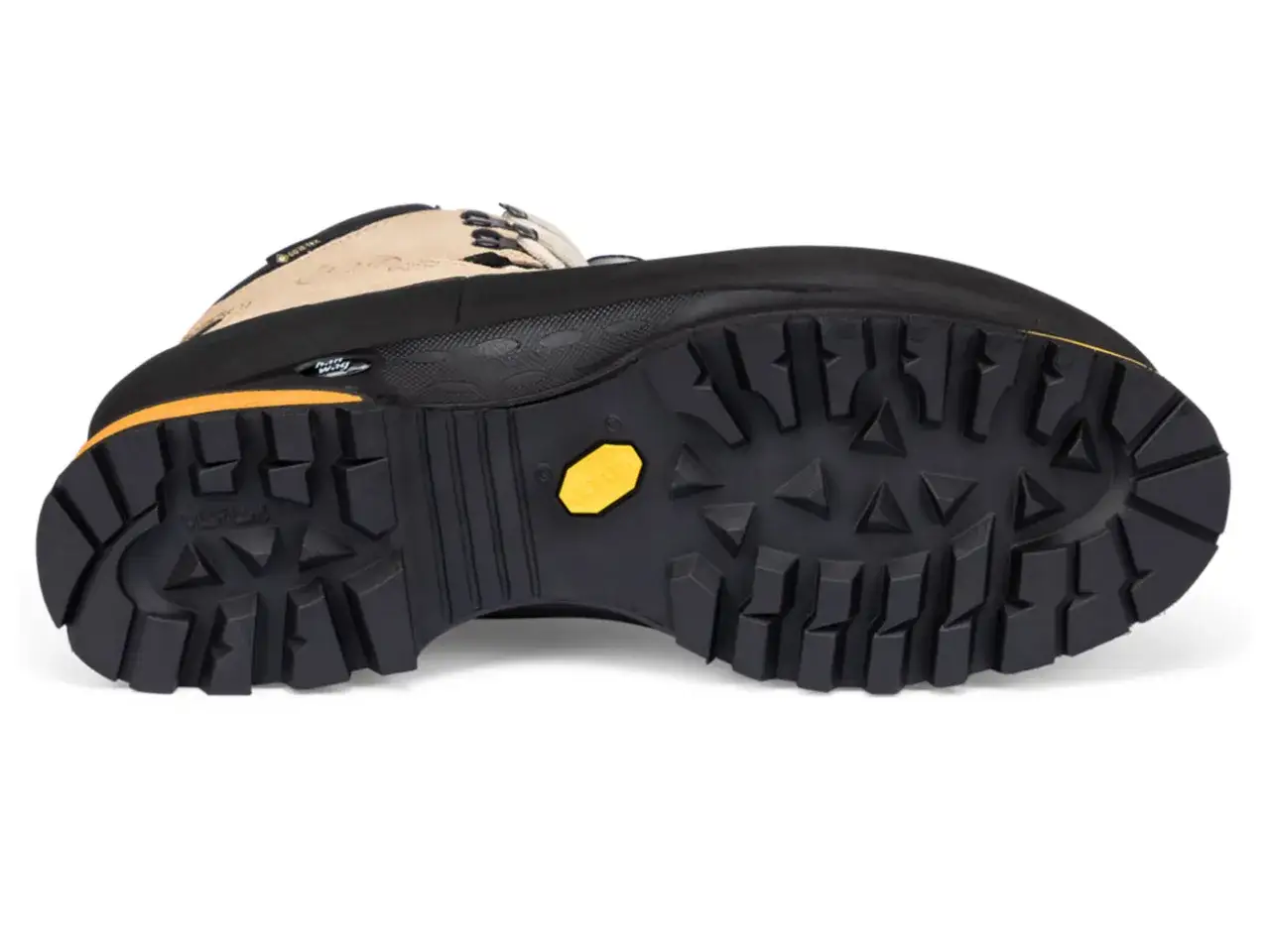
How to match the tread to the terrain you actually hike
The cleanest way to choose a sole is to start with the surface under it. I use a simple rule: the softer and messier the trail, the deeper and more open the lug layout should be; the harder and smoother the surface, the more I value contact area, rubber quality, and a calmer ride. That logic shows up everywhere from muddy New England paths to wet limestone and granite in the Alps.
| Terrain | What to look for | Why it helps | Watch out for |
|---|---|---|---|
| Dry, packed trails and forest roads | Shallow to moderate lugs with tighter spacing | Smoother ride and enough grip on firm ground | Less bite in mud or loose soil |
| Muddy climbs and rain-soft soil | Deeper, wider lugs | Bites into the surface and sheds debris more easily | Can feel clumsy on pavement or hardpack |
| Rocky and uneven mountain routes | Multidirectional lugs with a stable platform and heel brake | Improves purchase on edges and control on descents | May feel harsher on easy, flat miles |
| Wet stone and polished slabs | Moderate tread with sticky rubber and broader contact areas | More surface contact can feel more secure than very tall lugs | Overly aggressive tread can skate instead of bite |
| Snow and early winter trails | Aggressive tread, but with traction devices ready for real ice | Helps in soft or mixed winter ground | Tread alone is not enough when the trail turns icy |
For a middle-ground reference point, a moderate lug depth such as 4 mm often lands in the mixed-terrain zone rather than the mud-specialist zone. That is the kind of outsole I expect to work well on a long day where the trail changes character halfway through, not just on one perfect surface. That trade-off is why the outsole matters, but never in isolation.
Why outsole pattern is only part of the grip equation
A tread can only do so much if the rest of the platform works against it. The midsole - the foam layer between outsole and foot - affects how stable the shoe feels when you land on a tilted rock, and a rock plate can stop sharp edges from forcing the sole to fold around every stone. I also pay attention to the width of the platform and the heel hold, because a shoe that lets the foot slide inside the upper will feel less secure than a slightly less aggressive sole that locks in properly.
- Midsole stiffness matters because a firmer platform usually feels more precise on side-hills, while a softer one can feel smoother on easy miles.
- Rubber coverage matters because full-coverage outsoles usually add durability and bite, while partial coverage saves weight.
- Compound matters because sticky rubber can help on wet stone even when the tread itself is only moderately deep.
- Heel lock matters because a secure heel keeps the outsole from feeling slippery when your foot is moving around inside the shoe.
I would rather wear a well-fitted shoe with a sensible tread and good rubber than an overbuilt model that feels clumsy every time the trail turns from dirt to rock. That is the part many hikers miss, and it is why outsole shape alone never tells the full story. The more you notice those trade-offs, the easier it becomes to avoid the wrong shoe for your kind of trail.
The mistakes that make good tread feel bad
Most traction problems come from mismatched expectations, not bad products. I see the same few errors repeatedly: people choose the most aggressive lug they can find, then take it onto dry hardpack and wonder why the shoe feels noisy and vague; or they buy a shallow, fast-moving sole for summer paths and then try to force it through wet mud and loose hillside gravel.
- Choosing for the hardest day, not the most common one means the shoe may be excellent once a season and annoying the rest of the time.
- Ignoring surface type is a fast way to get surprised by wet rock, clay, or loose shale.
- Forgetting about fatigue matters because a heavy, stiff sole can feel stable at first and tiring by the end of the hike.
- Assuming deeper always means better is a common mistake; deeper lugs help in soft ground, but they can reduce contact on slick stone.
- Overlooking fit matters because if your heel lifts or your foot slides forward, the best outsole on the shelf will not save the descent.
The right answer is usually not the most dramatic outsole in the store. It is the one that keeps working when the trail changes from clean dirt to wet roots, then to stone, then to a long descent. Those mistakes matter because they show up as hesitation first and slips later.
When the tread has worn past useful grip
You do not need a lab test to know when a sole is fading. The signs are practical: the edges of the lugs round off, the heel brake loses its bite, mud stops shedding cleanly, and you begin to notice slips on sections that used to feel routine. I also watch for uneven wear on the inside or outside edge, because that can change how the shoe grips on side-hills and traverses.
- Flattened center lugs mean less purchase on loose soil and wet rock.
- Smoothed heel lugs reduce braking control on descents.
- Asymmetrical wear can make the shoe feel unstable even before the outsole looks obviously worn out.
- Cumulative loss of confidence is often the earliest sign; if you start avoiding the same line on the trail, the tread is telling you something.
There is no universal mileage for replacement, because abrasive rock, heavy loads, and constant pavement crossings wear soles very differently. If the upper is still in good shape and the boot can be resoled, that may be worth considering; otherwise, I judge the shoe by one simple question: would I trust it on a wet descent I already know well? If the answer is no, the tread has probably done its job and moved on. That brings me to the part of the decision I trust most.
A practical way to choose a sole that fits your trail calendar
If most of your hiking happens on maintained paths, forest roads, and dry or moderately mixed ground, I would start with a moderate tread pattern, enough lug depth to stay secure, but not so aggressive that the shoe feels slow on easier miles. If your trips regularly include steep climbs, mud, loose scree, or shoulder-season weather, move toward deeper and more widely spaced lugs with a sticky rubber compound. For winter walking, remember that traction devices may matter more than outsole geometry once ice becomes the real problem.
For the average hiker, the best answer is usually a versatile shoe that handles your most common terrain well, not a specialist pair built for one dramatic scenario. That is the principle I use when reviewing hiking footwear, and it holds up especially well on the varied surfaces you find across American trail networks and European mountain routes. Start with the ground, judge the sole, and only then worry about the rest of the shoe.
A good outsole should disappear on easy miles and become obvious only when the trail gets awkward, slippery, or steep.