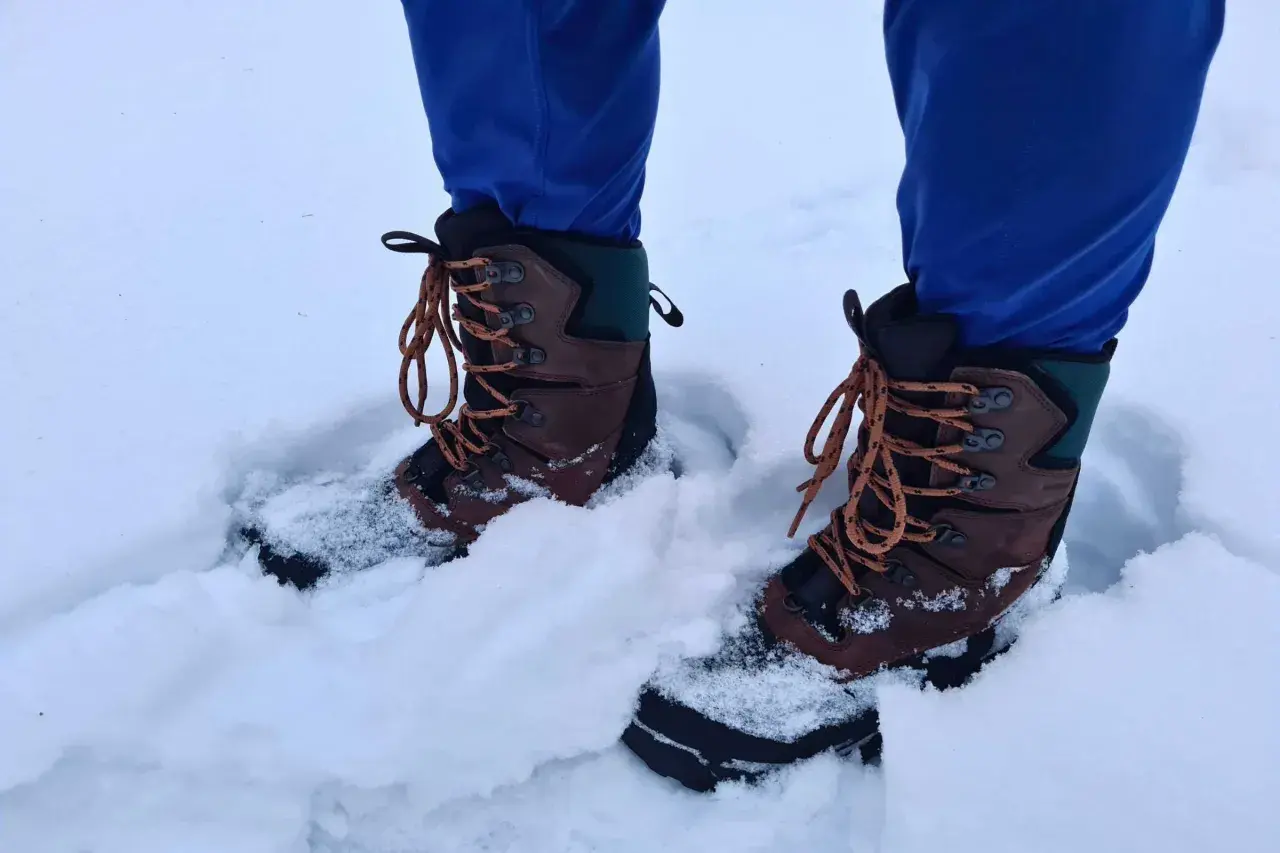
Can hiking boots be used as snow boots? Sometimes, yes, but only when the snow is shallow, the boot stays dry, and you are moving enough to generate heat. I treat the decision as a balance of warmth, waterproofing, and traction rather than a simple yes-or-no label. The right answer changes fast if you move from a packed trail to wet slush, a ski-town sidewalk, or a longer day outdoors.
The decision comes down to warmth, water, and traction
- Uninsulated hiking boots can work in light, packed snow if the outing is short and active.
- Lightly insulated boots in the 100g to 200g range are often the sweet spot for winter hiking.
- Deep snow, wet slush, and long periods of standing usually call for dedicated snow boots.
- Fit matters more in winter because thicker socks and foot swelling can make a summer-size boot feel tight.
- Gaiters and traction aids can extend what hiking boots can handle, especially on packed snow and ice.
The short answer depends on the snow
In practical terms, hiking boots can stand in for snow boots when the conditions are manageable: packed snow, moderate cold, short walks, and active movement. They start to fall short when the snow is wet, deep, or mixed with thawing slush, because that is when warmth and shaft height matter more than trail feel. On a winter city break or a scenic day hike, I would be much more comfortable trusting a waterproof hiking boot than a fashion boot, but I would not treat it as a universal winter solution.
REI’s winter-boot guidance puts around 200g of insulation in the active-hiking range, while 400g is better suited to colder, slower conditions. KEEN makes a similar split, treating 100g as more lifestyle-friendly and 200g as a stronger fit for hiking use. That is the core idea here: the more you move, the less insulation you need; the more you stand around, the more warmth you want.
| Snow condition | Can hiking boots work | Why |
|---|---|---|
| Packed snow on a maintained trail | Usually yes | Traction and moderate warmth are often enough if the pace stays steady. |
| Cold, dry sidewalks or short winter walks | Yes, if the boot is waterproof | You are moving in and out of warmth, so bulk matters less than comfort. |
| Wet slush and thawing snow | Sometimes | Waterproofing becomes the main issue, and many hiking boots are only partly ready for that job. |
| Deep snow or drifting powder | Usually no | Snow can spill over the collar and soak the upper before the boot has a chance to keep up. |
| Long periods of standing outside | No, in most cases | Trail comfort does not replace winter warmth once you stop generating body heat. |
That distinction leads straight into the next question: what actually makes one boot better than another in snow, and which features matter most in real use?
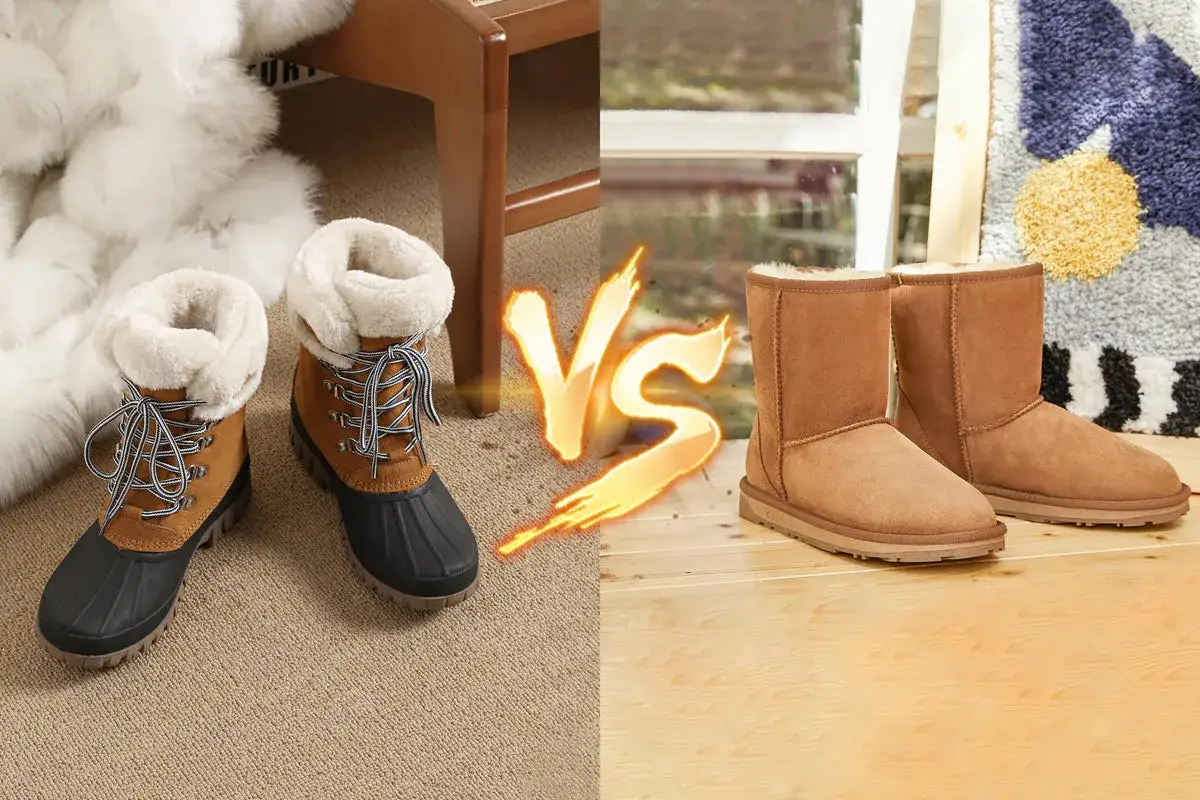
What separates a hiking boot from a true snow boot
The biggest difference is not the label on the box. It is the mix of insulation, waterproofing, collar height, and traction underfoot. A boot can look rugged and still fail in winter if it leaks at the tongue, traps too little heat, or has a sole that is great on dirt but mediocre on frozen pavement.
| Feature | Why it matters in snow | What to look for |
|---|---|---|
| Waterproofing | Melted snow soaks a boot faster than most people expect. | A waterproof-breathable membrane blocks liquid water while still allowing some vapor to escape. |
| Insulation | Insulation traps heat, but too much can make active hiking sweaty. | Think roughly 100g for lighter city use, around 200g for winter hiking, and 400g for colder, slower conditions. |
| Height | Higher collars help keep snow from spilling in. | The deeper the snow, the more shaft height matters. |
| Traction | Snow and ice punish soft, shallow tread patterns. | Look for a winter-friendly outsole, and add microspikes when the surface turns icy. |
| Flex and stiffness | A boot that is too soft can feel unstable on frozen ground. | Choose enough structure to stay balanced, but not so much stiffness that walking becomes tiring. |
Once you look at those features together, the picture gets clearer: a hiking boot can behave like a snow boot if it has the right upper, enough insulation, and real winter grip. The next step is figuring out the situations where that crossover actually works well.
When hiking boots work well in winter
There are a few winter scenarios where I would happily choose hiking boots over bulky snow boots.
- Packed trails after fresh snow - If the path has already been compacted, a waterproof hiking boot usually has enough grip and warmth for steady movement.
- Cold but dry days - When snow is limited and temperatures are low rather than wet, an uninsulated or lightly insulated hiking boot can feel more natural than a heavy snow boot.
- City walking between indoors and outdoors - For a winter trip with cafés, transit, and short walks, trail comfort often matters more than deep-snow protection.
- Short scenic hikes - If you are out for an hour or two and not stopping much, a winter-ready hiking boot can be the better all-around choice.
The common thread is movement. Hiking boots do their best work when your feet are active, your route is reasonably maintained, and the snow is not trying to get over the top of the boot. That makes them useful in a lot of real-world winter travel, but not in every one.
How to make a hiking boot more winter-ready
This is where small adjustments pay off. A solid pair of hiking boots can feel dramatically more capable in winter if you prepare them properly instead of wearing them exactly as you would in July.
- Use the right socks - Wool or synthetic socks help manage moisture and keep warmth even when conditions fluctuate. Cotton is still a bad winter choice because it holds water and cools down fast.
- Leave room for winter fit - A boot that fits perfectly with a thin summer sock can feel cramped once you add insulation. I want enough space to wiggle my toes without my heel sliding around.
- Add gaiters - Gaiters are fabric covers that seal the gap between your boot and pant leg, which helps keep powder, slush, and debris from sneaking in over the top.
- Carry traction aids - Microspikes are slip-on traction devices with short metal points that bite into hard snow and ice. They are one of the simplest ways to make a hiking boot feel safer on frozen ground.
- Dry them thoroughly - Wet liners and damp insoles quietly ruin the next outing. If you hike in snow more than once a week, drying time becomes part of the system.
- Check snowshoe compatibility - If you plan to use snowshoes, make sure the boot collar and sole do not fight the bindings. Extra bulk can make a boot uncomfortable even if it looks suitable on paper.
These upgrades do not turn every hiking boot into a true winter boot, but they can close the gap enough for a lot of trips. Once the snow gets deeper or wetter, though, the compromise starts to show quickly.
When I would choose snow boots instead
If I am expecting real winter rather than just winter scenery, I switch to snow boots. Deep snow, thawing slush, freezing rain, and long stationary stretches are the situations where dedicated snow boots earn their keep.
I also stop trying to make hiking boots do everything if my feet run cold even when I am moving. That usually tells me the boot is doing trail duty, not winter duty. A snow boot gives you a taller upper, more insulation, and a little more forgiveness when the weather turns sloppy.
- Deep or untracked snow - The collar height and upper coverage become more important than trail comfort.
- Wet slush or freezing rain - Moisture control matters more than breathability once the surface turns messy.
- Long periods of standing still - Waiting outside, watching kids, or lingering at a viewpoint exposes the weakness of lightly insulated footwear.
- All-day winter use - If one pair has to handle sidewalks, snowbanks, and cold evenings, the warmer boot is usually the safer bet.
In other words, if the day starts to look more like a winter commute than a trail walk, the hiking boot is no longer the best tool. That is the point where a proper snow boot stops being overkill and starts being the practical choice.
The rule I use before I pack one pair for a winter trip
I keep the decision simple. If I am moving, the route is packed, and the forecast is dry-cold, I can usually get by with a waterproof hiking boot. If I am facing wet snow, deeper drifts, or any real amount of standing around, I pack snow boots and stop negotiating with the weather.
That rule works well for winter travel because it keeps the gear matched to the day instead of to the label on the boot. A good hiking boot can absolutely pull winter duty, but only when the conditions stay within its range. Once they do not, the smarter choice is to switch footwear and keep your feet warm, dry, and stable all day.