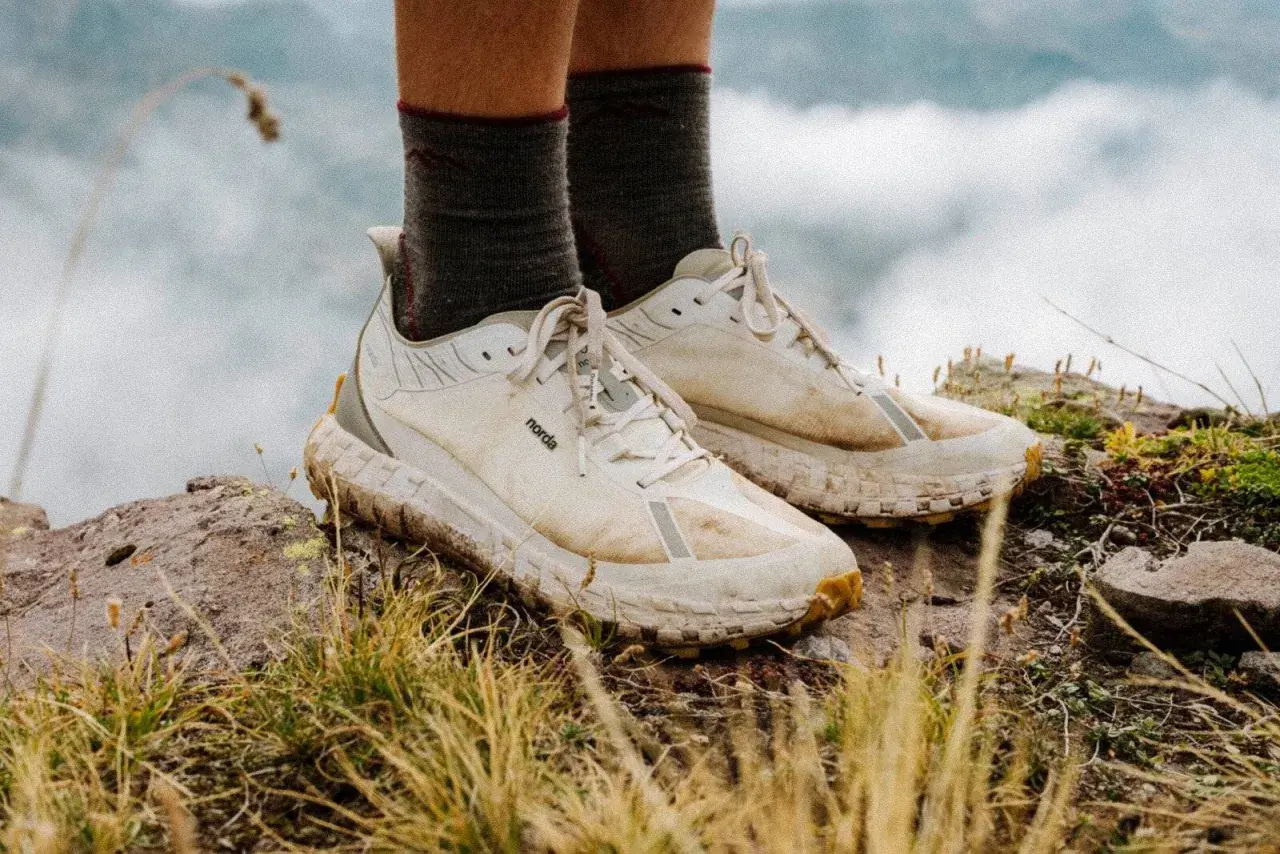
The 001A sits in a very specific corner of hiking footwear: light enough for fast movement, durable enough for hard trail mileage, and cushioned enough to stay comfortable when the route gets long. I’m looking at what makes the Norda 001A different, how it behaves on real terrain, and whether the standard shoe or the weatherproof G+ version makes more sense for the kind of hiking most people actually do.
What matters most before you buy
- Best use: fast hiking, long trail days, mixed terrain, and trail running.
- Fit: it runs slightly small, so most people should go up half a US size.
- Specs that matter: 5 mm drop, 26 mm heel / 21 mm forefoot, 5 mm lugs, and 268 g for a men’s US 8.5.
- Weather choice: the standard shoe is water-resistant; the G+ version adds a 10,000 mm membrane.
- Value: expensive upfront at $295 CAD, but built for unusually high mileage.
What the 001A is built to do
Norda positions the 001A as its workhorse: an ultra-distance trail model updated from the original 001 with a new Arnitel TPEE midsole for more responsiveness and energy return. In plain English, that means the ride is meant to feel cushioned without turning mushy, which is exactly what I want when a hike stretches from a simple out-and-back into a full-day mountain route.
The rest of the build follows the same logic. The seamless Dyneema upper is there for abrasion resistance, the Vibram soleplate handles traction, and the 5 mm lug depth lands in the practical middle ground between smooth hardpack and more aggressive mountain tread. It is a premium construction package, but it is not an overbuilt boot hidden inside a sneaker shape.
| Spec | 001A |
|---|---|
| Drop | 5 mm |
| Stack | 26 mm heel / 21 mm forefoot |
| Weight | 268 g / 9.45 oz in men’s US 8.5, 232 g / 8.18 oz in women’s US 8 |
| Lug depth | 5 mm |
| Upper | Seamless Dyneema |
| Midsole | Arnitel TPEE |
| Water resistance | Water-resistant, not waterproof |
| Price | $295 CAD |
That combination makes more sense once you look at how it handles actual trail conditions.
How it behaves on the kind of terrain hikers actually face
This is where the shoe makes sense for hikers. On hardpack, rocky forest trails, gravel tracks, and alpine-style paths, it feels like a fast, controlled shoe with enough protection to stay comfortable over distance. I would trust it on long day hikes in places like the Dolomites, the Pyrenees, or the Rockies, especially when the plan is to keep moving instead of plodding.
What stands out is the balance. The cushioning protects your feet on descents, but the shoe still keeps enough ground connection to feel stable on uneven rock. That is a useful trait for hikers who dislike the disconnected feeling of bulky max-cushion shoes.
Where it shines
- Fast day hikes and light fastpacking
- Mixed trail running and hiking
- Hardpack, gravel, and rock
- Long descents where underfoot protection matters
- Shoulder-season miles where quick drying matters
Read Also: How to Choose Hiking Boots That Fit the Trail and Your Feet
Where I’d be cautious
- Very deep mud or soft boggy ground
- Heavily loaded backpacking
- Routes that demand real scrambling
- Situations where you want the support of a taller hiking boot
The standard version is also a better wet-weather shoe than many people expect. Dyneema does not absorb water, so the upper itself is naturally water-resistant, but the woven construction still lets air move through and water drain out rather than trapping it. That is useful for stream crossings and drizzle, but it is not the same as a sealed waterproof membrane.
Fit is the part that decides whether those strengths actually show up on your feet.
Fit, sizing, and comfort details that matter
The most practical sizing note is simple: the 001A runs slightly small. Norda recommends going up half a US size, and if you are between sizes I would follow that advice rather than gamble on a tighter fit. That matters even more on hikes, because feet swell during long climbs, warm weather, and late-afternoon descents.
The toe box is anatomical, which means it is shaped to let the forefoot splay more naturally. That does not make it a wide shoe, but it does make it more forgiving for hikers whose toes need room on steep downhill sections. The midfoot and heel are still secure, so the fit feels precise rather than sloppy.
- Best fit profile: neutral to slightly wide forefoot, secure midfoot, and a runner-like preference for lockdown.
- Orthotics: the insole is removable, so custom inserts are easy to use.
- Break-in: the updated midsole is meant to feel comfortable quickly, not after a long break-in period.
- Good sign: if you want toe room without a loose heel, this shape makes sense.
If you usually hate shoes that pinch in front but still want a snug heel for technical footing, that combination is one of the 001A’s better traits. The real fork in the road now is whether you need the standard upper or the G+ version.
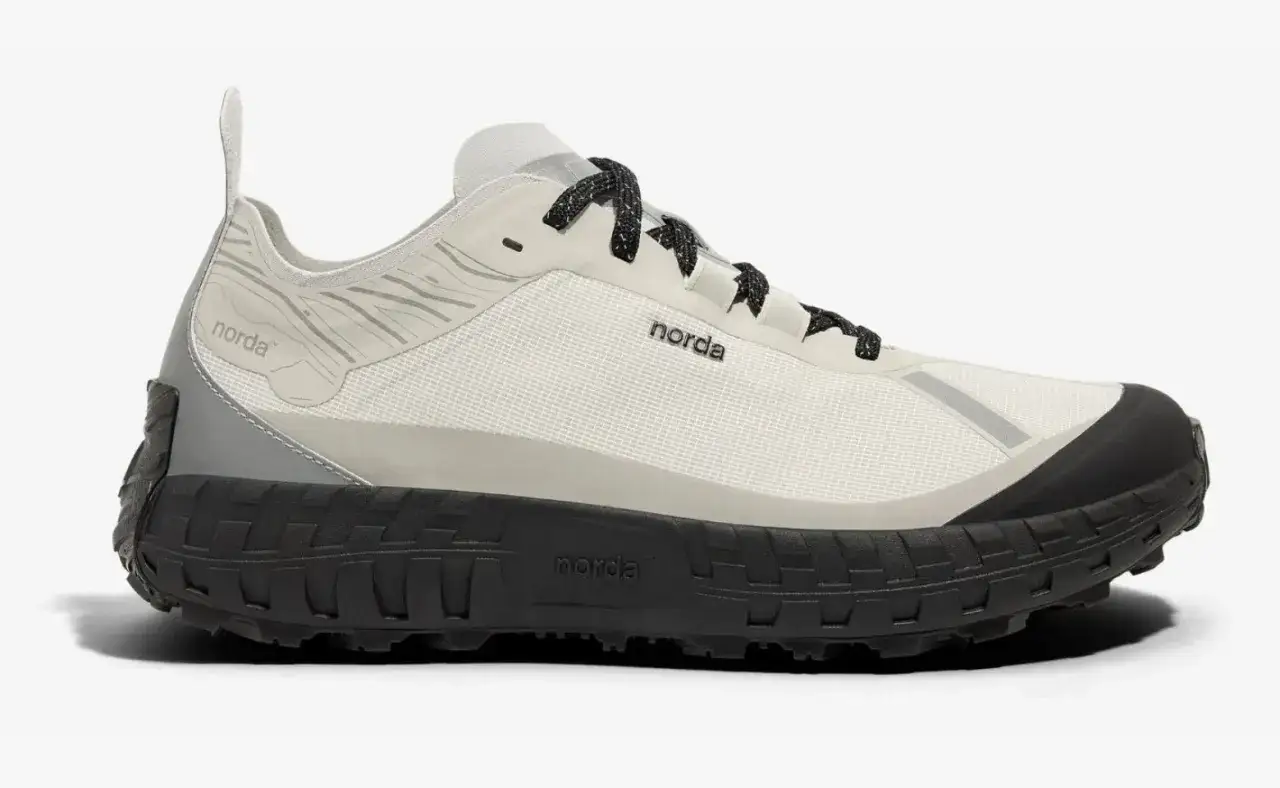
Standard 001A or G+ and how the rest of the lineup compares
For most hikers, the standard model is the cleaner pick because it breathes better and drains faster. The G+ version makes sense when wet grass, cold mornings, and steady rain are part of the story, because the graphene membrane adds 10,000 mm of water resistance and extra thermoregulation without changing the basic platform.
| Model | Best for | Why it matters | Tradeoff |
|---|---|---|---|
| 001A | Mixed trail mileage, fast hikes, and warm-to-mild conditions | Cushioned, durable, and naturally drains well | Not waterproof |
| 001A G+ | Wet, cold, and shoulder-season hiking | 10,000 mm membrane with added weather protection | Warmer and less airy |
| 003 | Hiking, scrambling, and approach terrain | More hike-scramble hybrid behavior | Less like a pure trail runner |
| 002 | Technical terrain and lower-to-the-ground precision | More direct ground feel | Less long-distance cushioning |
I like this comparison because it shows the real decision. The 001A is the easiest all-rounder, the G+ is the weather-proofed version, the 003 is the more hike-scramble hybrid, and the 002 is for people who want more ground feel on technical ground. If your route includes hands-on rock or lots of approach-style movement, I would move toward the 003 before I would stretch the 001A into a role it was not designed for.
The final question is whether that premium construction justifies the price.
Why the durability story matters more than the sticker price
At $295 CAD, the 001A is expensive by any normal trail-shoe standard. That said, Norda’s argument is that the shoe should last longer than typical mesh-based trail runners, and the materials do support that logic: Dyneema for abrasion resistance, a resilient midsole compound, and a durable Vibram outsole. The brand’s own guidance puts replacement around 700 km / 500 miles, while noting that some athletes go past 1,600 km / 1,000 miles before performance falls off.
I would treat that higher mileage claim as plausible, not guaranteed. Terrain matters, body weight matters, and sharp rock chews through any shoe faster than forest paths do. But if you hike often, travel with one pair that does multiple jobs, or run the same shoe on weekends and on vacation, the cost-per-wear argument becomes much stronger than the headline price suggests.
- Good value case: frequent trail use, mixed hiking and running, rough terrain, and a preference for long-lived materials.
- Weak value case: a few casual hikes per season, mostly flat terrain, or a strict budget.
- Hidden benefit: fewer compromises if you need one shoe to cover travel, training, and day hikes.
Once you look at it that way, the 001A reads less like a luxury shoe and more like a durable tool that happens to cost more upfront.
Which hikers I would put in the 001A
If your hikes are fast, varied, and often a little ambitious, this is a strong candidate. I would choose the standard 001A for warm or mixed-weather day hikes, light fastpacking, and travel when I want one shoe that can handle city pavement, trailheads, and rocky paths without feeling out of place. I’d choose the G+ version if spring storms, cold mornings, or repeated wet grass are part of the plan.If, on the other hand, your hiking is more about heavy packs, ankle protection, and very rough off-trail terrain, I would not force this shoe into a job it does not want. In that case, a real hiking boot or a more hiking-biased model makes more sense. The 001A is best when you want trail-shoe efficiency without giving up durability or foot security.
For me, that is the real value of the 001A: it gives hikers a premium, long-distance option that feels agile enough for movement and substantial enough for serious mileage, and it does so without pretending to be a boot.