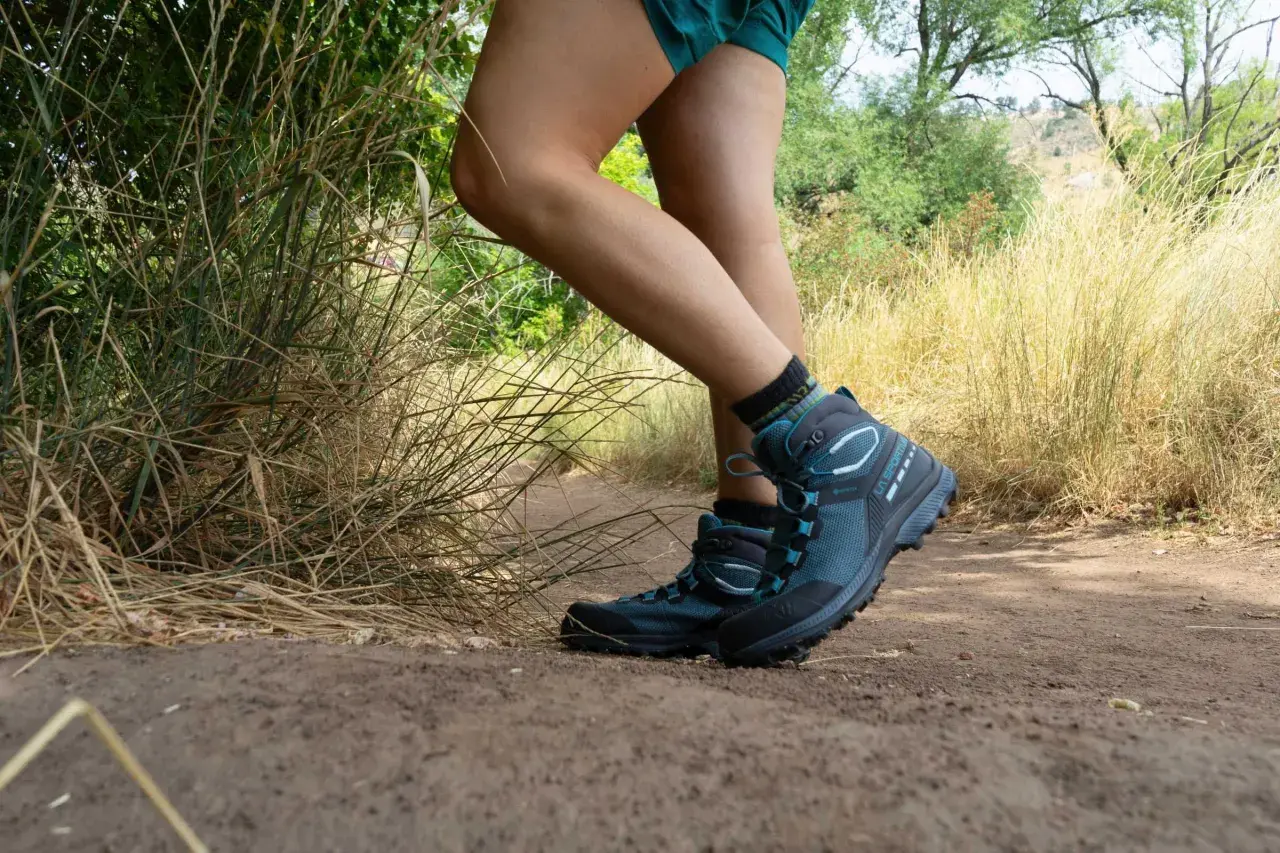
On rough, wet, or long mountain days, the right boot changes the whole hike: your foot sits more securely, sharp rock feels less punishing, and fatigue builds more slowly. The benefits of hiking boots show up most clearly when the trail gets uneven, the weather turns messy, or the pack on your back stops feeling light. In this article, I break down where boots genuinely help, where they are overkill, and how to choose a pair that matches real trail conditions rather than a generic gear list.
The short answer for hikers choosing footwear
- Boots matter most on rocky, muddy, steep, or cold routes where stability and protection beat pure speed.
- The biggest gains come from a stiffer platform, better toe protection, and more predictable traction on broken ground.
- They are usually a stronger choice for backpacking or any hike with a heavier load.
- Waterproof boots help in slush, wet brush, and shoulder-season weather, but they usually run warmer.
- Fit is non-negotiable: a poorly fitted boot erases most of the advantage.
What hiking boots improve on the trail
I think of hiking boots as a stability tool first and a footwear category second. The collar matters, but the real value comes from how the boot controls twisting, absorbs rough ground, and shields the foot from the small impacts that add up over a long day.
| Benefit | What it changes on the trail | Where it matters most |
|---|---|---|
| Support | A stiffer platform helps keep the foot centered on sidehills and loose descents. | Rocky, uneven, or off-camber terrain |
| Protection | Toe caps, tougher uppers, and firmer midsoles blunt repeated impacts from stones and roots. | Talus, scree, brush, and rooty forest paths |
| Traction | Deeper lugs and firmer outsoles grip mud and broken ground more predictably. | Wet trails, steep downhill sections, and loose soil |
| Weather resistance | Higher collars and waterproof options keep out splash, slush, and snowmelt better than low-cut shoes. | Rain, shoulder season, and cold mornings |
| Durability | More robust materials usually wear more slowly than light mesh uppers. | Frequent hiking and multi-day trips |
The technical word that matters here is torsional rigidity, which is simply how much a boot resists twisting side to side. That stiffness, combined with a secure heel and midfoot fit, is what makes a boot feel composed when the ground keeps changing under you. Once you feel that difference on a rocky descent, it becomes much easier to see where boots earn their place.
When the extra structure is worth it
Boots are not automatically the right answer, but there are situations where I would reach for them without hesitation. If I expect loose rock, steep downhills, cold rain, or a long day with a loaded pack, I want more underfoot structure and more protection around the foot.
- Backpacking with real weight. Heavier loads increase the stress on ankles and feet, and some heavy-duty boot categories are designed for loads above 80 pounds.
- Rough, broken terrain. Rocky ridgelines, scree, talus, and rooty trails reward a boot that stays stable instead of folding around every edge.
- Wet or cold conditions. A higher collar and weather-resistant build help when the trail is soaked, muddy, or lined with snowmelt.
- Long descents. Downhill hiking punishes toes and forefoot pressure, so a firm boot can feel much kinder by the end of the day.
- Trips where fatigue compounds. On multi-day routes, the small savings in foot protection and support often matter more than shaving a few ounces.
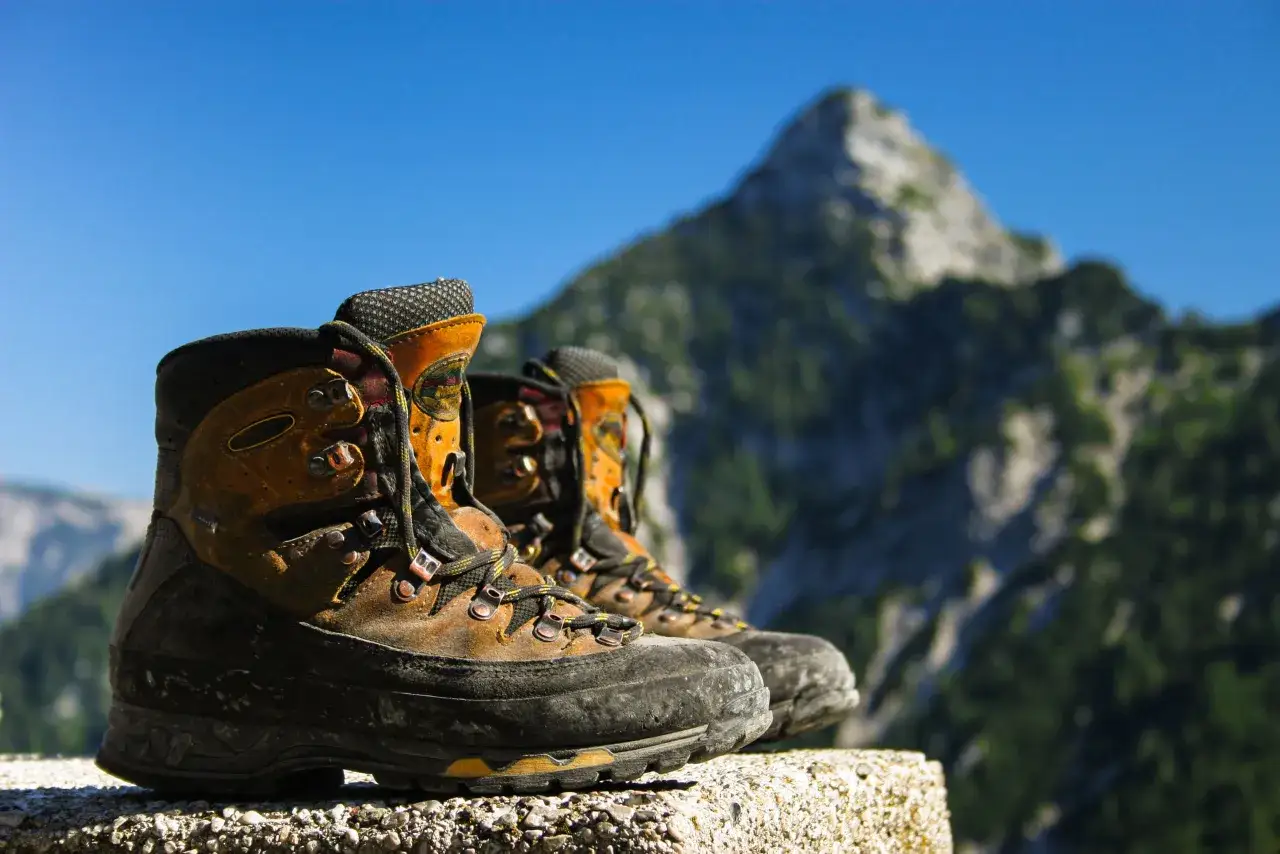
That is why boots still make sense on many mountain routes, including the kind of rocky or damp terrain that shows up on European passes, coastal paths, and high routes. The more the trail behaves like uneven ground instead of a groomed path, the more those extra layers of structure start paying you back.
Boots versus hiking shoes and trail runners
The real choice is usually not “boots or nothing.” It is boots versus lighter hiking shoes versus trail runners, and each one solves a slightly different problem. REI’s current guidance lines up with that view: boots win on stability, durability, and protection, while trail runners win on breathability and speed.
| Criteria | Hiking boots | Hiking shoes | Trail runners |
|---|---|---|---|
| Support | Highest support and stiffness | Moderate support | Least support, but lightest |
| Best use | Rugged terrain, backpacking, cold or wet weather | Mixed terrain, day hikes, moderate packs | Fast day hikes, dry trails, light packs |
| Weight | Heaviest | Middle ground | Lightest |
| Drying speed | Slowest | Faster than boots | Fastest |
| Protection | Most toe and underfoot protection | Good compromise | Least protection |
My practical rule is simple: if the hike is light, dry, and fast, lighter footwear can be the smarter move. If the route is steep, rocky, muddy, or loaded, boots stop being a luxury and start becoming sensible gear. That trade-off leads directly into the costs you pay for that extra structure.
The trade-offs I would plan for
Boots solve real problems, but they do not solve them for free. AMC notes that a typical pair of midweight hiking boots often lands around 2 to 3 pounds per pair, with heavy-duty styles closer to 4 pounds. You feel that difference after thousands of steps, especially on flat miles where protection matters less than efficiency.
- Weight: More material usually means more fatigue on long, easy trails.
- Break-in: Many boots need time before they move naturally with your foot, so I never take a brand-new pair on a big trip.
- Breathability: Waterproof membranes help in wet conditions, but they can trap heat when the weather is hot.
- Cost: A more durable boot often costs more up front, even if it lasts longer.
- Stiffness: Great on broken terrain, but sometimes clunky on smooth trail or pavement approaches.
That does not make boots worse. It just means the upside is terrain-specific. The better the hike matches those strengths, the better the purchase will feel after the first few long miles.
How I would choose a pair for a real route
When I shop for hiking footwear, I start with the route and work backward. That keeps me from buying a boot that looks serious but does not actually fit the hike I plan to do.
- Match the boot to the terrain. For rocky or uneven paths, choose more stiffness and better toe protection. For smoother terrain, a lighter boot or shoe may be enough.
- Check heel lock first. Your heel should stay seated without slipping upward, because heel movement is a fast route to blisters.
- Leave room in the toe box. Toes should have space to splay and move, especially on descents when the foot slides forward.
- Decide on waterproofing honestly. If you hike mostly in hot, dry weather, breathability may matter more than a membrane. If you hike in slush, wet brush, or shoulder season, waterproofing earns its keep.
- Test them on descents. I care less about how boots feel standing still in a shop and more about how they behave when the trail slopes down and the foot keeps bracing.
A boot that fits correctly should feel secure without squeezing. That balance is what makes the rest of the benefits possible, because support only helps when the boot is actually working with your foot rather than fighting it.
Common mistakes that cancel out the advantage
Most bad boot experiences come from choosing the wrong pair or wearing the right pair the wrong way. The boot itself is often not the problem.
- Buying for ankle height alone. A tall collar does not fix poor fit or a soft, unstable sole.
- Ignoring heel slip. If the heel moves, blisters usually follow.
- Choosing waterproof by default. On hot summer hikes, waterproof models can feel swampy and slow to dry.
- Skipping short test hikes. A boot that looks perfect in the house can still rub on the first real descent.
- Assuming boots replace good footwork. Foot placement still matters on loose rock, mud, and steep ground.
Those are small mistakes, but they compound fast. A well-built boot can only deliver its full value when the fit, terrain, and pacing all make sense together.
What I would recommend for your next mountain weekend
If I were heading out for a rocky, wet, or shoulder-season hike, I would choose boots first and lighter footwear second. That is especially true on steep trails, long descents, and routes where a heavier pack or unpredictable weather makes every step a little more demanding. On smoother summer routes, I would happily drop down to a lighter shoe if it let me move faster and breathe better.
The best pair is the one that fits your route, your pack, and your tolerance for weight. If you are choosing only one thing to remember, make it this: the right boot should make hard ground feel manageable, not turn an easy walk into a chore.