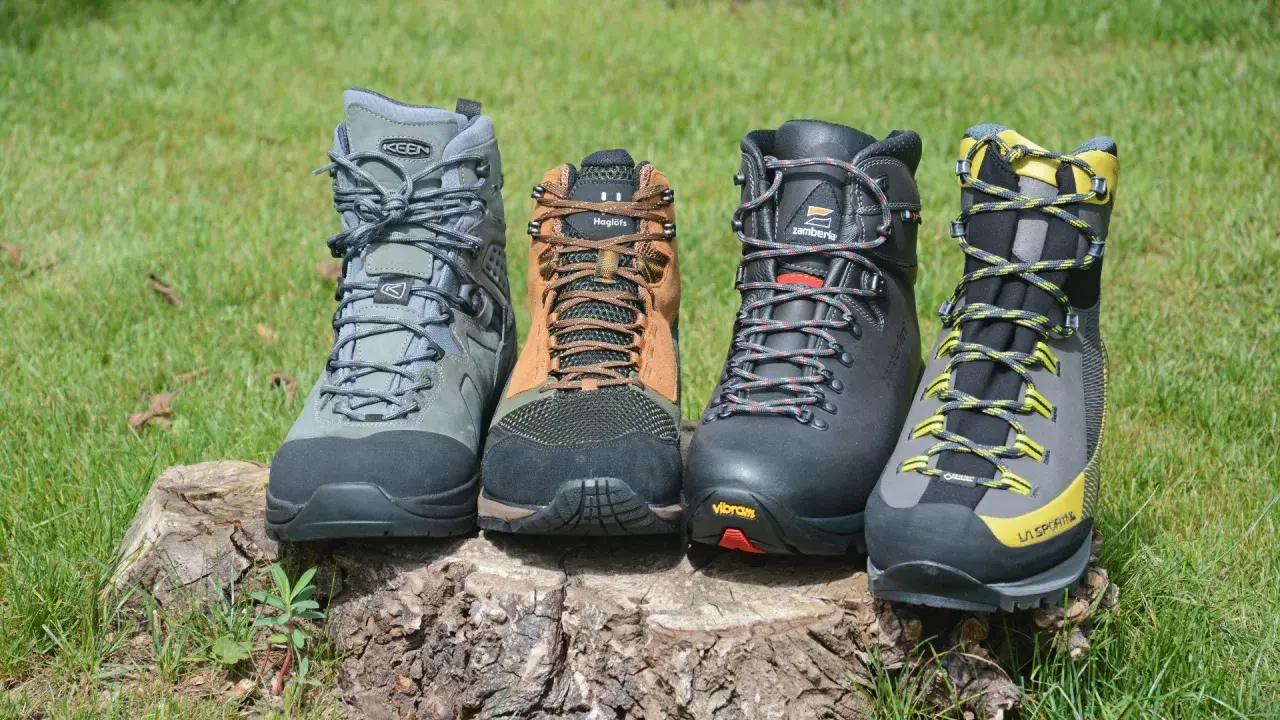
Hiking boots are rarely made from a single material. Most pair leather or synthetic uppers with rubber outsoles, foam midsoles, textile linings, and sometimes a waterproof membrane hidden inside the boot. The short answer to what are boots made of is that the right mix depends on the trail: durability for rough ground, breathability for warm weather, and weather protection when the forecast turns wet.
The material mix matters more than the logo on the side
- The upper is usually leather, synthetic fabric, or a blend of both.
- The outsole is almost always rubber, because grip and abrasion resistance matter most there.
- The midsole is often EVA or PU foam, which changes cushioning and support more than most buyers expect.
- Waterproofing is usually a hidden membrane or bootie, not the outer leather or mesh itself.
- Heavier materials usually last longer and protect better, but they dry more slowly and feel warmer.
- Fit and construction matter as much as material choice if you want the boot to work on real trails.
Boots are built as a system, not a single material
When I look at a hiking boot, I do not think of it as one shell. I think of a stack of parts that each solve a different problem: keeping the foot in place, cushioning the landing, resisting twist, gripping rock, and handling water. Once you separate those jobs, the material choices stop looking random and start making sense.
| Boot part | Common materials | What it changes on the trail |
|---|---|---|
| Upper | Full-grain leather, nubuck, nylon, polyester, ripstop mesh, synthetic leather | Durability, breathability, weight, and break-in feel |
| Lining | Mesh, polyester, recycled textiles | Next-to-foot comfort and moisture management |
| Waterproof layer | PU or ePE membrane, waterproof bootie | Keeps liquid water out, but usually adds warmth and reduces airflow |
| Midsole | EVA, PU foam, algae-based blends | Cushioning, fatigue, and load support |
| Shank | Nylon, TPU, composite materials | Twist resistance and stability under a backpack |
| Outsole | Rubber, recycled rubber, carbon rubber | Grip, wear resistance, and control on descents |
A shank is the stiff insert between the midsole and outsole that keeps the boot from folding and twisting too easily. EVA, a lightweight foam, usually makes a boot feel softer underfoot; PU is denser and often more durable. That is why two boots can look similar on the shelf and feel completely different on day three of a wet mountain walk.
Once you know what each layer does, the next step is deciding which upper material gives you the best balance of durability, weight, and drying time.
Leather, synthetic, and hybrid uppers each solve different problems
The upper gets most of the attention because it is the part people can see, touch, and buy for. In practice, though, the best upper is the one that fits the kind of walking you actually do, not the one with the most romantic story attached to it. I usually separate uppers into four buckets.
| Upper type | Strengths | Trade-offs | Best use case |
|---|---|---|---|
| Full-grain leather | Very durable, supportive, molds to the foot over time | Heavier, slower to dry, usually needs break-in | Rough terrain, heavy packs, long-distance durability |
| Nubuck leather | Strong and abrasion resistant, with a slightly softer feel than polished leather | Still heavier than most synthetics and can need care | Mixed mountain use where support matters more than minimal weight |
| Synthetic fabric | Light, breathable, quick-drying | Usually wears out sooner than leather | Warm-weather hiking, faster pacing, travel days with mixed surfaces |
| Hybrid construction | Balances durability in high-wear zones with lighter materials elsewhere | Can be more complex and sometimes costs more | The middle ground I reach for most often |
Leather still earns its reputation because it is hard-wearing and tends to shape itself to the foot over time. Synthetic uppers, usually polyester, nylon, or a synthetic leather blend, breathe better and dry faster after rain or stream crossings, but they do not usually age as gracefully. Hybrids are the practical compromise: leather where abrasion is high, lighter materials where ventilation matters more.
That trade-off becomes especially clear on trips where the weather changes quickly, because the same boot that feels perfect on a cool ridge can feel very different after an hour of rain.
Why waterproof boots feel different on the trail
The upper itself is not what makes a boot waterproof. In most waterproof hiking boots, a membrane or bootie sits beneath the outer material and blocks liquid water while letting some moisture vapor escape. That hidden layer is useful, but it is also the reason waterproof boots usually feel warmer, less airy, and a bit more expensive.
I treat waterproofing as a climate decision, not a prestige upgrade. It is worth it if you hike in rain, wet grass, slush, snow, or shoulder-season mud, and it is often worth the trade-off on rocky coastal paths where water is part of the day rather than an occasional surprise. It is less useful if you mostly hike in hot, dry weather and want the fastest-drying boot possible.
- Choose waterproof boots when your feet are likely to stay wet for hours if you do nothing.
- Skip waterproofing when airflow and drying speed matter more than weather protection.
- Expect a trade-off because the membrane adds comfort in bad weather but also slows drying once water gets inside.
This is one of the places where hikers often overbuy. A waterproof boot is not automatically better; it is just better matched to some conditions than others. From there, the outsole and midsole decide whether the boot feels stable, cushioned, or clumsy on uneven ground.
Outsoles, midsoles, and shanks do the heavy lifting
If the upper is the visible part of the boot, the platform underneath is what your feet remember after a long climb. The outsole, midsole, and shank are where traction, comfort, and fatigue management really happen. This is also where material choice changes the feel of a boot more than most people expect.
| Component | Common materials | What you feel |
|---|---|---|
| Outsole | Standard rubber, softer rubber, carbon rubber, recycled rubber | Harder compounds last longer but can feel slick off trail; softer compounds grip and cushion better but wear faster |
| Midsole | EVA, PU, blended foams | EVA feels lighter and softer; PU usually feels denser and more supportive over long miles |
| Shank | Nylon, TPU, composite materials | More stiffness, better load support, and less foot fatigue when the terrain gets rocky |
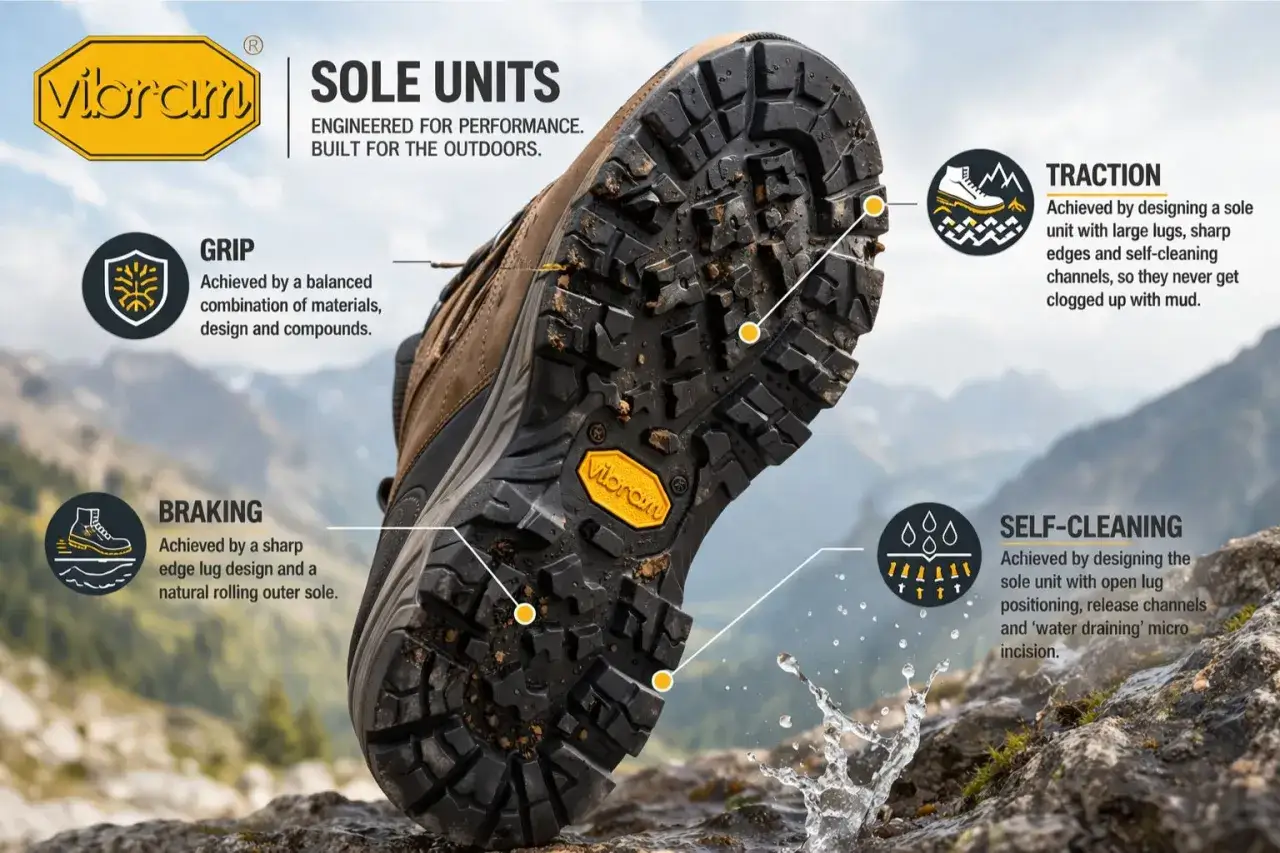
Rubber is the most common outsole material for good reason. It gives you traction without turning the boot into a brick, and the right tread lugs help in mud, gravel, and wet stone. Many boots also use a heel brake, which is simply a more pronounced heel area on the outsole that helps you control steep descents.
I also pay attention to how much stiffness the boot has underfoot. A stiffer platform helps when I carry a heavier pack or move across broken terrain, while a softer one feels better for relaxed day hikes. That is where material weight starts to matter, because a light boot that lacks structure can feel tiring in a different way than a heavier boot that actually supports you.
How I match materials to the hike I am actually doing
Material choice only becomes meaningful when it is matched to the route. A boot that is perfect for wet forest trails can feel overbuilt on a warm gravel path, and a breathable boot that is great in July can be a bad idea on a cold, muddy ridge. If I strip the decision down to the essentials, I usually think in terms of terrain, weather, and pack weight.
| Hiking scenario | Material emphasis | Why it works |
|---|---|---|
| Warm, dry day hikes | Synthetic upper, lighter lining, standard rubber outsole | Breathes better and dries faster if you splash through a stream |
| Wet coastal paths or muddy forest trails | Waterproof membrane, hybrid or leather upper, grippy outsole | Helps keep feet dry when rain, grass, and mud all show up together |
| Backpacking with a heavier load | Leather or reinforced hybrid, firmer midsole, supportive shank | Improves stability and reduces collapse under a full pack |
| Travel hikes with mixed pavement and trail | Light hybrid construction, moderate cushioning, faster-drying materials | Comfortable enough for a city approach walk and capable enough for the trail |
There is also a simple weight reality that people tend to ignore until they have a sore calf at mile eight. A light hiking shoe can weigh as little as 1 pound, while a sturdy hiking boot can weigh more than 3 pounds. I only accept that extra weight when the materials are doing real work for me, such as on technical ground, in cold weather, or under a heavier load.
That is why the same pair I would choose for a wet autumn crossing in the hills might be the wrong answer for a summer travel day with a light pack. Once you know the use case, the final question becomes how long those materials will keep doing their job.
What keeps a boot alive after the first season
Boot materials do not fail all at once. They age in layers, and the layer that fails first is not always the one people notice first. A leather upper can look fine while the midsole goes flat; a grippy outsole can still be fine while the lining starts to feel damp and tired.
In basic durability terms, hiking shoes often break down before hiking boots, with a solid hiking shoe lasting up to 500 miles and a sturdy hiking boot lasting twice that or more, especially if it can be resoled. That does not mean every boot is worth rescuing, but it does mean the right materials can save money if you actually use the boot hard.
- Brush off grit and mud after a hike so abrasive dirt does not grind away the finish and stitching.
- Dry boots slowly at room temperature rather than placing them directly on a heater or near a fire.
- Condition leather carefully when water stops beading on the surface, but do not over-treat it.
- Watch the midsole because foam that has gone dead will make the boot feel tired even if the upper still looks strong.
- Choose resoleable boots if you know you want a long-term pair and the upper fits you perfectly.
There is a practical limit here, and I think it matters to say it plainly: the best materials in the world cannot save a boot that never fit correctly in the first place. That is why the final decision is less about chasing a perfect material and more about choosing a balanced build that matches your feet, your routes, and your tolerance for weather.
The pair I would trust on a long trail day
If I were choosing for rocky, wet, and changing terrain, I would start with a hybrid or leather upper, a rubber outsole with solid lugs, and a midsole firm enough to support the load. If the route were warm and dry, I would move toward lighter synthetics because less material usually means less heat and faster drying.
That is the real answer to the material question: boots are not made from one miracle fabric, but from a system of parts that have to work together. When the materials match the trail, the boot stops being the thing you think about and starts being the thing that quietly lets you keep moving.