Do boots run bigger than shoes? Not in a reliable, universal way. Some hiking boots feel roomier than your everyday sneakers, while others fit shorter, narrower, or deeper depending on the brand, the last, and the socks you wear. The useful question is not whether the number on the box should change, but how the boot should feel on your foot before you trust it on a long trail.
What matters most when comparing boot and shoe sizing
- Boot size labels are only a starting point, because shape and volume vary more than most shoppers expect.
- Many hiking boots feel roomier in the toe box, but that does not automatically mean you should size up.
- The right fit is snug at the heel and midfoot, with enough room to wiggle your toes and handle downhill pressure.
- Wear the socks and insoles you plan to hike in, then test the boots later in the day when your feet are closer to their largest.
- A half size adjustment is often enough. A full-size jump usually means the model is wrong for your foot shape.
The short answer is not a clean yes or no
In practice, hiking boots can feel bigger than shoes, smaller than shoes, or simply different. The label size does not tell you much by itself. A size 10 boot may feel generous in the forefoot but short in the toe, or it may feel long enough and still pinch because the midfoot volume is wrong.
That is why I do not treat boot sizing as a simple upgrade from shoe sizing. I look at three things instead: length, width, and volume. A boot that fits correctly should let your toes move, keep your heel from lifting, and avoid pressure across the top of the foot. If one of those fails, the fit is off even if the number looks right.
| What you notice | What it usually means | What to do |
|---|---|---|
| The boot feels roomier than your shoes | The last may have a wider toe box or more overall volume | Check heel lock and toe clearance before changing size |
| The boot feels tighter in the same size | The model may run narrow, shallow, or more structured | Try the same size in a wider width or a different last |
| The boot feels longer but not more comfortable | Length is not the problem, shape is | Focus on width, instep height, and arch placement |
| The boot feels almost identical to your shoes | That can be normal in lighter hiking models | Judge by fit, not by the expectation that boots must feel larger |
That table is the real answer in most cases. The same size label can hide very different fit behavior, which is why I always look past the number and test how the boot behaves on the foot. From there, the question becomes why hiking boots fit the way they do.
What makes hiking boots feel different from shoes
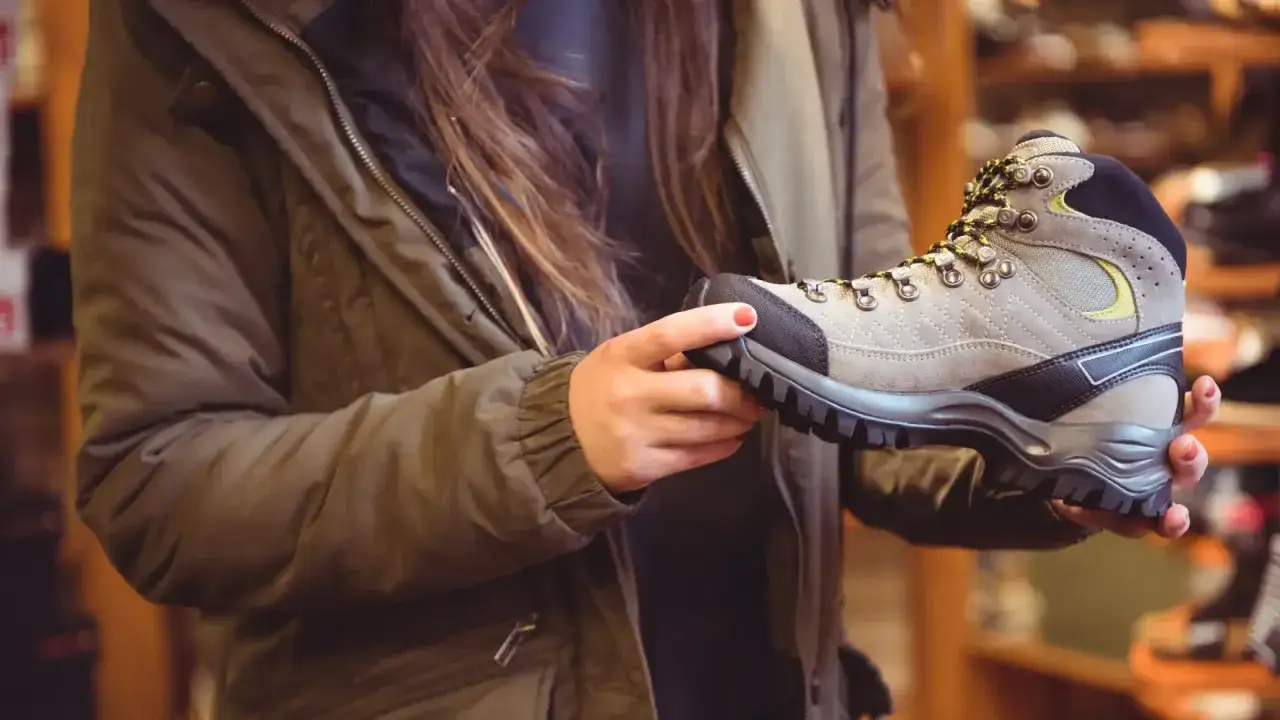
The biggest reason is the last, which is the foot-shaped mold used to build the boot. Danner notes that the shape of the last changes the toe box, width, and overall volume, so two boots with the same labeled size can feel noticeably different. That matters more than most people realize, especially if you have a high instep, wide forefoot, or low-volume heel.
Hiking boots also behave differently because they are built for movement on uneven ground. The upper is often more structured than a casual shoe, the collar rises higher around the ankle, and the interior space is designed to work with hiking socks instead of thin everyday socks. REI makes a similar point in its hiking boot advice, recommending that you try footwear with the socks you will actually wear on the trail, because sock thickness changes the fit fast.
- Toe box shape affects whether your toes can spread or feel compressed on descents.
- Midfoot volume affects how securely the boot holds the top of your foot.
- Heel shape affects how much slip you get when you walk uphill.
- Upper stiffness affects break-in feel, but it does not fix a poor length choice.
- Sock thickness and insoles change the interior space more than many buyers expect.
There is also the simple reality of foot swelling. After a few hours of walking, especially on warm days or long climbs, your feet expand a bit. That is one reason I prefer to fit hiking boots later in the day. If a boot only feels acceptable when your feet are fresh and small, it is probably too tight for trail use. Once you understand those variables, sizing becomes much more practical.
How I size a pair before a long hike
I use a repeatable process because guessing from sneaker size is a bad habit. On a real trail, a slightly wrong fit can turn into blisters, black toenails, or a hot spot that ruins the second half of the day. The goal is not a loose boot. The goal is controlled space where the foot can move without sliding.
- Measure both feet, and size to the larger one. Most people have one foot that is slightly longer or wider.
- Try the boots in the late afternoon or evening, when your feet are closer to their largest.
- Wear the hiking socks you actually plan to use, not thin casual socks.
- Stand up, lace the boot fully, and check that your toes have about a thumb’s width, roughly 1/2 inch or 1.25 cm, of space in front of the longest toe.
- Walk on an incline if you can. Your heel should stay anchored and your toes should not slam the front.
- Pay attention to pressure on the top of the foot. If lacing feels aggressive just to keep the boot on, the volume is wrong.
If I can walk for 10 to 15 minutes and the boot still feels balanced, I take that seriously. If the fit only improves because the boot is stiff and distracting, I treat that as a warning rather than a victory. For hiking footwear, comfort at the start matters, but comfort after movement matters more.
When a half size up helps, and when it backfires
This is where people overcorrect. A half size up can be useful, but a bigger number does not automatically mean a better hiking boot. The fit decision should come from the foot, not the assumption that boots need extra room by default.
| Situation | What usually helps | Why it works |
|---|---|---|
| You hike in thicker wool socks | Try a half size up | You need enough interior room to avoid compression and numb toes |
| Your toes hit the front on descents | Size up slightly or switch to a roomier last | Downhill pressure matters more than standing-room feel |
| The forefoot feels cramped but the heel is okay | Try a wider width first | Width fixes shape problems better than extra length |
| The boot already feels long and slippery | Stay in size and adjust lacing or insoles | More length would likely create heel lift and blisters |
| You need substantial room just to avoid pain | Try a different model | The boot is probably the wrong shape for your foot |
My rule is simple: size up for space, not for rescue. If a half size up solves toe crowding without creating heel lift, that is reasonable. If it only masks a poor shape match, it will come back to bite you on the trail, especially on long descents or uneven ground.
The mistakes that cause hot spots and black toenails
Most bad boot experiences do not come from one dramatic sizing mistake. They come from small ones stacked together. A boot that is slightly too small, worn with the wrong sock, tested for too short a time, and taken straight onto a long hike is a classic recipe for regret.
- Buying by sneaker size alone ignores the fact that boots and shoes are built around different shapes.
- Ignoring width is a common mistake for hikers with wide forefeet or bunions.
- Trying boots with thin socks makes the fit look better than it will feel on trail.
- Assuming break-in solves everything is risky. Stiff leather can soften, but it will not create missing length.
- Forgetting downhill fit leads to toe bang, even if the boot feels fine while standing still.
- Testing for only a minute or two misses the pressure points that show up after your foot warms up and swells.
I also think people overtrust the phrase “they will give a little.” Sometimes they will, sometimes they will not, and the difference matters. If the boot feels painful in a way that comes from length or shape, I would rather exchange it than hope for a miracle. That is especially true for hikers planning long days on rocky European paths, where repeated downhill impact exposes fit problems quickly.
The fit checks I would never skip before the trailhead
When I am trying to decide whether a hiking boot really works, I focus on a few simple checks that predict trail comfort better than the label on the tongue. If these are all in place, the boot is probably a keeper.
- The heel stays secure when I walk, with only minimal lift.
- The toes have room to spread and do not touch the front when I move downhill.
- The midfoot feels supported, not squeezed.
- The boot works with the socks and insoles I actually plan to use.
- The fit still feels good after 15 to 20 minutes, not just during the first 30 seconds.
That is the standard I would use before buying boots for a day hike, a mountain trip, or a longer walking route where comfort matters as much as grip. The size number is useful only if it leads to the right shape and the right trail feel. If you remember one thing, make it this: a good hiking boot fits your foot, not your expectation of what a boot size should be.