
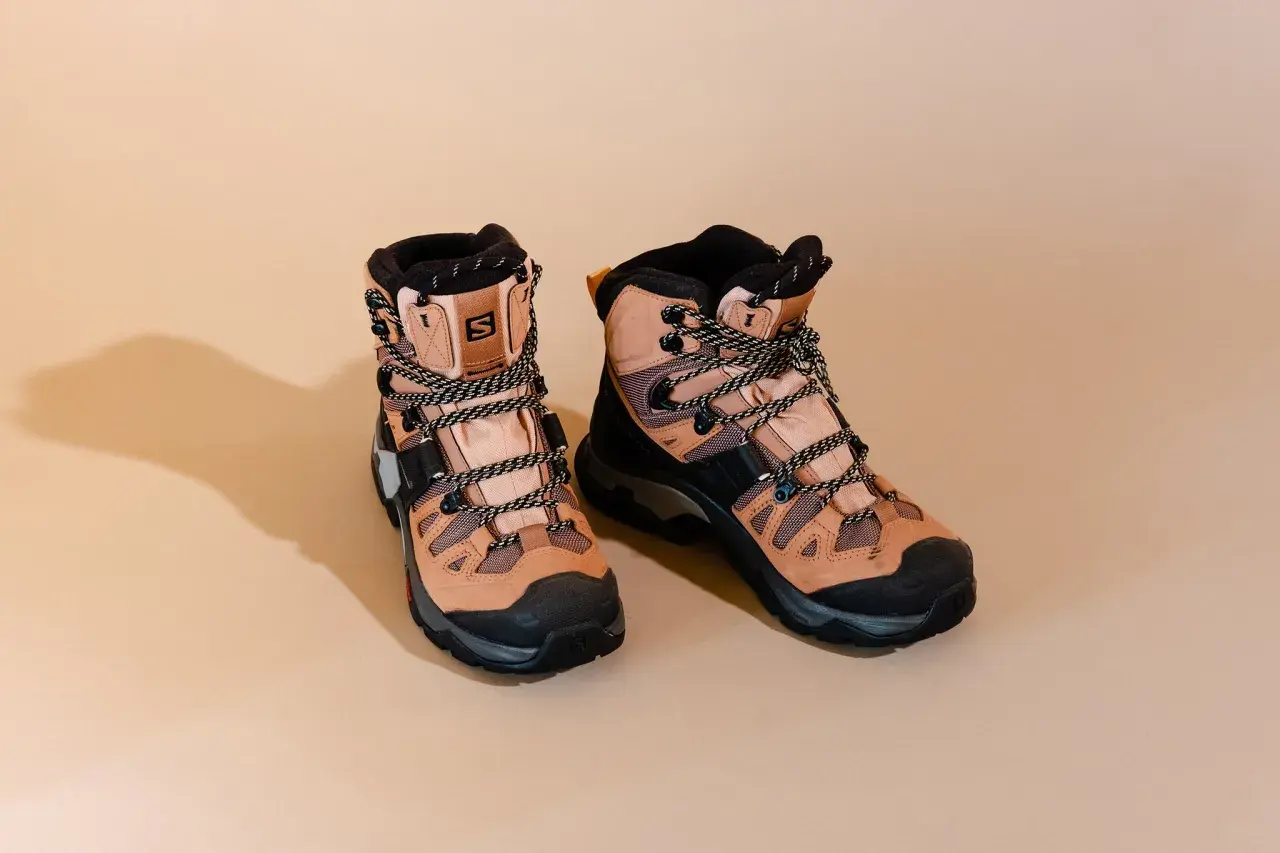
Boot weight changes more than most hikers expect. The real answer to how much do hiking boots weigh depends on cut, materials, and how much support you want underfoot. A light pair can feel fast and comfortable on a warm day hike, while a heavier build may make more sense on rocky routes, wet ground, or long backpacking days.
The short answer is that most hiking boots fall into a few practical weight bands.
- Light hiking shoes and low-cut hikers usually sit around 1.5 to 2.1 pounds per pair.
- Lightweight mid boots commonly land between 2.0 and 2.5 pounds per pair.
- Traditional day-hiking boots often run from about 2.5 to 3.0 pounds per pair.
- Backpacking and mountaineering boots can move past 3 pounds and sometimes reach 4 pounds or more.
- Published weights are usually sample-size weights, so the same model can change a little with size and version.
What a typical pair weighs
I think of hiking boots in ranges, not single numbers. Brands often publish the weight of one sample size, usually a men's US 9 or a women's 8.5, so the number is useful for comparison but not a promise that every size will feel identical. In real use, the lighter end starts around 1.5 pounds per pair, and the sturdier end can push past 3 pounds very quickly.
That spread matters because boots are one of the few gear items you feel on every step. A few ounces can look trivial on a spec sheet and still show up late in the day, especially on climbs, descents, or long travel approaches. That is why the construction details matter just as much as the raw number, which is where the real differences begin.
Why boot weight changes so much
When two boots look similar but weigh very differently, the explanation is usually hiding in the build. I usually look at six things first:
- Upper material - Leather adds durability and structure, but it also adds mass. Synthetics and mesh trim weight down, which is why modern lightweight hikers can feel more like athletic shoes than old-school boots.
- Boot height - Mid and high collars use more material than low-cut designs, so ankle coverage almost always costs weight.
- Waterproofing - A waterproof membrane and extra sealing can add a little weight, even if the penalty is not huge on paper. It is often a fair trade if you hike in wet grass, rain, or snowmelt.
- Sole stiffness - A stiffer platform usually needs a beefier midsole or a shank. A shank is the support piece between the outsole and midsole, and it helps the boot carry load, but it also adds grams.
- Outsole and lugs - Deeper lugs and more aggressive rubber can improve bite on loose rock or mud, yet they often come with extra weight.
- Size and fit volume - Bigger sizes need more material, so a size 12 pair will almost never match the published size 9 weight exactly.
Once you understand those tradeoffs, the spec sheet stops looking like a mystery and starts looking like a clue. The next step is to see how those clues map to different boot categories.
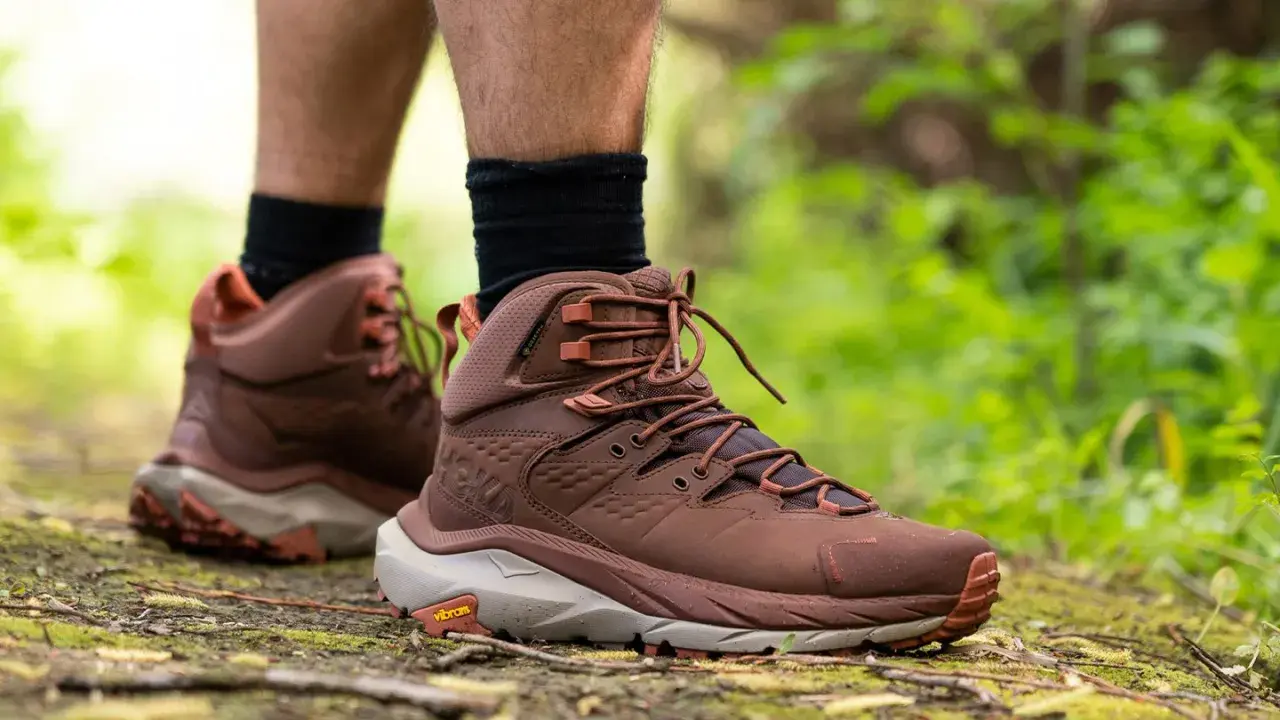
How different boot categories compare
The cleanest way to judge hiking boot weight is to match it to the job. A boot that feels perfect for a short, dry day on smooth trails can feel sluggish on a steep, muddy approach, and a burly boot that feels reassuring in the mountains can be overkill for a summer stroll.
| Boot category | Typical pair weight | What it feels like | Best use |
|---|---|---|---|
| Hiking shoe or low-cut hiker | 1.5 to 2.1 lb | Quick, flexible, least fatiguing | Warm-weather hikes, travel, well-maintained trails |
| Lightweight mid boot | 2.0 to 2.5 lb | Balanced, stable, still fairly nimble | Mixed terrain, long day hikes, most casual mountain trips |
| Traditional day-hiking boot | 2.5 to 3.0 lb | More planted and protective | Rocky ground, muddy trails, heavier day packs |
| Backpacking boot | 3.0 to 4.0+ lb | Supportive, durable, noticeably heavier | Multi-day loads, rough terrain, demanding weather |
| Mountaineering boot | 4.0+ lb | Rigid, warm, highly structured | Snow, ice, alpine travel, technical objectives |
If you want the simplest rule, it is this: once a boot crosses into the heavier categories, it should be buying you something real, such as stiffness, warmth, or stability. If it is not, you are probably paying for bulk you do not need.
When a lighter boot is worth chasing
There are plenty of situations where shaving weight is a smart move. I lean lighter when the hike is fast, the load is small, and the terrain is not asking for serious ankle protection or winter insulation.
- Day hikes with a light pack - If you are carrying water, layers, and not much else, a lighter boot can make the whole outing feel easier.
- Warm and dry conditions - Breathability often matters more than brute support when the trail is mostly dry and stable.
- Travel days that include walking - A lower-weight boot can double as an airport-to-trail option without feeling clunky in town.
- Long mileage on moderate terrain - Less weight underfoot usually means less fatigue over the course of a full day.
That said, I stop chasing ounces when the route gets serious. On steep, wet limestone or loose rock, like many of the mountain paths around northern Spain, I would rather carry a few extra ounces than fight unstable footing all day. In those conditions, a midweight boot often earns its place by making the trail feel calmer and more controlled.
The real mistake is assuming the lightest boot is automatically the best one. On technical ground, the wrong light boot can feel sketchy, and that is a worse trade than a little extra weight.
How to compare weights before you buy
Once you start shopping, I would compare boots in a very specific order. That keeps the numbers honest and stops small differences from distracting you from fit and function.
- Check the size used for the spec - A published weight is only meaningful if you know whether it is based on a men's US 9, a women's 8.5, or something else.
- Compare pair weight, not just one boot - Some listings make this clear, others do not. Pair weight is what matters when you are hiking all day.
- Look at the waterproof version separately - The waterproof model can be heavier than the non-waterproof version, and sometimes the tradeoff is worth it only for certain climates.
- Think about sole stiffness and support - A boot that is a bit heavier may still be the better choice if it keeps you stable on rough ground.
- Put fit ahead of grams - A slightly heavier boot that locks your heel down and does not rub is usually the better hiking boot.
When I compare two similar models, I care less about a one-ounce swing and more about whether the weight is hiding a real design improvement. If the heavier boot gives you better traction, better fit, or better fatigue resistance, that extra mass can be money well spent.
What I would pick for different kinds of trips
For most hikers, the sweet spot lands in the lightweight-mid range. It is the zone where support, comfort, and trail feel are usually best balanced, especially for mixed terrain and long day hikes. I would only move heavier when the route or load truly demands it.
- Fast day hikes on established trails - Aim for 1.5 to 2.1 pounds per pair.
- General mountain walking and travel hikes - Aim for 2.0 to 2.5 pounds per pair.
- Rocky, wet, or heavily loaded trips - Aim for 2.5 to 3.0 pounds per pair.
- Winter, snow, or alpine use - Choose the boot for warmth and structure first, then worry about the scale.
If I were buying for a wet, rocky route and a lot of descent, I would happily choose a midweight boot over the lightest option on the shelf. For a simple summer hike, I would do the opposite. That is the real answer hidden inside boot weight: not a single perfect number, but the right tradeoff for the trail you actually plan to walk.
