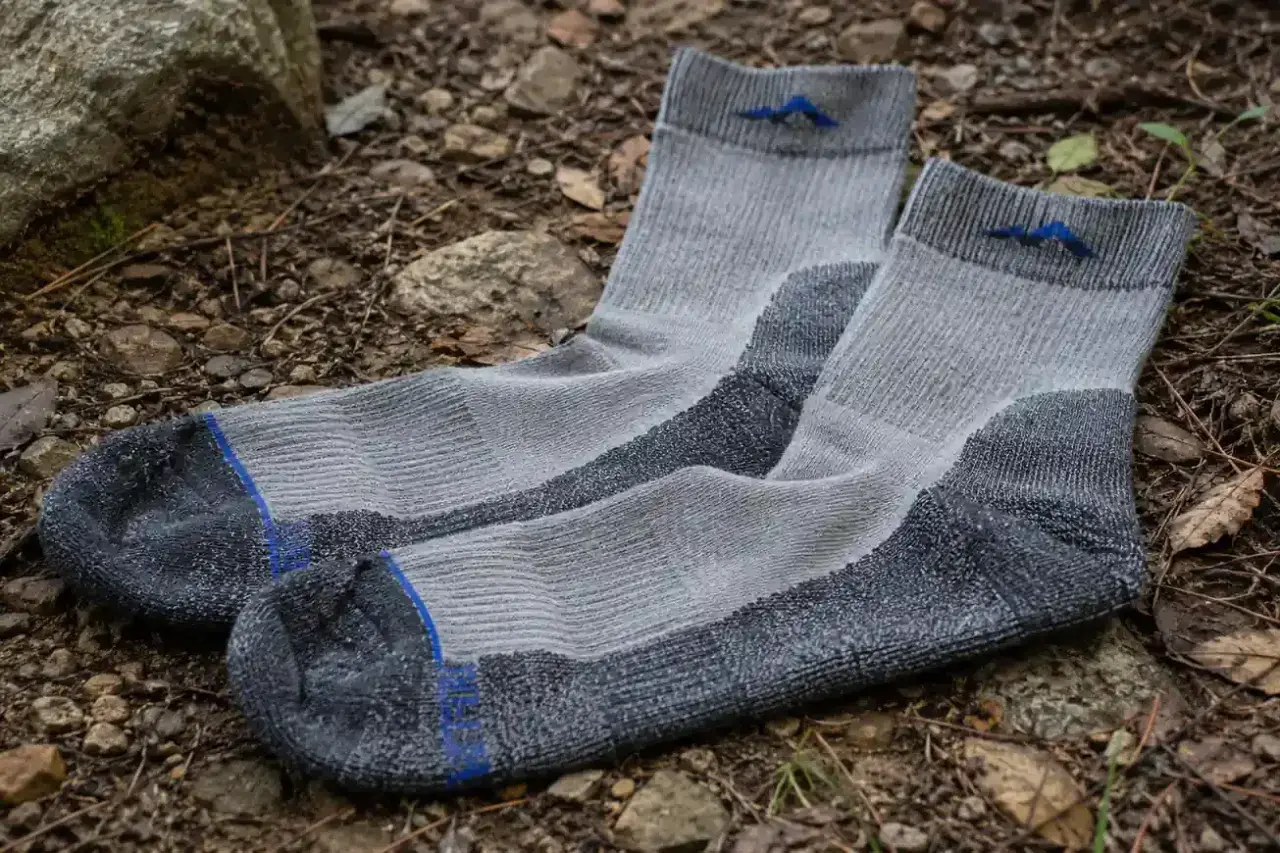
Good hiking socks do more than keep your feet warm. They control moisture, reduce friction, and help your boots fit the way they should on long climbs, hot descents, and wet trail days. Knowing how to choose hiking socks matters because the wrong pair can turn a normal trek into a blister problem before lunch.
The fastest way to narrow the choice is to match height, cushioning, fit, and fabric to the trail
- Height should follow footwear. Low-cut shoes pair best with no-show or ankle socks, while boots usually call for crew height.
- Cushioning changes warmth and volume. Thicker socks add padding, but they also add heat and can crowd a snug shoe.
- Fit beats brand hype. A sock should sit snugly, align at the heel, and avoid wrinkles or loose fabric.
- Merino blends are the safest all-around pick. They balance odor control, moisture management, and comfort better than cotton.
- Construction details matter. Seamless toes, reinforced heels, and breathable mesh zones usually help more than flashy styling.
Match sock height to the shoe or boot you actually hike in
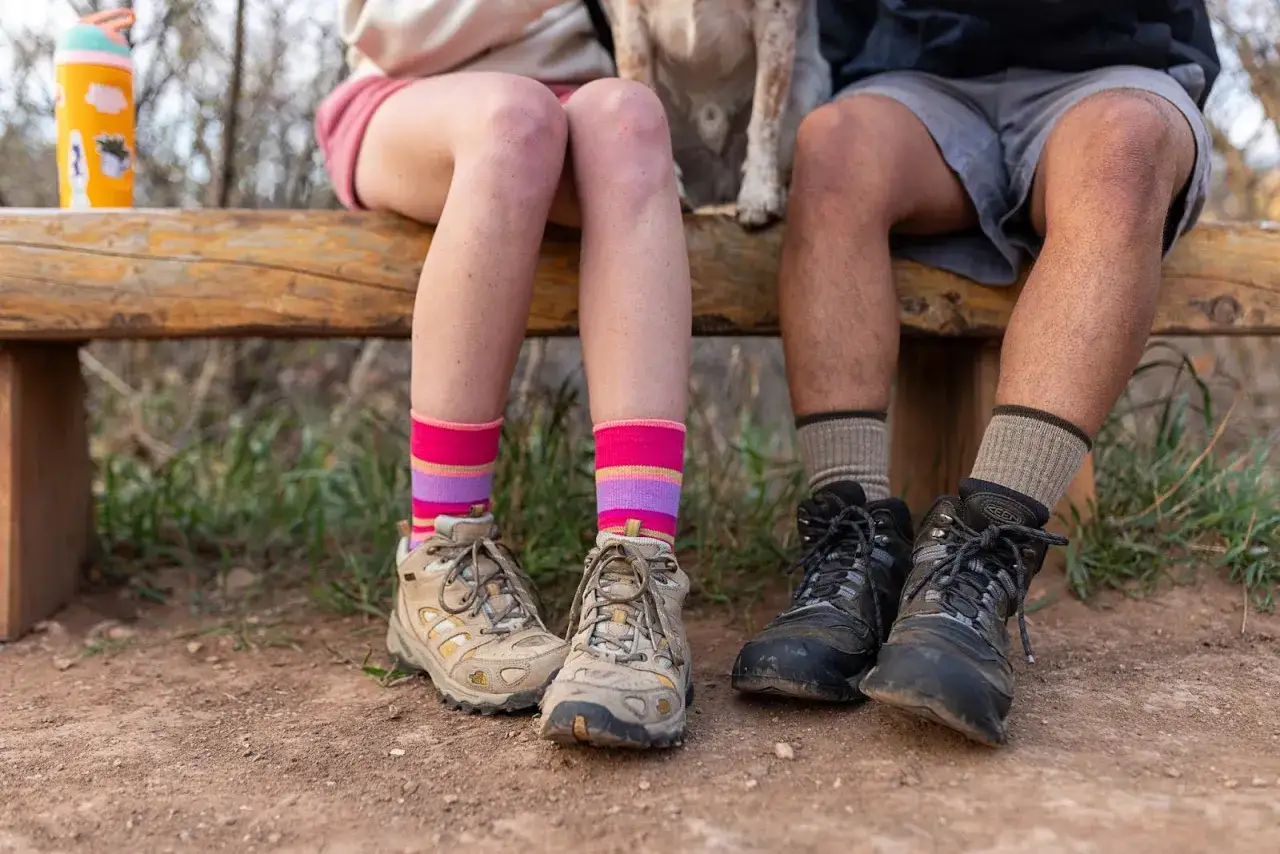
The first decision I make is height, because it affects comfort before materials even come into play. If the cuff of your footwear sits low, a shorter sock can work well; if the cuff rises higher, I want more coverage so the fabric protects skin from rubbing directly against the shoe or boot.
| Height | Best for | Why it works | Tradeoff |
|---|---|---|---|
| No-show | Trail runners and very low-cut hiking shoes | Lightest feel, least fabric, coolest in hot weather | Very little protection against boot collar abrasion |
| Ankle | Low- to mid-cut shoes | More coverage than no-show without adding much bulk | Still limited if your footwear has a taller cuff |
| Crew | Most hiking shoes and boots | Classic hiking height, good abrasion protection, versatile year-round | Can feel warm on very hot days |
| Knee-high | Mountaineering boots, glacier travel, deep snow | Extra shin and lower-leg protection | Niche use; usually overkill for normal hiking |
For most hikers, crew is the safest default. I still make exceptions for summer trail shoes, where ankle or no-show socks feel better, especially on routes with a lot of heat and not much boot contact. The next question is cushion, because height alone does not tell you how the sock will feel over miles of walking.
Choose cushioning for the pace, terrain, and temperature
Cushioning is where a lot of people overspend their attention on style and underspend it on comfort. The thicker the sock, the more padding you get under the heel and forefoot, but also the more warmth and shoe volume the sock adds. That balance matters on long descents, rocky trails, and packed boots where a half-size of extra bulk can change the fit.
| Cushion level | Best for | What I expect | Main drawback |
|---|---|---|---|
| No cushioning | Hot weather, very light trail use, minimalist shoes | Maximum breathability and the lowest profile | Little padding for rough terrain or long mileage |
| Light cushioning | Warm days, trail runners, day hikes | Enough padding to soften key pressure points without feeling bulky | Not as protective on hard or loaded trips |
| Medium cushioning | Most backpacking, mixed terrain, shoulder-season hiking | The best balance of comfort, warmth, and trail feel | Can be too warm for very hot climates |
| Heavy cushioning | Cold weather, rough terrain, long trips, mountaineering | Maximum padding and insulation | Often too thick for warm weather or snug footwear |
I usually tell hikers to start with light or medium cushioning unless they already know they like a thicker sock. If your shoe suddenly feels cramped, do not assume you need a larger shoe right away; often the real issue is that the sock is too thick for the volume of the footwear. That leads directly to fit, which is the part most people get wrong when they shop by shoe size alone.
Get the fit right before you start comparing brands
Sock fit is the difference between a sock that disappears on the trail and one that starts folding, sliding, and rubbing by the second mile. I always prefer sizing from the actual foot, not the shoe size, because many hikers size up their shoes and accidentally buy socks that are too large. Excess fabric creates wrinkles, and wrinkles are blister material.
- Use your foot size, not your shoe size. Shoe sizing often runs larger than the foot itself.
- Size down if you are between sizes. A little less fabric is usually better than a little extra fabric.
- Check the heel cup. The heel should sit where your heel actually is, not slide above or below it.
- Look for a snug but not tight feel. Compression is not the goal; stable fabric is.
- Watch for toe bunching. If the front of the sock folds when you flex your foot, the size or shape is wrong.
I also pay attention to whether the sock stays put when I walk around the store. If it twists, creeps, or feels loose before the hike starts, it will not improve after ten uphill miles. Once fit is sorted, material choice becomes much easier.
Pick materials that manage sweat without turning the sock into a sponge
For hiking, I want a fabric that can deal with sweat, dry reasonably fast, and stay comfortable when the weather changes. Merino wool is still the most dependable all-around option because it regulates temperature well, resists odor, and can absorb roughly 30% of its own weight in water without feeling as soggy as cotton. Synthetic fibers are useful too, especially when quick drying and durability matter more than a softer hand feel.
| Material | Strengths | Limitations | Best use |
|---|---|---|---|
| Merino wool | Temperature regulation, odor resistance, good moisture buffering | Costs more and dries a bit slower than pure synthetics | Most hiking conditions, especially variable weather |
| Synthetic blend | Fast drying, durable, shape-retaining, often less expensive | Can feel less natural and may hold odor sooner | Hot climates, heavy sweat, fast wash-and-wear trips |
| Cotton | Cheap and familiar | Absorbs sweat, dries slowly, raises blister risk | Not a good active hiking choice |
Most good hiking socks are blends rather than pure wool or pure nylon. A representative construction is something like 56% nylon, 41% merino wool, and 3% spandex, which gives you the softness and moisture control of wool plus the shape retention of synthetic fibers. That blend approach is one reason many hikers settle on merino-heavy socks and stop thinking about them after that.
Look for construction details that actually help on the trail
Marketing language around socks can get noisy, so I look for a short list of features that have a real effect on comfort. These are the details that often separate a decent sock from one that can handle long days, sweaty feet, and repeated washing without turning sloppy.
- Reinforced heel and forefoot. Extra durability where the foot lands hardest.
- Seamless or flat toe closure. Less chance of pressure points across the toes.
- Mesh zones over the top of the foot. Better airflow where heat builds up fastest.
- Arch reinforcement. Helps the sock stay shaped and can reduce movement in the midfoot.
- Elastic yarns such as nylon and spandex. These help the sock recover after wear and keep wrinkles down.
I do use liner socks occasionally, but only when I already know my feet like them or when I am building a very specific long-trip system. For most hikers today, a well-made single sock does the job better than a two-layer setup. If the construction already manages moisture, fit, and friction well, a liner is usually extra complexity rather than extra value.
Build the sock around the hike, not the marketing label
Once I know the trail, I can usually narrow the choice to a sensible profile in seconds. The same pair that feels perfect on a cool Appalachian morning may be too warm on a desert climb, and the sock that feels airy in a trail runner may not be protective enough inside a stiffer boot. The best choice is the one that matches the actual outing, not the idea of hiking in general.
| Hiking scenario | What I would choose | Why |
|---|---|---|
| Hot summer trail runs or low-cut shoes | No-show or ankle sock, light cushioning, synthetic or merino-synthetic blend | Lowest bulk and enough breathability for warm conditions |
| Regular day hikes | Crew sock, light or medium cushioning, merino blend | Best all-around mix of protection, comfort, and trail versatility |
| Backpacking with a loaded pack | Crew sock, medium cushioning, reinforced heel and toe | More padding helps on long mileage and repeated impact |
| Cold, wet, or shoulder-season hiking | Crew sock, medium or heavy cushioning, merino-dominant blend | Warmer, more protective, and still manages moisture better than cotton |
| Winter hiking or snow travel | Crew or taller sock, heavier cushioning | Extra insulation and coverage matter more than a low-profile feel |
In the U.S. market, I usually see technical hiking socks land around $20 to $28 per pair, with premium models sitting at the upper end and multipacks lowering the cost a bit. That price range is normal for socks built with targeted cushioning, merino blends, and durable synthetic reinforcement. If the pair is far cheaper, I usually check whether it is missing one of the features that actually keeps feet comfortable on the trail.
The first pair I would buy for most hikers
- Crew height if I hike in boots, ankle height only for low-cut shoes
- Light or medium cushioning, depending on temperature and mileage
- A merino blend with nylon and a small amount of spandex
- A snug fit based on foot size, not shoe size
- A smooth toe and a reinforced heel and forefoot
If I were buying one pair today for most trail days, I would start with a crew-length merino blend in light to medium cushioning and make sure the heel cup matched my actual foot shape. That combination covers the widest range of conditions without feeling fussy, and it leaves room to go thinner for hot-weather trail shoes or thicker for cold, loaded, or rough terrain.