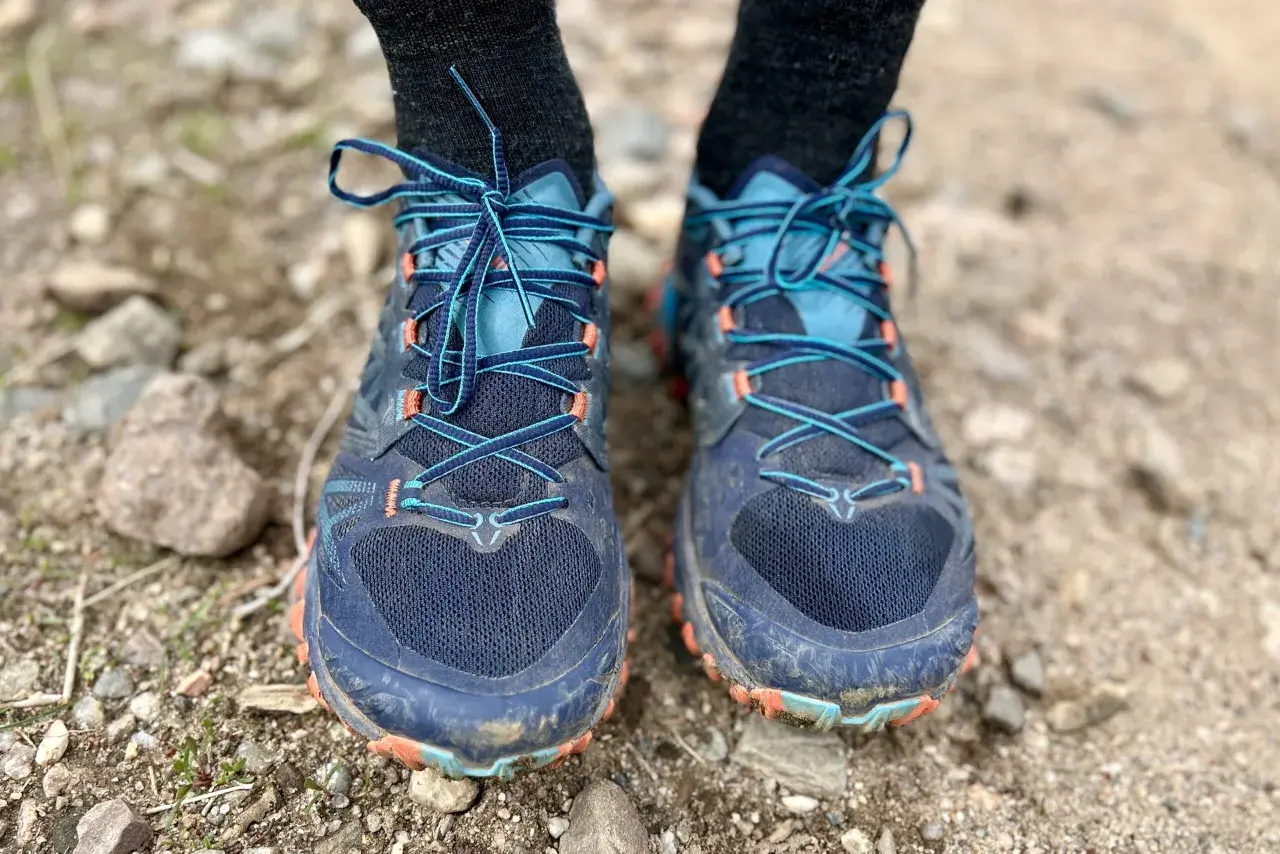
The Bushido III sits in a very specific lane: a trail shoe for rocky, technical ground where precision matters more than softness. That makes it interesting not only for runners, but also for hikers who move fast, want secure footing, and spend more time on rough mountain trails than on smooth paths. Here I break down how it fits, how it feels on the trail, where it works as hiking footwear, and where a different shoe will serve you better.
What matters most before you decide
- Best use case: technical trails, rocky day hikes, steep descents, and fast mountain travel.
- Feel underfoot: low, firm, and stable rather than soft and cushioned.
- Fit: performance-oriented and fairly snug; the wide version solves a real problem for broader feet.
- Terrain strength: excellent on rock, slabs, scree, and off-camber ground.
- Main tradeoff: it is less forgiving on easy trails, pavement, and long mileage when you want plush comfort.
- Current U.S. pricing: usually around $160 for the standard model and $185 for GTX, with sale prices moving around.
What this shoe is built to do
La Sportiva’s Bushido line has always been about control, and this version stays loyal to that idea. The standard shoe weighs about 300 g in men’s sizing, uses a 6 mm drop, and pairs a protective upper with a low, responsive platform. In plain English, it is designed to keep you sure-footed when the trail gets awkward.
| Feature | Why it matters for hiking |
|---|---|
| Weight | Light enough for fast movement without feeling flimsy. |
| 6 mm drop | Enough heel-to-toe difference to feel natural for many hikers, while still staying close to the ground. |
| 4 mm lugs | Good bite on rock, dirt, and loose trail, but not a deep-mud specialist. |
| Rock guard and TPU inserts | Helpful when you are stepping on sharp stone or uneven talus. |
| Performance fit | Locks the foot down for technical terrain, but can feel tight if you prefer room to spread out. |
That combination tells you a lot about the intended audience. This is not a soft cruiser for easy forest paths. It is a control shoe for mountain trails, ridge lines, and routes where foot placement matters. For hikers, that usually means the shoe makes the most sense on rocky alpine-style terrain, scramble-heavy day hikes, and fast overnights with a light pack. From here, the real question is how that design translates once you are actually moving.
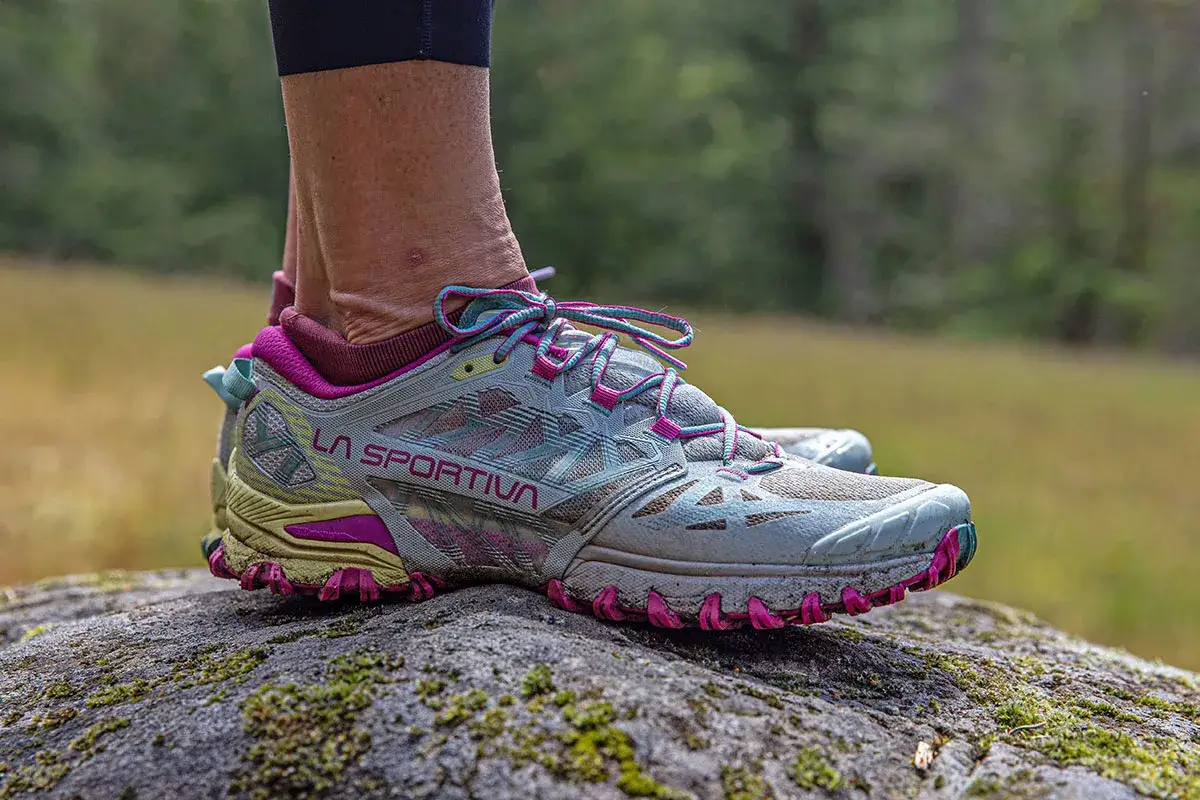
How it feels when the trail turns technical
The strongest thing about this model is the way it handles rough terrain. The low platform and firm midsole give you a clear sense of where your foot is, which is exactly what you want on slabs, loose stone, and sloped ground. The outsole’s grip is also a major part of the story: the rubber compound and 4 mm lugs are made to cling to rock and bite into uneven surfaces rather than feel soft and marshy.
Dry rock and scree
This is where the shoe feels at home. On dry granite, limestone, and decomposed rock, it feels confident and precise. I would trust it on routes where you are constantly stepping from one odd angle to another, because the outsole and sidewall structure help reduce that skittish, rolled-under feeling that some softer trail shoes create.
Off-camber traverses
Off-camber terrain means the trail slopes away from the centerline, so your foot lands on a tilt. This is one of the areas where the Bushido III stands out. The wraparound outsole and stable chassis help keep the shoe planted, which is useful on sidehill traverses, ridge paths, and mountain cutbacks where a little instability can turn into a bad step very quickly.
Wet stone and mixed conditions
The grip is strong enough that the shoe still makes sense when conditions are not perfect, but I would not call it a magic solution for every wet surface. Wet algae, polished stone, and deep mud still demand caution. What you do get is a shoe that remains more trustworthy than many lighter trail runners when the terrain becomes slick but still technical.
Read Also: Hiking Boot Lace Length - Find Your Perfect Fit
Easy paths and long pavement approaches
This is the downside. On smooth dirt, gravel rail trails, or several miles of road before the trailhead, the firm feel is less impressive. The shoe can feel like more shoe than you need. If your hikes start with long, boring approach miles, a more cushioned trail runner will usually feel better on the feet and calves. That is the tradeoff for better control on hard terrain, and it matters more than people expect.
So the outsole and platform are strong, but fit is the other half of the decision. That is where most buyers win or lose the comfort equation.
Fit and sizing are where most people need to pay attention
The Bushido III uses a performance last, which means the fit is intentional and fairly snug. That is good if you want your foot to sit securely in the shoe during descents and traverses. It is less good if you like a roomy toe box, if your feet swell a lot on long climbs, or if you usually wear thicker hiking socks.
| Version | Best for | Tradeoff |
|---|---|---|
| Standard fit | Narrow to average feet, precise lockdown, technical hiking | Can feel tight in the forefoot for some hikers |
| Wide fit | Broader feet, toe splay, longer descents, swelling on warm days | Slightly less race-snug feeling |
| GTX | Wet, snowy, or cold conditions where weather protection matters | Warmer and slower to dry than the non-GTX version |
| Wide GTX | Broader feet plus damp shoulder-season hiking | The most specialized and least breathable option of the group |
If you are between sizes, I would seriously consider going up half a size, especially if you hike downhill for hours or use medium-thick socks. The wide version is not a cosmetic tweak; the extra volume is real, with more room in the toe area and forefoot. That matters because a shoe that feels perfect in the store can become oppressive after two hours of climbing and descending. Once fit is sorted, the next question is where this shoe actually earns its keep on hiking trips.
Why hikers like it and where it is the wrong tool
For hiking, this shoe makes the most sense when speed, agility, and precision are the priority. I think of it as a strong fit for mountain days where the trail is narrow, rocky, and constantly changing underfoot. It is especially appealing if you like trail runners more than boots, but still want something that feels protective rather than airy and soft.
- Fast day hikes: ideal when you want to move quickly and stay stable on rough ground.
- Rocky alpine routes: a strong match for mountain terrain with lots of stone, ledges, and sidehill traverses.
- Light fastpacking: useful for lightweight overnight trips where pack weight stays low.
- Technical descents: helpful when descending steep, loose trails and you need the foot to stay centered.
- Shoulder-season hiking: the GTX version is worth a look when rain, slush, or lingering snow are part of the picture.
Where I would hesitate is with heavy packs, long easy miles, or trips that are more about comfort than precision. If your hiking style is closer to classic backpacking, with a heavier load and lots of sustained walking on ordinary trail tread, a more cushioned hiking shoe or a light boot will probably feel better. The Bushido III is a specialist, and specialists are excellent only when the job matches the design.
How it compares with more typical hiking footwear
This is the simplest way to frame the decision: the Bushido III is more precise than most hiking shoes, but less plush than most all-day trail shoes. That sounds like a minor distinction until you spend six hours on the trail and realize the difference between “stable” and “comfortable” is not always the same thing.
| Category | Bushido III | Typical cushioned trail shoe | Light hiking shoe |
|---|---|---|---|
| Precision on technical ground | Excellent | Good | Good to very good |
| Plush comfort on easy trails | Limited | Strong | Moderate to strong |
| Stability on off-camber terrain | Excellent | Moderate | Good |
| Breathability in warm weather | Good in the standard model | Often very good | Varies |
| Weather protection | Only the GTX version | Usually limited | Often better than trail shoes, but heavier |
| Best match | Technical hikes and mountain running | Mixed terrain and longer comfort-focused days | General hiking and everyday trail use |
That comparison is why I would not recommend it as a default hiking shoe for everyone. If your trips are mostly moderate trails, the Bushido III may feel overbuilt. If your routes are rugged, steep, and rocky, it starts to look like one of the better crossover options between trail running and hiking footwear. The final choice comes down to which version you buy and how honestly you match it to your terrain.
The trips where I would pack it first
If I were choosing this shoe for a real trip, I would pack it for a rocky mountain day in the Rockies, the Sierra, the White Mountains, or an alpine-style route where the trail is narrow and the footing is inconsistent. I would also consider it for European mountain paths with lots of stone, especially when I expect quick movement, sharp descents, and occasional route-finding off the most obvious tread.
- Choose the standard version if you want the lightest, coolest, most precise feel and your feet are not especially wide.
- Choose the wide version if your forefoot usually feels pinched, or if your feet swell on long climbs and descents.
- Choose GTX if you regularly hike in cold rain, wet shoulder-season conditions, or lingering snow where dry feet matter more than breathability.
- Skip it if you mostly walk easy trails, carry a heavy pack, or want soft cushioning for long mileage.
My practical advice is simple: try the shoe on with the socks you actually hike in, walk downhill in it before you commit, and do not buy the waterproof version unless you truly need it. The standard model already solves the main problem it was built for, which is keeping you stable when the trail gets rough. That is exactly why it remains a smart option in 2026 for hikers who value precision over plushness.