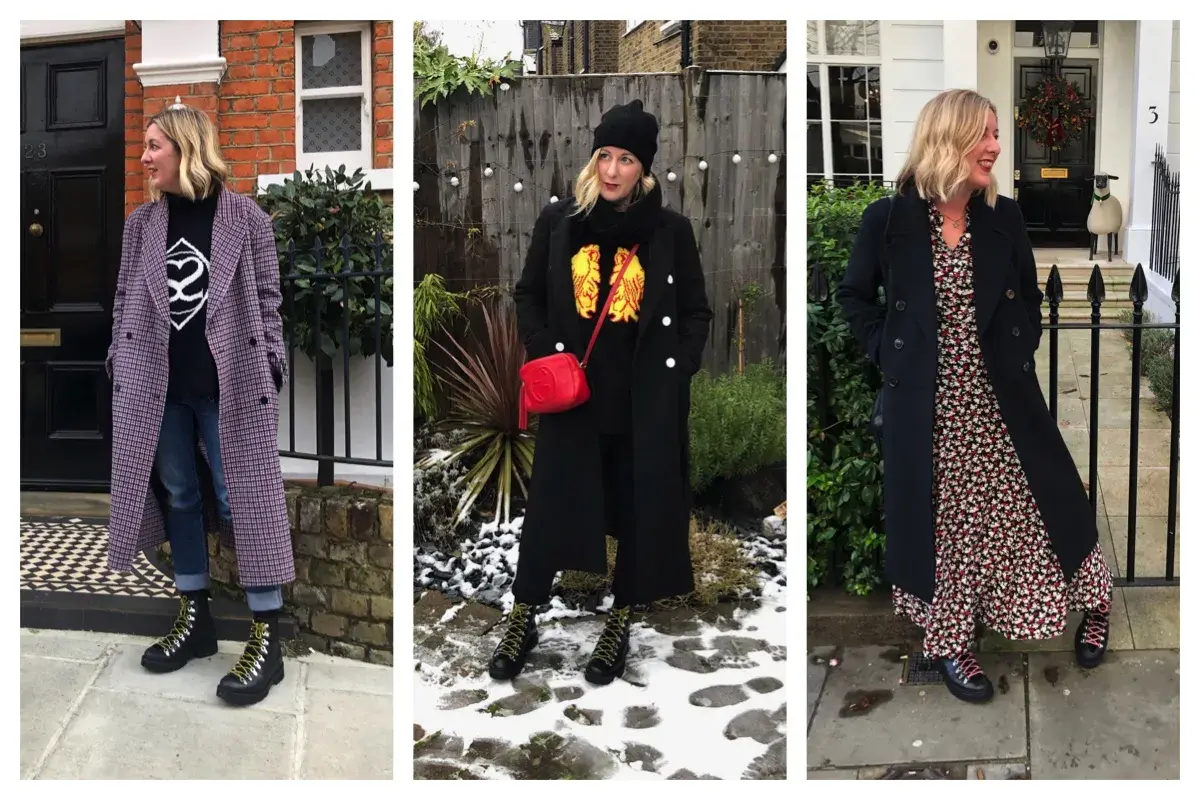
Hiking boots work best when the rest of the outfit respects their shape: sturdy, practical, and a little rugged. When people ask what to wear with hiking boots, I usually start with fit, fabric, and silhouette, because those three decisions do most of the visual and functional work. The right combination can take you from a trailhead to a village café without looking overbuilt or underdressed.
The fastest way to make hiking boots look right is to keep the outfit simple, layered, and weather-ready
- Choose bottoms with a clear shape, such as straight-leg jeans, tapered cargo pants, trekking tights, or technical joggers.
- Use layers like merino tees, flannels, fleece, vests, and shells so the outfit feels intentional in changing weather.
- Match the boots with grounded fabrics such as denim, wool, brushed cotton, and softshell instead of overly delicate pieces.
- Pick socks and hems on purpose; the ankle line should look clean, not accidental.
- Avoid cotton-heavy outfits on wet or cold days, because moisture changes how both the clothes and the boots feel.
Start with the right bottoms
The easiest way to build an outfit around hiking boots is to get the lower half right first. I want the pant leg to either sit cleanly above the boot or fall with enough structure that it does not fight the boot collar. That is why straight-leg jeans, tapered cargo pants, and fitted outdoor trousers usually work better than extreme skinny cuts or overly wide hems. The boot should anchor the look, not disappear under fabric.
| Bottom | Why it works | Best use |
|---|---|---|
| Straight-leg jeans | They balance the bulk of the boot and usually cuff well. | Everyday wear, travel days, casual town outfits |
| Tapered cargo pants | They add utility without looking sloppy around the ankle. | Trail days, active weekends, mixed weather |
| Trekking tights or leggings | They create a streamlined line that works well under longer tops. | Fast hikes, colder mornings, athletic layering |
| Technical joggers | They feel casual but still look controlled at the ankle. | Airport-to-trail travel, low-key outdoor days |
| Utility shorts or skorts | They keep the outfit light when the weather turns warm. | Summer walks, warm coastal paths, easy hikes |
If I want a slightly sharper look, I reach for straight-leg denim before anything else. If I want pure function, I choose tapered outdoor pants with a little stretch and a clean hem. Once the bottoms feel balanced, the next job is to layer the top half so the whole outfit stays coherent.
Build around layers that make sense in real weather
Hiking boots almost always look better when the rest of the outfit has the same practical logic. That means layering with purpose. A base layer is the piece closest to your skin, usually a moisture-wicking tee or thermal top. A midlayer adds insulation, like a fleece or knit. An outer layer protects you from wind or rain, which is where a shell or lightweight jacket earns its place.
- Merino tee - Merino wool is a fine, soft wool that still insulates when it is cool and helps move moisture away from the skin. I like it because it feels more polished than a gym shirt and works in a lot of temperatures.
- Flannel or overshirt - This is one of the easiest pairings with hiking boots. It adds texture, gives the outfit shape, and feels natural in town or on the trail.
- Fleece - Fleece is not glamorous, but it is hard to beat for comfort. A clean pullover fleece looks especially good with denim or cargo pants.
- Quilted vest - A vest keeps your arms free while making the outfit look layered rather than random. I use it most in shoulder season.
- Puffer jacket - Best for cold mornings, alpine weather, or travel days when warmth matters more than sharp tailoring.
- Rain shell - A shell is a lightweight outer layer built to block wind and rain. If you are dealing with coastal weather or changing mountain conditions, this is the piece that keeps the outfit practical.
I avoid cotton-heavy tops on damp or cold days because cotton holds moisture and cools down fast once the weather changes. That is a small detail, but it changes how comfortable the whole outfit feels, which is exactly why the top half matters as much as the boots themselves.
Use color and texture to keep the boots from looking heavy
Hiking boots have visual weight, so I like to give them clothing that can hold its own. Earth tones, washed denim, black, cream, olive, navy, and charcoal usually feel natural with rugged footwear. The goal is not to hide the boots; it is to make them look like part of a planned outfit instead of a last-minute practical choice.
Texture does a lot of the work here. Denim, brushed cotton, wool, corduroy, and softshell fabric all sit comfortably beside leather or suede boots because they share the same slightly sturdy attitude. I am less interested in glossy, fragile, or overly dressy fabrics unless the boot itself has a cleaner, hybrid look. A polished boot can handle a sweater knit or a tailored trouser. A heavy trail boot usually cannot.
- Brown boots look best with indigo denim, olive, cream, rust, and tan.
- Black boots work well with charcoal, slate, black, white, and deep green.
- Tan or sand boots pair naturally with navy, stone, beige, and washed blue.
If the boots are aggressive and lugged, I keep the rest of the outfit calmer. If the boots are cleaner and more refined, I can bring in a stronger jacket or richer knit without making the look feel heavy. That leads naturally into the smaller details that often decide whether an outfit feels intentional or sloppy.
Get the socks and hems right
This is the part people overlook, and it is usually where the outfit either clicks or falls apart. Socks are not just functional with hiking boots; they are part of the visual line. I prefer crew-length socks or mid-calf socks that rise high enough to protect the ankle and create a clean transition between pant and boot. No-show socks can work in casual style, but on actual hikes they often feel like a compromise rather than a choice.
Hems matter just as much. A cropped pant that ends a little above the boot collar usually looks sharp. A cuffed straight-leg jean can do the same job if the cuff is neat and not too bulky. What I try to avoid is fabric that puddles awkwardly over the laces or bunches in a way that makes the boots look oversized.
Two other details make a bigger difference than most people expect: a well-fitting belt and, in wet or rocky conditions, gaiters. Gaiters are covers that sit over the top of the boot and lower pant leg to block debris, water, or snow. They are not a fashion trick, but they do keep the lower half of the outfit visually tidy when the weather gets rough.
Outfit formulas I would actually wear
When I want an outfit to work without overthinking it, I start from the setting. A trail loop, a rainy city walk, and a relaxed lunch stop all need a slightly different balance. This is where hiking boots become useful outside the trail too, especially in places with mixed terrain, changing weather, or long walking days.
| Setting | What I would wear | Why it works |
|---|---|---|
| Easy day hike | Tapered cargo pants, merino tee, fleece, lightweight shell, crew socks | Functional first, but still neat enough for a post-hike stop |
| Coastal or shoulder-season travel day | Straight-leg jeans, overshirt, knit sweater, leather hiking boots | Handles wind and shifting temperatures without looking too technical |
| Rainy day in town | Black jeans, thermal top, rain shell, wool socks | The outfit stays streamlined, and the boots feel purposeful instead of bulky |
| Cold mountain morning | Trekking tights, long fleece, puffer jacket, gaiters | Warmth and mobility come first, which is exactly what the boots are built for |
| Warm-weather walk with a café stop | Utility shorts, breathable tee, lightweight button-up, low-profile hiking boots | Enough airflow for comfort, but still grounded enough for uneven paths |
For a scenic travel day, I especially like the combination of straight jeans, a soft knit, and boots in a cleaner leather or suede finish. It feels right on stone streets, misty coastal paths, or anywhere the day can start outdoors and end indoors without a wardrobe change.
What I avoid when styling hiking boots
A good hiking-boot outfit does not need much, but it does need restraint. The most common mistakes are easy to spot once you know what to look for.- Too much cotton - It can feel fine in perfect weather, but on wet or cold days it loses comfort fast.
- Pants that swallow the boot - If the hem hides the boot completely, the lower half looks heavy and undefined.
- Overly tight skinny cuts - They can work in some outfits, but they often feel forced with substantial boots.
- Fragile or overly dressy fabrics - Silk, sharp suiting, and ultra-delicate knits usually clash with the boot’s rugged character.
- Brand-new boots on a long day - Even the best outfit looks bad when the footwear is still fighting your feet.
- Ignoring weather - The best styling choice is useless if the clothing does not work for wind, rain, mud, or heat.
If I want the boots to look intentional, I make sure the outfit has the same practical logic as the footwear. That is the difference between dressing around the boots and simply wearing them by accident.
The easiest formula I keep coming back to
If I had to reduce the whole idea to one simple formula, I would use this: a clean bottom shape, a moisture-aware top, one warm layer, and socks that finish the line properly. That combination works in most climates, from mild fall days to wet spring walks, and it translates well to travel because it never looks overdone.
In 2026, the strongest hiking-boot outfits still rely on restraint, not tricks. Keep the silhouette clear, let the textures do the talking, and choose pieces that can handle the weather you are actually stepping into. That is the simplest way to make hiking boots look natural in the real world, not just on a styled photo.