Key things to know before you start
- Best one-day strategy: start in Baixa, move into Alfama, and finish with a viewpoint or dinner rather than trying to cross the whole city twice.
- Best value transport: a 24-hour Carris/Metro ticket is €7.25, plus €0.50 for the occasional card if you need one.
- Important current note: Visit Lisboa currently marks the Santa Justa Lift as temporarily closed, so I would not build your day around it.
- Belém is optional: it works best as a half-day extension for monuments and pastries, not as a second full city loop.
- Food rhythm matters: keep breakfast quick, lunch simple, and save one proper dinner for the end of the day.
- Footwear matters more than perfection: Lisbon’s cobbles and climbs reward comfortable shoes and a route with fewer backtracks.
The route I would choose for a first day in Lisbon
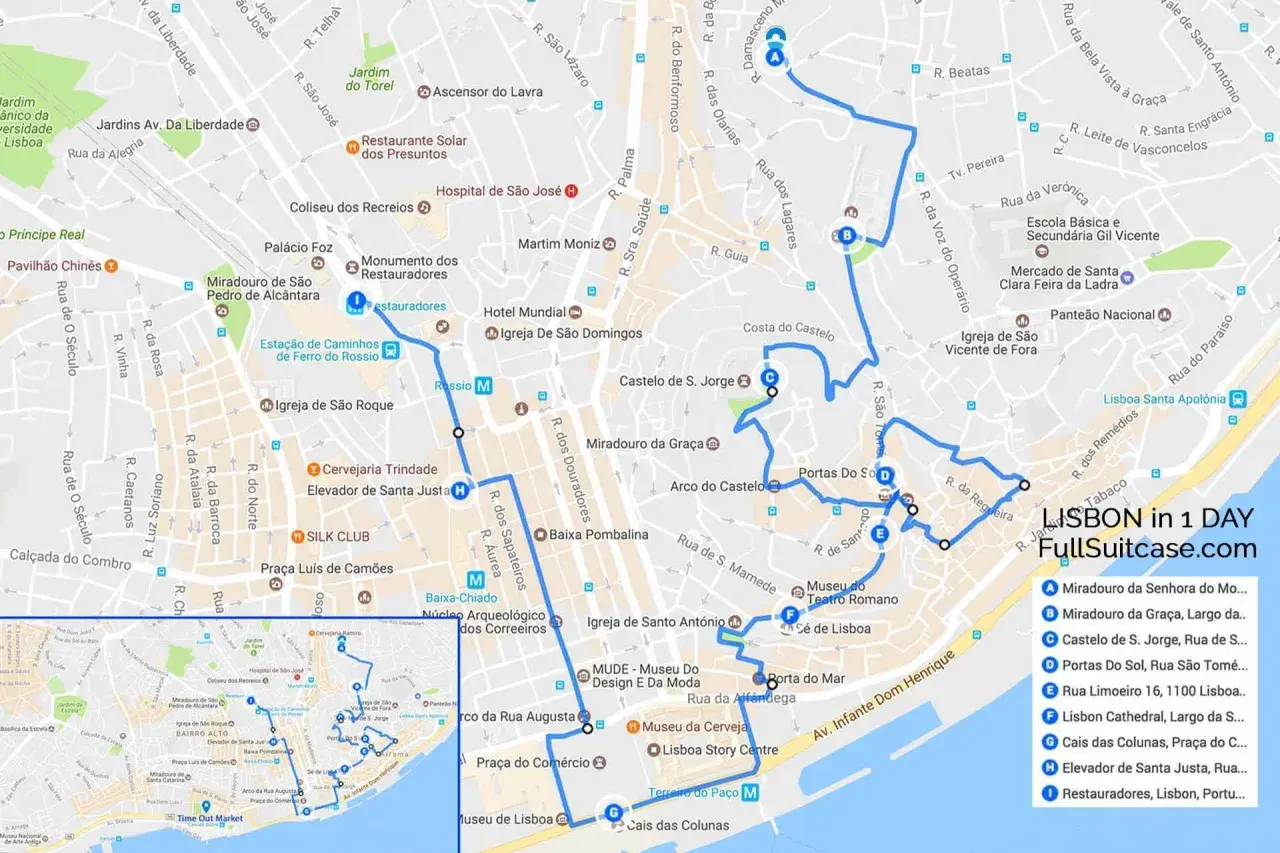
If I only had one day, I would keep the core of the trip in the historic center and nearby hills. That gives you the city’s strongest mix of views, old streets, tiled facades, and easy food stops without turning the day into a transport exercise. It is the most efficient way to get the Lisbon atmosphere people actually come for.
Morning in Baixa and the riverfront
Start early in Praça do Comércio, where the scale of the square immediately sets the tone. It is open, bright, and useful as a visual reset before the narrower streets begin. From there, walk through Baixa toward Rua Augusta and the nearby side streets, stopping for coffee and a pastry before the day gets busy.
If you want one quick landmark view, the Arch of Rua Augusta is a fine add-on, but I would not let it become a long stop. The real value here is walking the grid of the rebuilt center and noticing how quickly Lisbon shifts from formal squares to compact, lived-in streets. That transition is part of the city’s character, and it is worth experiencing on foot.
Afternoon in Alfama and the castle hills
By late morning or early afternoon, head into Alfama. This is where Lisbon stops feeling like a postcard and starts feeling like a city with texture. The lanes narrow, the climbs get steeper, and the views open up in unexpected places. I usually recommend moving slowly here rather than trying to “cover” it quickly; Alfama rewards wandering more than efficiency.
Two stops matter most in this part of the day: Miradouro de Santa Luzia and Castelo de São Jorge. Santa Luzia is one of the easiest places to pause for a classic view over the rooftops, while the castle gives you a broader look at the river and the city’s old layout. If you only want one elevated stop, choose the castle. If you want one easy-to-reach viewpoint with less commitment, choose Santa Luzia.
For lunch, I would stay in or near Alfama and keep it simple. A long lunch sounds appealing until you realize you have eaten away the best walking hours of the day. A quick tasca meal, grilled fish, or a bifana is usually enough to keep the schedule moving. The point is not to have the city’s most elaborate meal; it is to preserve your energy for the afternoon and sunset.
Evening in a viewpoint district or with fado
For the final stretch, I would choose one of two endings. If you want atmosphere, go for an early fado dinner in Alfama. If you want a broader city view and a more casual night, head toward Miradouro de São Pedro de Alcântara or Miradouro de Santa Catarina and stay in the city center afterward. Both give you that end-of-day Lisbon light that makes the hills look softer and the river brighter.I would not try to squeeze in more than one major evening plan. One good dinner or one good viewpoint is enough. Lisbon is a city where the pacing matters as much as the sights, and a calmer finish usually feels better than a rushed checklist. If you prefer monuments over wandering, that is where Belém enters the picture.
Belém is worth it, but only if you choose carefully
Belém is one of the easiest places to overdo on a one-day trip. It has several headline sights, but they are spread out enough that the area can swallow more time than expected. I recommend it when your trip priority is Portuguese history, maritime landmarks, and a pastry stop that lives up to the hype.
| Route choice | Best for | What you actually get | Main trade-off |
|---|---|---|---|
| Historic center first | First-time visitors, walkers, and anyone who wants the Lisbon “feel” | Praça do Comércio, Baixa, Alfama, viewpoints, and a flexible dinner | You will see fewer major monuments in one block |
| Belém add-on | Monument-focused travelers and people who care about maritime history | Jerónimos Monastery, the riverfront, Pastéis de Belém, and the Belém Tower area | More transit, more queue risk, and less neighborhood wandering |
In Belém, I would prioritize Jerónimos Monastery and Pastéis de Belém first. The monastery is one of the city’s most important historic sites, but it is also the kind of place that can eat your schedule if you arrive late. It is closed on Mondays, and last entry is at 5:00 pm, so the timing matters. If you are visiting on a Monday, I would choose the historic center instead and avoid building the day around a closed monument.
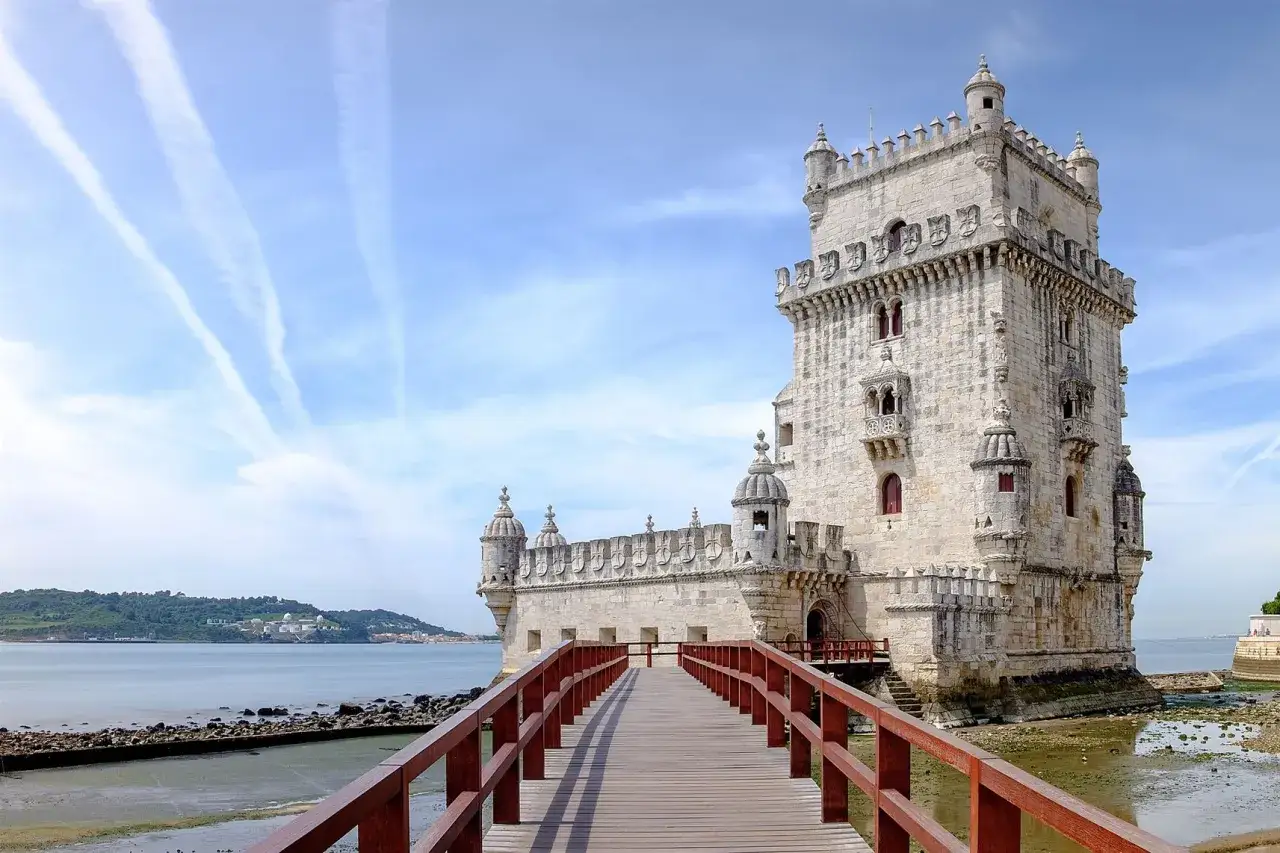
After that, the riverfront walk and the Monument to the Discoveries make sense if you still have energy. Belém Tower is iconic, but on a one-day itinerary I would only commit to it if the line is short and you are genuinely interested in going inside. Otherwise, I would admire it from outside and keep moving. That is the pattern in Lisbon: the smartest route is not the one with the most famous names, but the one that leaves you time to enjoy them.
How to get around without losing half the day
Lisbon is compact enough that walking does a lot of the work, but the hills make blind optimism a bad strategy. The goal is to combine walking with just enough transport to save your legs for the parts of the city that are worth the climb. As of 2026, the practical baseline is simple: buy the occasional card if needed, load a 24-hour ticket if you expect several rides, and avoid paying single fares every time you hop on and off.
| Option | Current cost | Best use | My take |
|---|---|---|---|
| Walking | Free | Baixa, Chiado, Alfama, viewpoints | Best way to feel the city, but the slopes are real |
| 24-hour Carris/Metro ticket | €7.25 | Multiple rides in one day | Usually the best value for a one-day itinerary |
| Occasional card | €0.50 | Anyone using metro, tram, or bus casually | Cheap enough that it should not be a decision point |
| On-board tram ticket | €3.20 | Single tram ride | Convenient, but expensive if you use it more than once |
| Santa Justa Lift ticket | €6.10 | Only if it is operating and you specifically want the ride | Not worth shaping your day around, especially while it is closed |
I would treat Tram 28E as an experience, not as essential transportation. It is scenic, historic, and crowded for exactly those reasons. If you want the classic tram feel, ride it early or make it a deliberate detour. If your priority is speed, use the metro or a short walk instead. That distinction saves a lot of frustration, especially on a tight schedule.
One more practical point: Visit Lisboa currently lists the Santa Justa Lift as temporarily closed, so do not plan a route around it. You can still see it from the street, but it should be a bonus sight, not a core part of the itinerary. With transport handled sensibly, the day becomes much easier to enjoy, and food is the next place where smart choices matter.
Where to eat when the schedule is tight
Food in Lisbon is not just a nice extra on a short trip; it is part of how the day feels. The trick is to avoid turning every meal into a sit-down event. I like a simple rhythm: coffee and pastry in the morning, a practical lunch, and one dinner that feels more deliberate. That keeps the day moving without making it feel rushed.
Breakfast that gets you moving
Start with coffee and a pastry, ideally something close to your morning route so you are not adding unnecessary detours. A bica and a pastel de nata are enough for most people to get going. If you are already near Belém, the famous custard tart stop there makes sense; if you are in the center, a good pastelaria is usually more efficient than chasing a specific address.
Lunch that does not eat your afternoon
For lunch, I would keep to dishes that arrive quickly and are easy to enjoy without lingering too long. Think grilled fish, a simple salad with a proper protein, or a local snack plate if you are not especially hungry. In practical terms, a casual lunch in Lisbon often lands in the €12 to €20 range, while something more elaborate can climb to €25 to €40 per person once drinks are included. The point is not exact budgeting; it is understanding how fast the middle of the day can disappear if you sit too long.
Read Also: Matera Travel Guide - What to Do in Matera, Italy
Dinner with either atmosphere or flexibility
For dinner, choose based on how much energy you have left. If you want atmosphere, a fado dinner in Alfama works well, but I would book ahead when possible. If you would rather keep things loose, stay around Bairro Alto or Chiado and go for a straightforward meal with a glass of wine. A one-day trip does not need a grand dining plan. It needs one meal that feels memorable and does not exhaust you.
I also think Lisbon is one of those cities where the best meal is often the one that fits the route, not the one with the loudest reputation. That is especially true when the day is short, because every detour competes with the things you came to see.
What I would skip on a one-day Lisbon visit
When time is limited, the hardest decision is often what not to do. Lisbon has enough famous names to make you feel as if you should try to fit in everything, but that is usually the wrong instinct. A better one-day plan comes from removing the low-value items first.
- Sintra, unless your Lisbon day is really just a launch point for a separate day trip.
- More than one major museum, because the transit time and mental fatigue add up quickly.
- Every famous viewpoint, since two or three strong miradouros are enough for a single day.
- A long queue for Santa Justa, especially while the lift is marked temporarily closed.
- Trying to combine Baixa, Alfama, Belém, Bairro Alto, and a river cruise, which sounds efficient until you are doing nothing but moving between them.
The real trade-off here is simple: the more neighborhoods you force into one day, the less each one feels like a place and the more it feels like a stop. Lisbon is best when you let the city breathe a little. I would rather give one district proper attention than spend the whole day checking names off a map.
The one-day Lisbon plan I would actually book
If I were shaping the day for myself, I would keep it honest and compact: early breakfast in Baixa, a slow walk through the historic center, a climb into Alfama, one strong viewpoint, one good lunch, and either a castle visit or a Belém extension depending on energy. That gives you the city’s best textures without the sense that you are sprinting from place to place.
- Choose one major hill route: Alfama and the castle if you want the classic old Lisbon feeling.
- Choose one riverside anchor: Praça do Comércio if you want a clean start, or Belém if monuments matter more.
- Choose one food priority: pastry in the morning, quick lunch, and a proper dinner at night.
- Leave one gap unplanned: Lisbon rewards a little slack time for photos, coffee, or an unplanned viewpoint.
That is the balance I would choose for first-time visitors: enough history to feel Lisbon, enough scenery to remember it, and enough open time that the city does not become a sprint. When people ask what to do in Lisbon for a day, my answer is not “everything”; it is this kind of route, with one or two smart choices that let the city show itself properly.