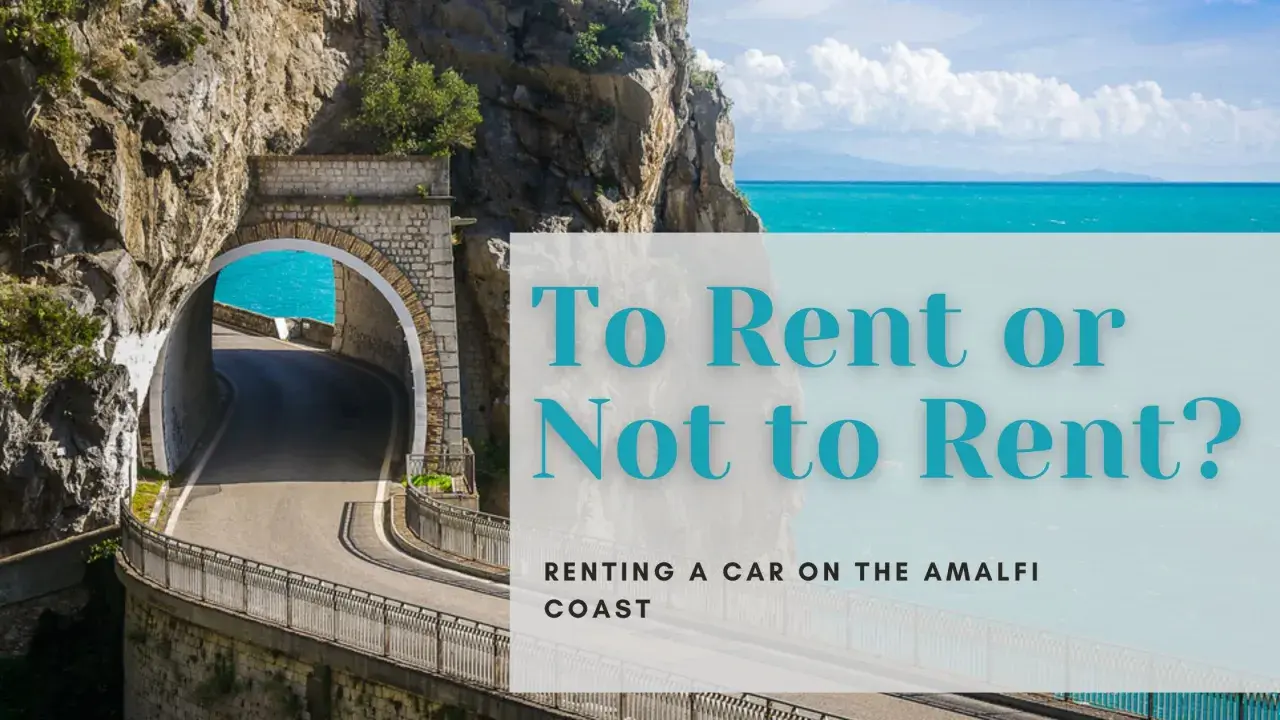
The Amalfi Coast is beautiful enough to tempt anyone into a self-drive, but the real decision is not about romance, it is about logistics. This guide breaks down when a car helps, when it slows you down, what parking and access rules change in practice, and which alternatives are usually easier for a trip built around scenic stops and short transfers.
For most visitors, the Amalfi Coast is easier without a car
- Skip the rental if you are staying in Positano, Amalfi, or another main town and plan to move mostly by day trips.
- Rent only if you have a clear inland use case, a guaranteed parking space, and a driver who is comfortable on narrow coastal roads.
- Ferries and buses usually handle coast-to-coast movement with less stress than driving.
- Parking and access rules are the hidden cost that most travelers underestimate.
- The smartest setup for many itineraries is one base town, then ferries for coast hops and buses only when needed.
Why driving the Amalfi Coast is harder than it looks
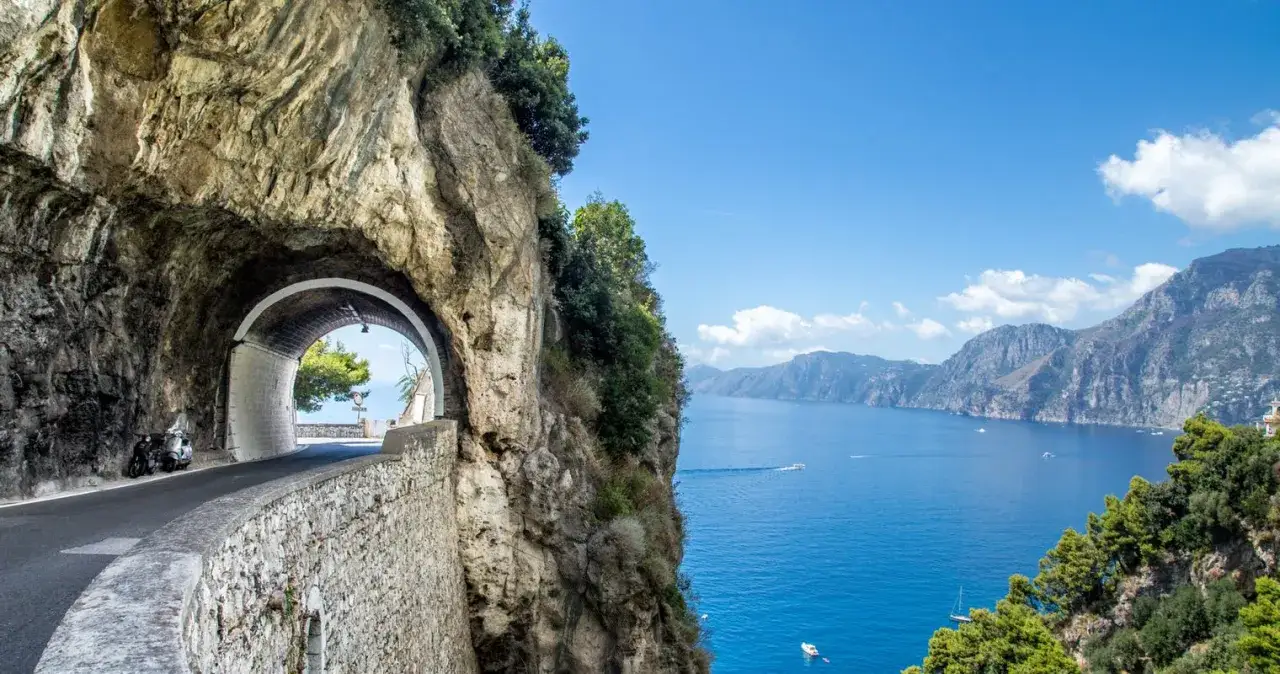
The Amalfi Coast drive looks simple on a map and very different in real life. The SS163 is narrow, curving, and often shared with buses, scooters, and tour coaches, which means the road is scenic but rarely relaxed. Once you add steep town entrances, limited parking, and historic centers that restrict access, a rental car becomes a very different proposition than it is in, say, rural Tuscany.
In 2026, the Comune di Amalfi confirmed alternating-plate restrictions on the SS163 for 30 March to 6 April and again for 24 April to 2 May, with traffic limited from 10 a.m. to 6 p.m.. That matters because it shows the road is not simply busy; it can also be regulated at specific times of year, which makes spontaneous driving less predictable than many visitors expect.
There is also a basic geographic problem: there is no rail line running along the coast, so every road transfer has to share a small amount of infrastructure. That is why even a beautiful drive can become a slow drive, and why the next question is not whether the coast is worth seeing, but whether a rental car is the best way to see it.
That leads directly to the situations where a car actually makes sense, because there are a few, and they are narrower than most first-timers assume.When a rental car actually makes sense
I would only recommend a car if it solves a real itinerary problem. If you are sleeping inland, making side trips that ferries and buses do not cover well, or traveling in a quieter season with a flexible schedule, a car can still be useful. The key is that it should serve the trip, not dominate it.
Good reasons to rent
- You are staying in an inland base such as Agerola, Tramonti, or another village away from the main cliff towns.
- Your plan includes Pompeii, the Sorrento Peninsula, or other destinations where road travel fits naturally.
- You are traveling in late fall, winter, or early spring, when traffic and parking pressure are much lower.
- You are in a group and can split the cost of fuel, tolls, and parking.
- Your accommodation has confirmed on-site parking and is clear about access rules.
Read Also: 2 Weeks in Sicily - The Perfect Itinerary for First-Timers
When I would not rent
- You are staying in Positano, Amalfi, or Ravello and want to walk, eat, and use the ferry or bus between towns.
- You are arriving for just a few nights and mainly want the classic coastal experience.
- You hate reversing on narrow roads, hunting for parking, or reading local access signs on the fly.
- You assume the car will be faster for every transfer, because on this coast that assumption often fails.
My practical rule is simple: if the car will spend most of the trip parked, it is probably the wrong tool. To see why, it helps to compare it with the alternatives that actually work well here.
How the alternatives compare in real life
For most visitors, the real choice is not car versus no car in the abstract. It is car versus ferry, car versus bus, or car versus a private driver. Each option works, but they work for different kinds of travelers.
| Option | Best for | Main drawback | Useful cost or rule of thumb |
|---|---|---|---|
| Rental car | Inland stays, flexible road trips, travelers who want to combine the coast with off-route stops | Parking, ZTL access, narrow roads, stress at peak times | Budget for rental plus fuel plus parking; the hidden costs add up fast |
| Bus | Budget travel and short town-to-town hops | Crowding, delays, limited evening service | COSTIERASITA 24 hours is EUR 10, or EUR 12 with Positano’s local buses included |
| Ferry | Scenic movement between ports in the main season | Seasonal service and fewer stops inland | Amalfi-Positano is EUR 10, Salerno-Amalfi is EUR 12; luggage is EUR 3 and pets are EUR 5 |
| Private driver | Door-to-door comfort, luggage-heavy arrivals, travelers who want zero parking stress | Highest price | Often the most convenient choice when time matters more than budget |
The bus is cheap and practical, but it is not foolproof. Tickets must be bought before boarding, and they cannot be purchased on board. Summer buses can be crowded enough that standing room is the norm, and service ends around 10 p.m., which makes dinner-to-dinner hops awkward. Ferries are the opposite: they cost more, but they are faster, calmer, and much better suited to a scenic coastline where the sea is often the most pleasant road.
If I were planning a first trip, I would usually choose ferries for the main coastal links, buses for short backup transfers, and a driver only when comfort or timing really mattered. That combination usually beats renting a car for the entire stay.
What parking and access rules change on the ground
This is the part most travelers underestimate. The Amalfi Coast does not just have roads; it has access rules, restricted centers, and parking spaces that disappear quickly in season. Amalfi’s official pages point drivers toward ZTL authorization and traffic guidance, and Positano has a dedicated ZTL portal as well. In practice, that means you should think about the car before you book it, not after you arrive and hope for the best.
Parking is also expensive enough to change the math. A realistic coast budget often includes rates in the EUR 3 to EUR 8 per hour range, with the busiest town-center lots climbing higher. If you leave a car all day, the parking bill can easily rival the cost of a transfer or a couple of ferry rides. That is why a cheap rental quote often stops being cheap once you add the real-life extras.
These are the questions I would ask any hotel before I drove there:
- Is parking on-site or off-site?
- Is the parking space inside a ZTL area?
- Do I need a permit or pass to reach the hotel?
- Is there a height, width, or vehicle-size limit?
- Will I need to walk or shuttle from the lot to the room?
If the property cannot answer those questions clearly, I would treat that as a warning sign. A coast trip should feel scenic and manageable, not like a parking audit with sea views. Once you factor that in, the final decision becomes much easier by trip style.
The decision I would make for different trip styles
If your trip is short, centered on Positano, Amalfi, or Ravello, and built around walking, eating, boat rides, and scenic stops, I would not rent a car. You will move more easily by ferry and bus, and you will avoid the daily friction of parking and access restrictions.
If your trip is longer, includes inland villages, and you have a guaranteed parking space, I would consider a car, but only as part of a broader road trip rather than the main way to move up and down the coast. That is the difference that matters: a car is better when it supports the itinerary, not when it becomes the itinerary.
If you are traveling with family, luggage, or a schedule that leaves little room for missed turns and delayed buses, I would compare the rental cost against a private transfer before deciding. On this coastline, convenience is often worth paying for, but parking stress usually is not.
My practical answer is this: rent only if you have a clear reason that the coast’s buses, ferries, and transfers cannot solve cleanly. Otherwise, leave the car behind, keep your base simple, and let the shoreline stay scenic instead of turning it into a driving problem.