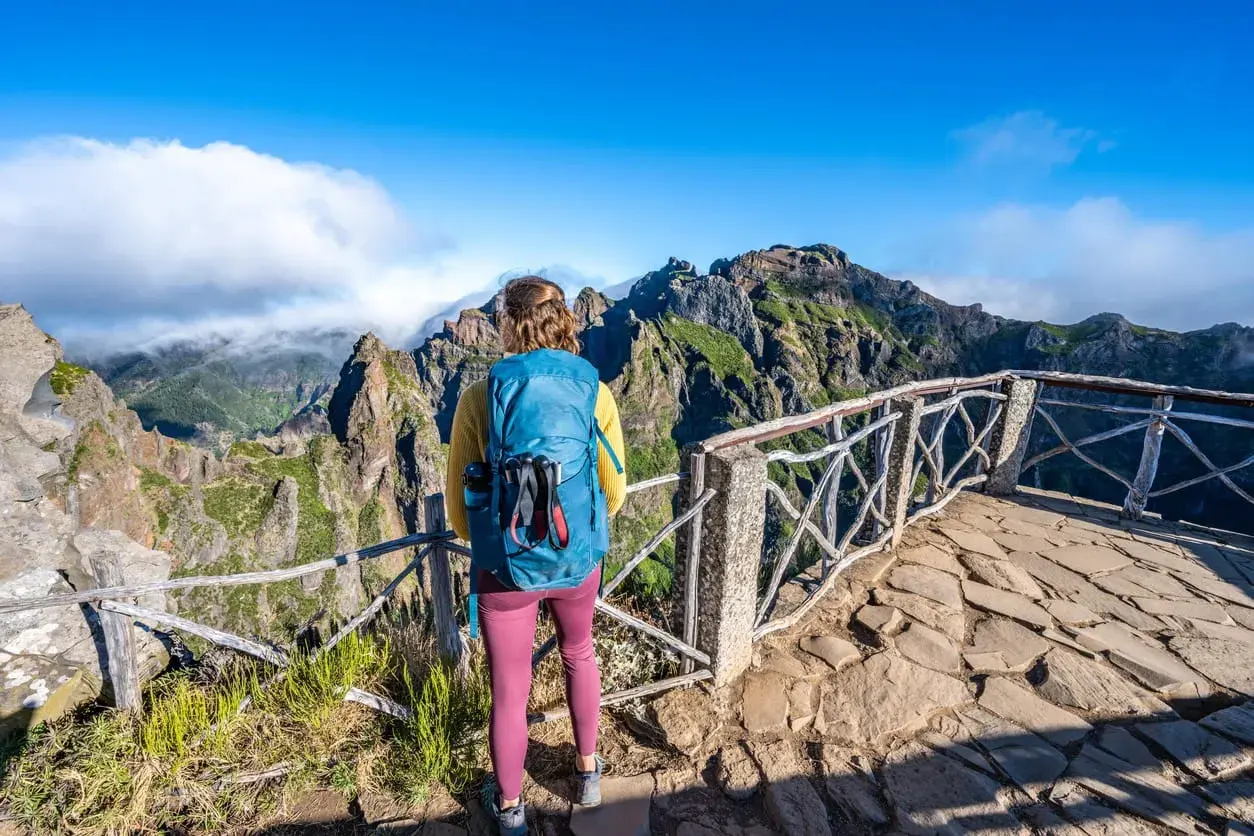
A Madeira hike is rarely just a walk. On this island, the route choice decides everything: whether you spend the day above the clouds on a ridge, inside a shaded levada corridor, or descending stone steps to a fishing village. In the next few minutes I’ll break down the trail types, the best routes for different fitness levels, what 2026 booking rules mean, and the gear details that actually matter on the ground.
Key things to know before you go
- All classified PR trails in Madeira require a reservation, and non-residents over 12 pay a €4.50 access fee.
- Levadas are the island’s water-channel walks, while veredas are footpaths. The former are often easier; the latter can be steeper and more exposed.
- For a first trip, the safest crowd-pleasers are Levada do Risco, Levada das 25 Fontes, and Vereda do Burro.
- Mountain routes such as Pico do Areeiro to Pico Ruivo are unforgettable, but they demand better timing, better footwear, and more respect for weather swings.
- Carry layers, waterproofs, water, snacks, and a torch if your route includes tunnels.
- Trail status can change, so I always check the official notice board before setting off.
What makes hiking in Madeira different from hiking almost anywhere else
Madeira is compact, but the terrain is anything but gentle. The island’s signature routes fall into two broad families: levadas, which follow old irrigation channels, and veredas, which are mountain footpaths cut into steep ground. That distinction matters, because a short distance on paper can still feel demanding once you add narrow edges, wet stone, tunnels, stair climbs, or a long descent.
The levada walks are the easiest way to understand the island’s landscape. They often run through laurel forest, past waterfalls, and along relatively level ground, although “relatively” is doing a lot of work here. Veredas are where Madeira gets dramatic. They climb ridges, cross exposed slopes, and give you the kind of views that make you stop every few minutes whether you planned to or not. I usually tell people to think of Madeira as an island where the scenery is the reward, but the terrain is the price.
That is also why the island appeals to such different hikers. You can build an easy half-day around a waterfall route, or commit to a serious mountain day with summit views and stair-heavy sections. Once you know that split, picking the right trail becomes much simpler, and the next step is deciding which routes are actually worth your time.
The routes I would put at the top of a first trip
If I had to narrow Madeira down to a handful of trails that cover the island well, I would choose a mix of one classic ridge walk, one or two levadas, and one historical descent. That gives you the full range without turning the trip into a checklist.
| Route | Length | Difficulty | Why it stands out | Best for |
|---|---|---|---|---|
| PR1 Vereda do Areeiro | 7 km | Moderate | High peaks, tunnels, steep rock stairs, and one of the most iconic mountain lines on the island | Fit hikers who want a true mountain day |
| PR6 Levada das 25 Fontes | 8.6 km round trip | Moderate | One of the most famous waterfall walks in Madeira, with lush surroundings and strong visual payoff | First-time visitors who want a classic levada experience |
| PR6.1 Levada do Risco | 3 km round trip | Easy | A short, family-friendly route that ends at a dramatic waterfall viewpoint | Beginners, families, or a lighter second hike on the same day |
| PR3 Vereda do Burro | 7.2 km | Easy | High-altitude scenery without the same commitment as the most serious summit routes | Walkers who want views without a punishing day |
| PR19 Caminho Real do Paul do Mar | 1.8 km | Moderate | A steep historical descent through terraces, with a strong sense of place | People who want a short route with character |
| PR17 Caminho do Pináculo e Folhadal | 15 km | Difficult | A longer, more serious walk through preserved forest and high ground | Experienced hikers who want a full-day challenge |
The route that gets talked about the most is still Pico do Areeiro to Pico Ruivo, and for good reason. According to Visit Madeira, it covers about 7 km, takes around 3.5 hours, and includes tunnels, steep stairs, and a hard final climb. It is the kind of hike that looks almost cinematic on a clear day, but it is not the one I would choose casually if the forecast is unstable or if someone in the group dislikes exposure.
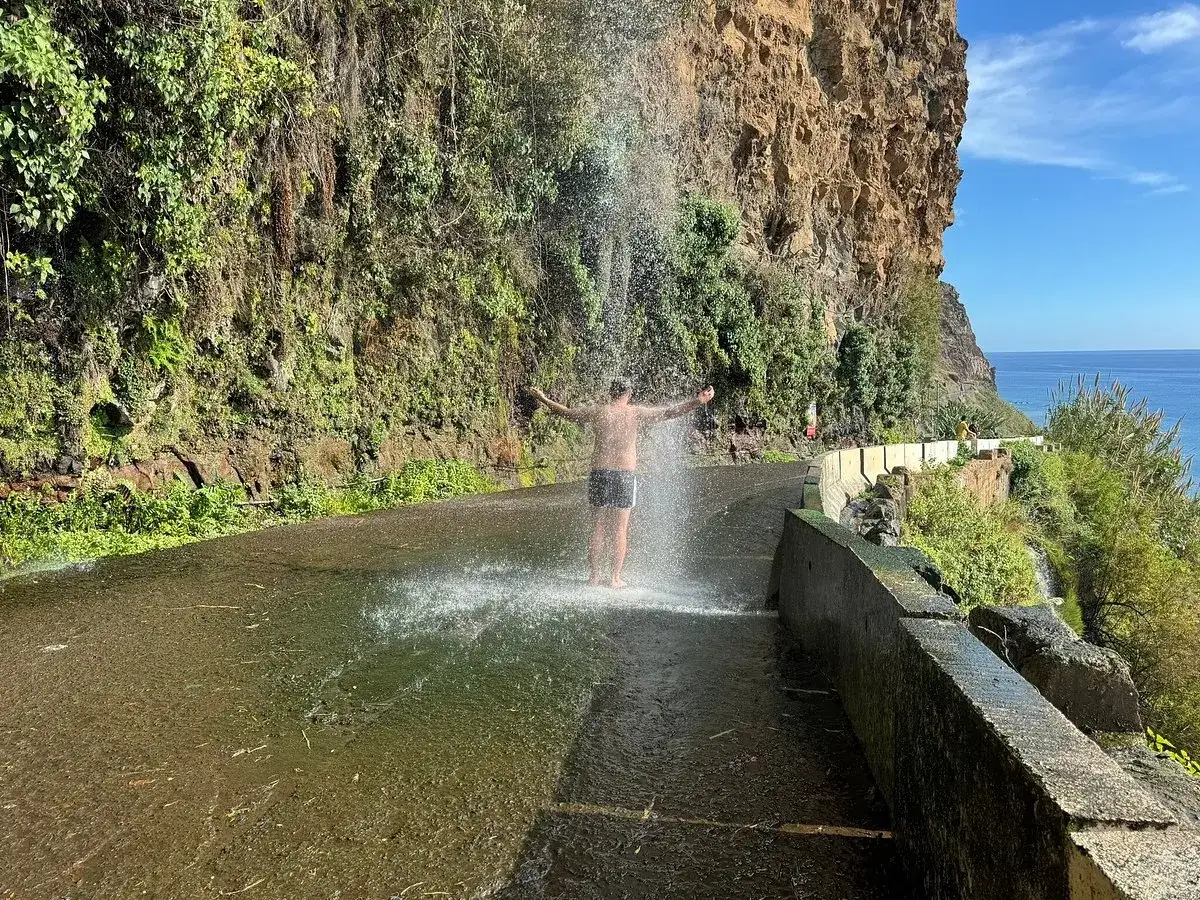
For a more forgiving first day, Levada do Risco is the smarter move. It is short, easy, and visually strong enough that you do not feel like you are settling for a “starter” trail. Levada das 25 Fontes is the more famous companion route, and I think the pairing works especially well because one route gives you a gentler introduction while the other gives you the full waterfall payoff. From there, you can decide whether you want more forest, more coastline, or more altitude, which is exactly what the next section helps with.
How I choose the right trail for a given day
On Madeira, I do not start by asking, “How long is the trail?” I start by asking, “What kind of terrain do I want to deal with today?” That framing prevents most bad decisions. A 4 km levada with wet stone and narrow edges can feel more tiring than a 7 km path on stable ground, while a ridge route with clear views can feel easy one hour and mentally demanding the next if the wind picks up.
- If you want the safest first choice, start with Levada do Risco. It is short, easy, and gives you a clean read on how Madeira hiking feels.
- If you want the classic postcard experience, choose Levada das 25 Fontes. It is more popular for a reason, but that also means you should expect more people.
- If you want a real mountain day, pick PR1 or another summit-style route, but only when visibility is good and you are comfortable on stair-heavy terrain.
- If you want views without a punishing itinerary, Vereda do Burro is a useful middle ground.
- If you want something short with local character, Caminho Real do Paul do Mar gives you a compact descent and a strong sense of history.
There is also a practical rule I use repeatedly: choose levadas when you want flow, choose veredas when you want drama. Levadas tend to give you continuous forward movement and frequent shade. Veredas reward you with broader panoramas, but they ask for more attention, especially on narrow or steep sections. If you understand that trade-off, you are much less likely to overestimate what a trail description actually means in real life.
That choice matters even more once you factor in booking, route status, and the access rules that now shape hiking in 2026.
What to book and check before you leave the hotel
According to Visit Madeira, all classified walking trails in the PR network require a reservation. That includes the headline routes most visitors want, such as PR1, PR6, and PR8. For non-residents over 12, the current access fee is €4.50. In practical terms, that means hiking in Madeira is still easy to enjoy, but it is no longer the kind of thing I would leave until the last minute without checking the official trail system first.
- Reserve the trail before you go, especially for the better-known routes.
- Check whether your route is open, restricted, or temporarily altered.
- Confirm whether the route is one-way or has any bypass sections in operation.
- Sort parking early if your trail starts at a popular mountain access point.
- Keep your reservation details handy in case of an inspection on the trail.
The reason I am being blunt here is simple: trail conditions can change. Visit Madeira’s own notices have shown temporary closures and route adjustments, including the PR6 bypass being closed for a short period while the one-way section operated in both directions. That is normal for Madeira, not a sign that the island is difficult to enjoy. It just means the smart hiker treats the official trail status as part of the planning, not as a detail to skim past.
Parking is another issue people underestimate. The Pico do Areeiro page currently lists parking at €4 per hour, which is enough to make a rushed start more expensive than it needs to be. If you know you want a summit walk, I would plan for an early departure rather than assuming you can simply arrive, park, and begin at a relaxed pace. From here, the only thing left is packing correctly, because Madeira punishes overconfidence more than almost any other easy-access hiking destination I know.
What I always carry on Madeira’s trails
Madeira’s official advice to walkers is sensible and, in my view, worth following almost literally. The weather can swing between sun, wind, and rain, and the average temperature rarely falls below 15°C, which is exactly the sort of fact that tempts people into underpacking. I would not do that. I have seen too many hikers start in a T-shirt and end a few hours later cold, wet, or both.
My basic kit for a Madeira trail is simple: waterproofs, a light insulating layer, hat, gloves, sunscreen, food, plenty of water, and a torch if the route includes tunnels. A map and compass are still worth carrying even if you rely on a phone for navigation, because battery drain becomes a real issue on longer days. Footwear matters more than branding here. You want grip, stability, and something that can handle wet stone and stair descents without turning every step into a small calculation.
Timing is another piece of the kit, even if it is not something you can put in a backpack. I usually prefer early starts on Madeira because the light is better, the air is cleaner, the paths are quieter, and mountain weather is often more predictable before cloud builds. If a route has a dramatic viewpoint, the morning light often makes it better anyway. That is especially true if you are trying to fit more than one hike into a short stay, which is where route planning becomes a lot more efficient.
How I would plan one day, or three, around Madeira’s best walks
If you only have one hiking day, I would not try to “do Madeira” in a single epic push. I would choose one major walk and leave enough room to enjoy the island rather than just transit through it. For a balanced first day, the easiest formula is a waterfall route in the morning and a coastal lunch afterward. If you are stronger and want a headline route, make the summit walk the main event and keep the rest of the day light.
| Time available | Good route plan | Why it works |
|---|---|---|
| Half a day | PR6.1 Levada do Risco, or PR19 Caminho Real do Paul do Mar | Short, manageable, and still rewarding enough to feel like a proper outing |
| One full day | PR6 Levada das 25 Fontes plus a lighter stop in Rabaçal, or PR1 if you want the big mountain experience | Gives you one substantial route without forcing you to rush the day |
| Three days | Day 1: PR1. Day 2: PR6 and PR6.1. Day 3: PR19 or PR17, depending on fitness | Balances altitude, forest, and coastline instead of repeating the same landscape |
If I were building a short hiking trip for someone who wants variety, I would deliberately avoid doing three routes that all feel the same. One summit trail, one levada, and one historical descent gives you a much clearer sense of Madeira’s range. That also makes the trip more memorable, because the island does not work best as a collection of checkboxes. It works best as a sequence of contrasts, which leads naturally into the one decision I would make if time were tight.
The route mix I would trust most on a short Madeira trip
If I had to simplify the whole island into a practical recommendation, I would say this: start with one accessible levada, add one iconic mountain route if conditions are good, and finish with one trail that shows you Madeira’s cultural side. That combination gives you the island’s essential textures without exhausting you or turning the trip into a logistics exercise.
For most travelers, the safest starting point is Levada do Risco. It is easy, scenic, and low-risk compared with the bigger mountain routes. If you are confident on uneven ground and the weather is cooperative, PR1 delivers the strongest single-day wow factor. And if you want a route that feels more like a walk through local history than a pure fitness challenge, Caminho Real do Paul do Mar is short but memorable. That is the kind of trail I like on Madeira, because it does more than show scenery. It explains the island.
Before you lock in your plan, check the official trail status once more, especially for the high routes and the most popular levadas. That one habit prevents most avoidable mistakes, and on Madeira it is the difference between a smooth day and a frustrating one.