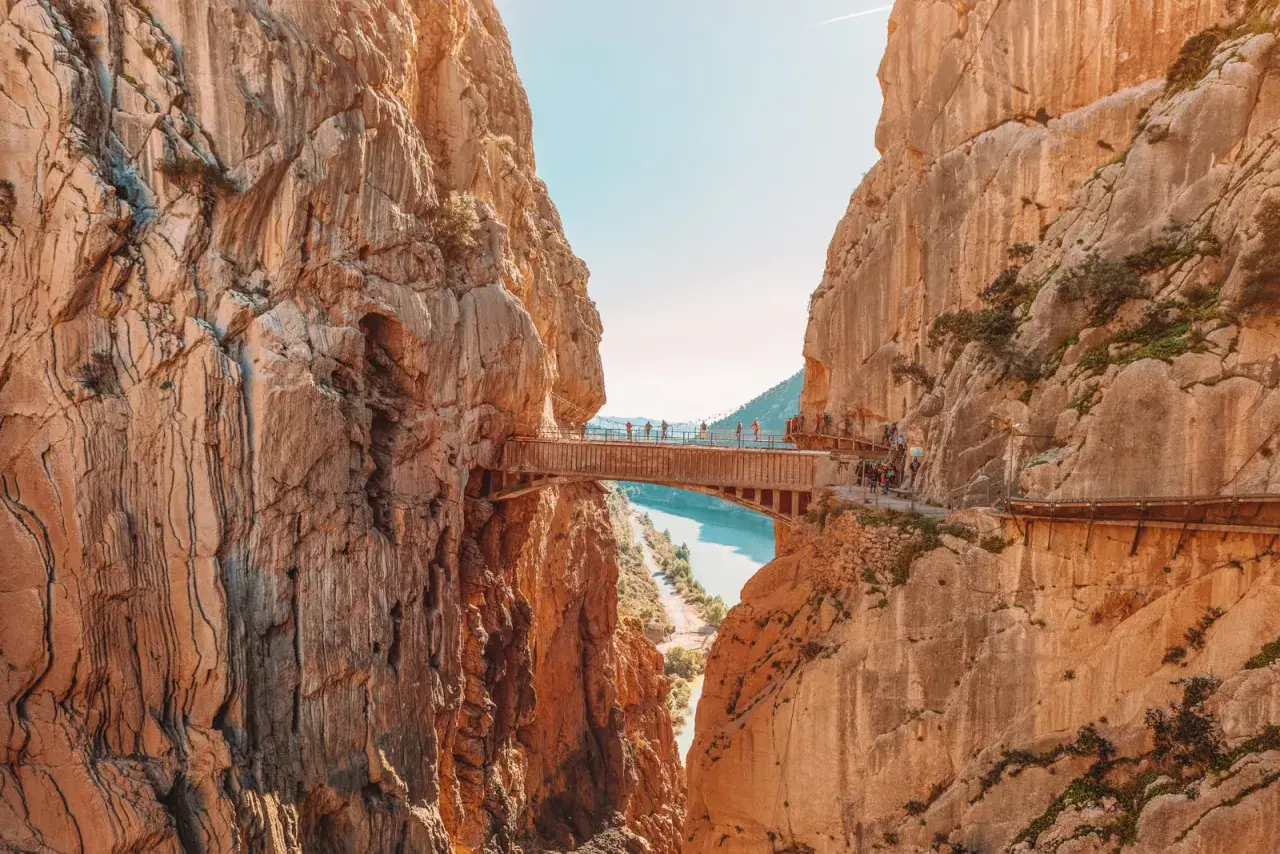
Spain is not one walking destination; it is several, and the difference matters. The best walks in Spain can be a coastal path with sea spray, a pilgrimage stage with hostels every few kilometres, or a mountain gorge where a short route still feels properly demanding. In this guide I focus on the routes that are actually worth planning around, how Spain’s trail system works, and what I would consider before deciding where to walk.
What matters most before you choose a route
- Spain has a dense network of signposted footpaths, so the real choice is terrain, season, and logistics.
- GR routes are long-distance trails, PR routes are short-distance, and SL routes are the easiest local walks.
- The Camino de Santiago is the reference point for many visitors, but it is only one part of the picture.
- Coastal routes are usually the easiest to combine with a short trip, while mountain routes reward better fitness and more careful timing.
- Spring and autumn work best in most of the country; winter is strongest in the Canary Islands.
How Spain’s trail system helps you choose quickly
Spain is unusually good for walking because the signage system is simple once you know the code. I like to think of it as a filter: it tells you whether a route is a relaxed day out, a full-day hike, or a multi-day trek before you even look at the scenery. That saves a lot of disappointment later, especially if you are trying to match a route to a holiday rather than to a training plan.
| Trail type | Typical length | Marking | What it usually means in practice |
|---|---|---|---|
| GR long-distance route | Over 50 km | Red and white | Several days, often with real elevation gain and occasional remote sections |
| PR short route | 10-50 km | Yellow and white | Half-day to one day, often the most practical option for visitors |
| SL local route | Under 10 km | Green and white | Short local walks, usually the easiest choice for families or casual walkers |
That structure gives Spain a rare advantage: the same landscape can work for a gentle outing, a weekend, or a proper trek depending on the route class. Once that framework makes sense, it becomes much easier to match a region to the kind of walking you enjoy most.
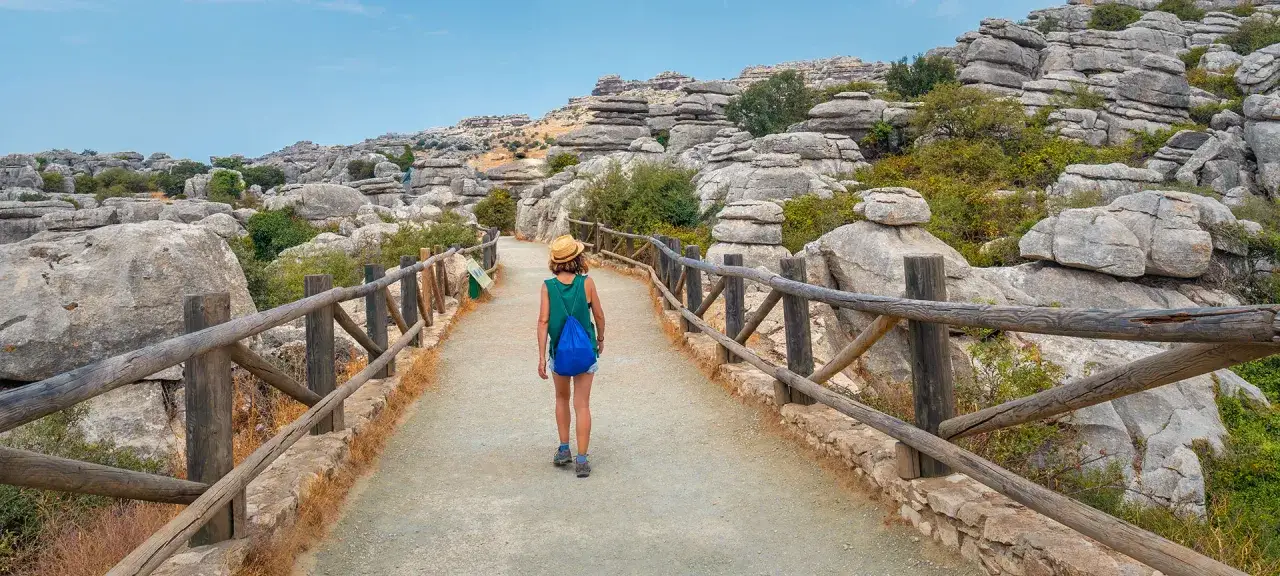
The best regions for different walking styles
If I were mapping Spain for a walking trip, I would divide it by experience rather than by geography alone. Some areas are made for coastal wandering, others for mountain effort, and others for slower pilgrimage-style travel where the route is as important as the scenery.
- Asturias and the Picos de Europa for dramatic gorges, mountain valleys, and routes that feel wild without being inaccessible. This is where Spain starts to feel properly alpine in places.
- Galicia for greener landscapes, softer terrain, and Camino stages that reward steady pacing more than speed. It is one of the best regions if you want atmosphere as much as scenery.
- Costa Brava for coastal paths, coves, and short stages that fit neatly into a beach or city break. It is one of the easiest places to combine walking with downtime.
- Mallorca and Menorca for island routes with a clear sense of progression, from dry-stone mountain paths to full coastal circuits. These islands are especially strong if you like doing a route in stages.
- The Canary Islands for winter walking, volcanic terrain, and big changes in landscape over short distances. If you want to avoid cold mainland conditions, this is the strongest bet.
- Andalusia for iconic gorge walks and dry, sunlit routes that are most comfortable outside the hottest part of the year. It is excellent for scenic contrast, but timing matters.
I would not pick the region only for the headline attraction. The difference between an enjoyable walk and a frustrating one often comes down to shade, transport, and how exposed the route feels in the season you are actually travelling. Those regional differences are useful, but the route names people remember are even more specific, so I would shortlist them next.
The routes I would shortlist first
Some Spanish routes are famous for good reason, but they are not all the same type of experience. A good shortlist mixes one or two big-name routes with shorter, more flexible paths that fit real travel schedules. That is usually the best way to avoid overcommitting to something that looks manageable on paper and turns into a logistical headache on the ground.
| Route | Length or structure | Best for | Why it stands out |
|---|---|---|---|
| Camino de Santiago French Way | Around 930 km in Spain, about 32 stages | First-time pilgrims and long cultural walks | The strongest mix of towns, services, history, and day-to-day walking rhythm |
| Camino Primitivo | Around 325 km, about 14 stages | Walkers who want more solitude and a tougher profile | Rural, atmospheric, and more demanding than the better-known routes |
| Cares Trail | About 22 km, usually just over six hours | One serious day in the mountains | Gorge scenery, tunnels, bridges, and constant visual drama |
| Caminito del Rey | 7.7 km, about 3-4 hours, one-way | A half-day with a strong wow factor | Suspended walkways and an easy-to-enjoy route if you plan the booking properly |
| Camí de Ronda | 43 km from Sant Feliu de Guíxols to Begur, usually 2-3 days | Coastal walkers | Cliffs, coves, beaches, and a route that breaks neatly into shorter sections |
| Camí de Cavalls | 185 km around Menorca, split into 20 stages | Island walking in manageable segments | It can be done all at once or one stretch at a time, which makes it very flexible |
| GR-221 Dry Stone Route | Around 170 km in northwest Mallorca | Multi-day rural walking | Stone villages, mountain scenery, and a clear sense of place |
My practical view is simple: the Camino de Santiago gives you the best long-form walking culture, the gorge routes give you the most dramatic single-day experiences, and the coastal routes are the easiest to adapt to a shorter trip. The next question is when each route actually works best, because Spain’s climate changes more than many visitors expect.
How to time a walk around weather and terrain
Season matters more in Spain than many first-time visitors assume. Spring and autumn are the safest all-round choices for most regions because temperatures are milder and the walking feels less punishing, especially on exposed paths or in inland areas. Summer can still be excellent, but I would use it selectively rather than blindly.
- Spring works well for most of the north, the Camino, and many coastal routes, although you still need to plan for rain in the greener regions.
- Autumn is often the best balance of clear weather, fewer crowds, and comfortable temperatures, especially for long-distance or multi-day walks.
- Summer is best for early starts, high ground, and northern or island routes where heat is less punishing than in inland Spain.
- Winter is the strongest season for the Canary Islands, where the climate is much better suited to hiking than much of mainland Europe.
I also separate “short” from “easy” very carefully. A 7 km route on flat ground is one thing; a 7 km gorge walk with rock underfoot, limited shade, or a one-way exit is something else entirely. On exposed routes, I start early, carry more water than I think I need, and plan around the possibility that the weather can change the whole feel of the day. That is especially important if the route has limited access points or sits high enough to be affected by wind and heat in the same afternoon.
From there, it helps to think less about the postcard view and more about the practical shape of the walk. That is where a lot of visitors make avoidable mistakes.
Planning details that save time and energy
The biggest mistake I see is treating every Spanish walking route like a casual city stroll. Some are built for flexibility and some are not, and the difference affects everything from footwear to transport back to your base. If you want the day to feel smooth, these details matter more than the headline distance.
- Check whether the route is linear or circular. Linear walks often need a shuttle, a second car, or a return plan, which is easy to overlook when the scenery is grabbing your attention.
- Book ahead when the route is famous. Iconic walks such as Caminito del Rey can require timed access, and accommodation around busy routes fills faster than most people expect.
- Carry enough water. I would not go into an exposed summer route with less than 1.5 litres for a half-day, and I would carry more when shade is limited.
- Use the right footwear for the terrain. Trail shoes are fine on many routes, but rocky mountain paths and gorge trails are not the place to test soft soles or brand-new shoes.
- Download offline maps. Signage is generally good, but a wrong turn at a junction or a missed spur can still cost time, especially in longer routes.
- Do not underestimate the “easy” trail. A route can be short, well known, and still physically sharper than it looks because of gradients, heat, or underfoot conditions.
I would also keep one rule in mind: the best walk is not necessarily the most famous one. Sometimes the smartest choice is a shorter PR or SL route that leaves you fresh enough to enjoy the rest of the trip. If you want a simple rule for a first visit, I would start with the route type before the scenery, because that decision solves more problems than the view ever will.
Where I would start on a first trip to Spain
If I were building a first walking trip to Spain for someone who wants a strong mix of scenery and practicality, I would keep it very focused. One region, one iconic route, and one easier backup walk is usually a better trip than trying to squeeze in every famous name at once.
- For one iconic day, I would choose Caminito del Rey because it gives you a dramatic, memorable route without demanding a multi-day commitment.
- For coastal variety, I would choose Camí de Ronda or a section of Camí de Cavalls, depending on whether you want mainland cliffs or an island circuit.
- For a true walking holiday, I would choose a section of the Camino de Santiago, especially if you want villages, accommodation, and a clear daily rhythm.
- For a tougher mountain experience, I would go to the Cares Trail or the Camino Primitivo, but only if I wanted the trip to feel more physical.
- For winter travel, I would look to the Canary Islands first, because they solve a weather problem rather than creating one.