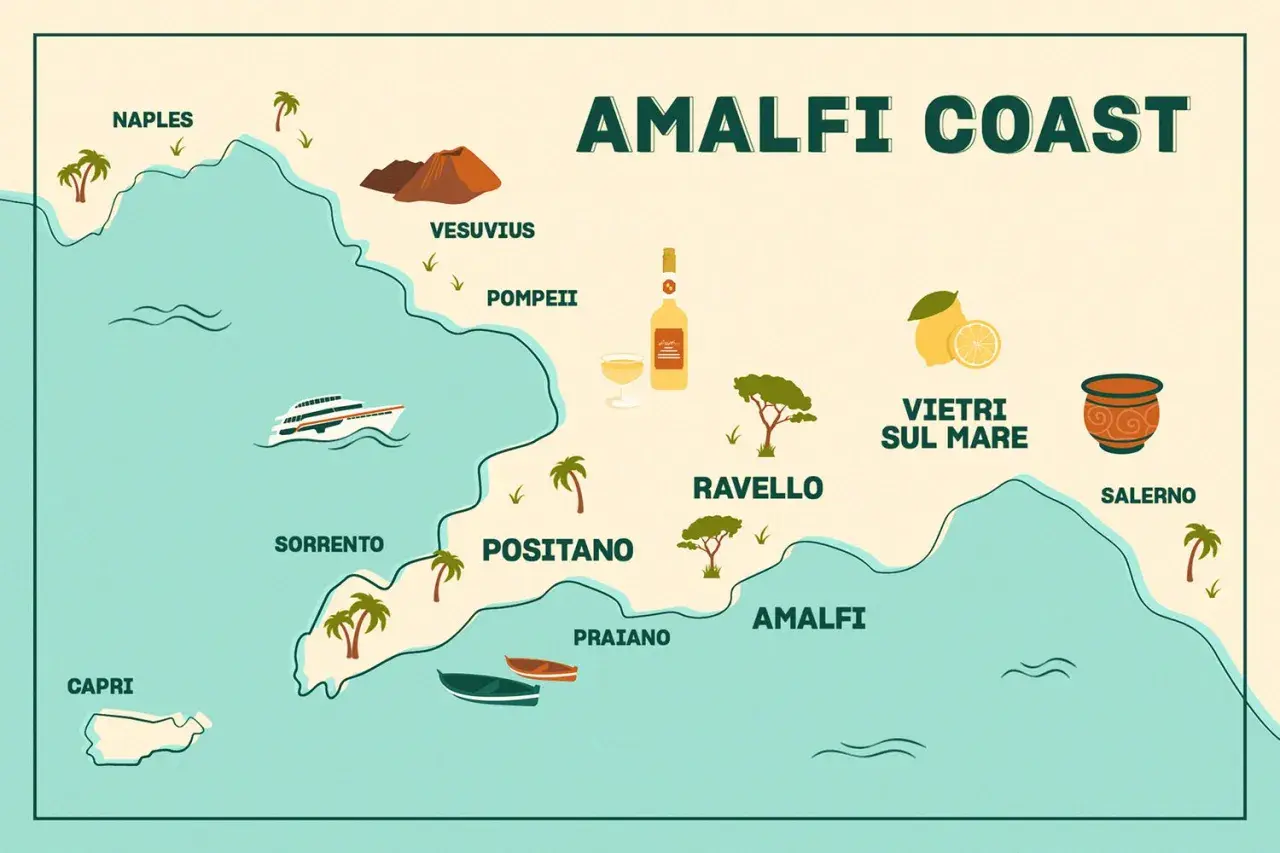
The smartest route depends on what kind of trip you are planning
- Fastest scenic option: the direct ferry works best in the main sailing season, but departures are limited.
- Best balance of comfort and cost: train to Sorrento or Salerno, then continue by ferry or bus.
- Best for luggage or late arrivals: a private transfer removes the connection puzzle.
- Cheapest option: the public bus, though it is usually the least comfortable and most affected by traffic.
- Most important planning detail: the coast is not one arrival point, so the right route depends on whether you are staying in Amalfi, Positano, Ravello, or farther inland.
The main routes and what each one is really good for
When I plan this route, I do not start with transport mode. I start with the real question: do I want the transfer to disappear, or do I want it to become part of the trip?
| Route | Typical door-to-door time | Current price signal | Best for | Main limitation |
|---|---|---|---|---|
| Direct ferry from Naples Beverello | About 2 to 3 hours | €31 one-way adult fare | Scenic, simple arrival in season | Seasonal service, weather, and some sailings that connect via Capri |
| Train to Sorrento + ferry to Amalfi | About 2.5 to 4 hours | €23.50 ferry fare plus the train ticket | Balanced comfort and flexibility | One connection to manage |
| Regional bus | About 2.5 to 4.5 hours | Usually the cheapest public option | Budget travel and inland stops | Traffic, curves, and baggage stress |
| Private transfer | About 75 to 120 minutes | Highest-cost option | Door-to-door ease, late arrivals, family travel | Expensive |
| Self-drive | About 90 to 180 minutes | Rental, parking, and tolls | Multi-stop itineraries | Parking and coastal traffic |
My rule of thumb is simple: if the transfer is part of your vacation, choose the ferry. If the transfer is just a means to an end, choose the option that gives you the most buffer. That is usually where the whole decision starts to make sense, and it leads straight into why the ferry remains the strongest scenic choice for most visitors.
Why the ferry is still the cleanest scenic choice
The direct sea link is the most elegant answer when the schedule lines up. The current 2026 timetable for Naples Beverello to Amalfi runs from April 1 to November 3, with adult one-way fares at €31. In the same sailing season, Naples Beverello to Positano follows a similar pattern, with departures clustered around morning and afternoon windows, which makes the route feel practical instead of purely decorative.What I like about the ferry is not just the view. It is the absence of friction. You skip the road traffic, you avoid the worst parking stress, and you arrive feeling like the coast has already started. That matters if you are landing in Naples, checking into a hotel in Amalfi or Positano, and do not want your first hour to be spent negotiating switchbacks.
There is one catch, and it matters. The current notes for the Naples ferry timetable flag some departures that require a change in Capri, so I always check the exact sailing rather than assuming every listing is a straight, nonstop hop. In rough seas or on a day with schedule changes, the ferry can also be the first option to wobble, which is why I would not build a too-tight flight connection around it. The ferry is the best choice when the timing fits, and the next section is about the fallback I trust when timing matters more than romance.
When the train plus ferry combination works better
If I am traveling with more luggage, arriving on a flight that could slip, or simply wanting a route that is easier to absorb if one piece moves, I usually split the trip. Naples to Sorrento is the classic rail leg. The current tourist-train service on that line lists 8 daily runs from March 28, 2026, which is the sort of frequency that gives a trip some breathing room instead of turning it into a timed performance.
From Sorrento, the ferry to Amalfi is a very clean second leg. The current seasonal timetable lists departures at 9:00, 9:30, 11:00, 12:25, 15:15, and 16:10, and the adult fare is €23.50 one way. Luggage is charged separately at €5 per piece, which is exactly why I like to think about this option before I overpack. It is still a comfortable route, but you see how the small costs add up once bags enter the equation.
There is also a strong Salerno-based variation of this idea. If your train line or hotel logic makes Salerno the better rail stop, the coast ferry network there is a very practical fallback and is less tied to one narrow tourist corridor. I like that option for shoulder-season trips because it keeps the sea transfer in the plan without forcing you into the most crowded Naples-side departures. Once you start looking at the bus network, though, the trade-offs become sharper and a little more honest.
The bus routes that make sense when you are not chasing comfort
The bus is the budget route, but it is the one travelers most often underestimate. The current Amalfi-Naples line 5020 connects Amalfi with Atrani, Minori, Maiori, Cetara, Vietri sul Mare, Cava de' Tirreni, Nocera, and Naples. The inland 5080 route runs via Agerola, Gragnano, and Castellammare before it reaches Naples. Those are very different journeys, and they serve different kinds of travelers.
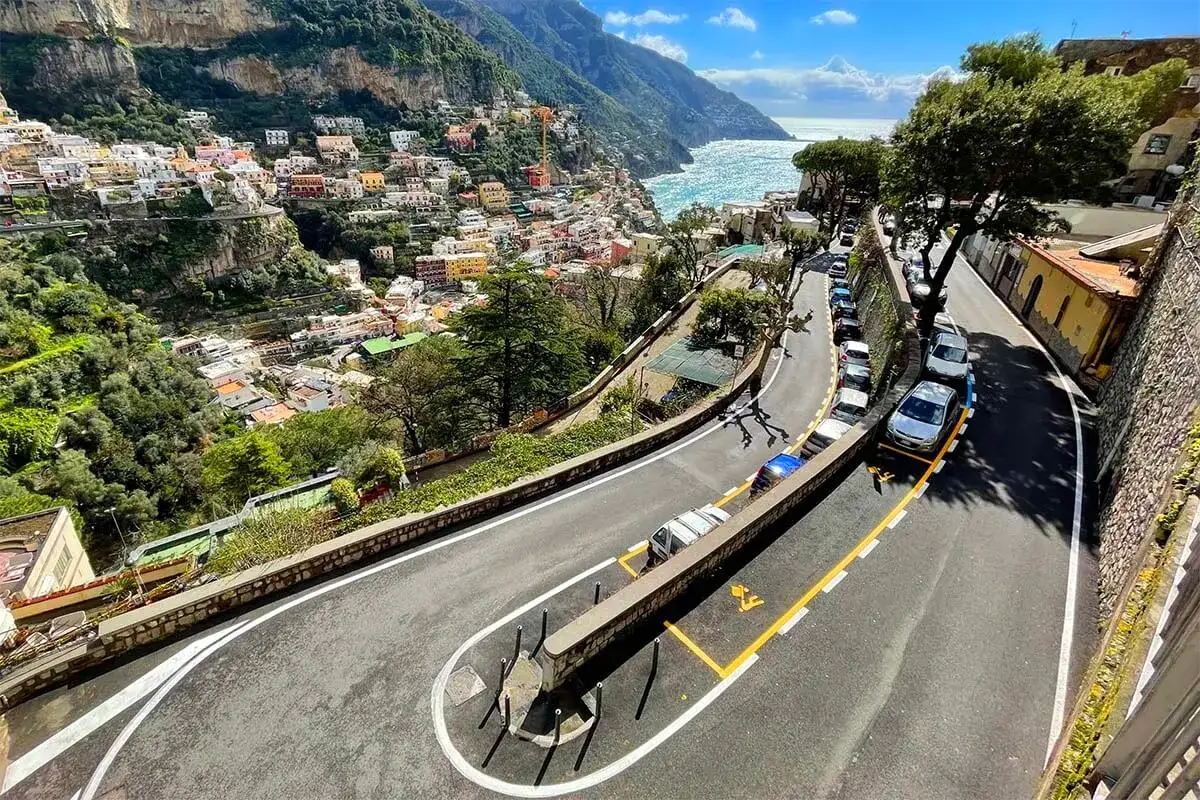
I use the bus when price matters more than comfort, or when I am staying in a place that sits awkwardly between ferry ports. I do not use it when I am arriving after a long flight, carrying oversized luggage, or trying to keep a fixed dinner reservation. The road is beautiful, but the same curves that make it beautiful also make it slow. If you are heading toward Agerola or the Path of the Gods area, the inland route can actually be the smarter choice; if you are aiming straight for the seafront towns, the bus is usually the least elegant way to get there.That brings me to the decision I make when speed and convenience matter more than budget: private transfer or self-drive.
When a car or private transfer earns its price
If flexibility is the priority, a car or private transfer can make perfect sense, but only under the right conditions. I would lean this way for families, late arrivals, or trips where the hotel sits high above the harbor and every extra connection feels like a tax on the day. A private transfer also removes the hardest part of the route puzzle: moving bags between dock, station, and hotel in midsummer heat.
Self-driving is the more complicated version of the same decision. You gain control, but you inherit Amalfi Coast traffic, tight parking, and the constant question of where to leave the car once you arrive. If your itinerary is built around one base and a few day trips, a car can still work. If you plan to move between several coastal towns, it usually becomes a liability rather than a convenience.
My cleanest advice is this: pay for flexibility only when you will actually use it. Otherwise, let the coast do what it does best and keep the transfer simple. The best route also changes depending on which town you are staying in, and that is where most first-time planners misread the map.
The route I would choose in each common scenario
If I had to reduce the whole decision to a few rules, this is what I would do.
- First-time summer trip: direct ferry from Naples if the sailing fits your dates.
- Shoulder season or tighter budget: train to Sorrento, then ferry to Amalfi.
- Arriving late or carrying heavy luggage: private transfer.
- Sleeping in Ravello: arrive in Amalfi first, then continue uphill by bus or taxi.
- Sleeping in Positano: I usually prefer arriving by sea rather than forcing a road transfer.
- Staying in Agerola or planning the Path of the Gods: the inland bus route can be more logical than a port-first plan.
- Trying to save every euro: use the bus, but keep your schedule loose.
The small checks that make the biggest difference are boring, but they matter: book ferries early in peak months, leave a generous buffer after flights, watch luggage charges, and do not assume the first timetable you see is the one that survives the day. If I were planning this trip for myself in 2026, I would pick the ferry when the season and weather cooperate, use the train-plus-ferry combination when I want more flexibility, and reserve the private transfer for the moments when convenience is worth paying for. That is the version of the Naples-to-Amalfi Coast trip that holds up best in real life, not just on paper.