The key planning rules before you book anything
- Think in bases, not attractions. Three well-chosen hotels beat six rushed stopovers.
- For a first trip, 10 days is the sweet spot. Seven days works only if you keep the route tight.
- Use a car where the landscape opens up. It helps in Puglia and Basilicata, but it is a liability in Naples and much of the Amalfi Coast.
- Spring and early autumn are the safest bets. Weather is easier, roads are calmer, and outdoor time feels less compressed.
- Book the coast first. In 2026, the best rooms and the most scenic stays disappear earliest.
A route that gives you coast, history, and breathing room
If I were planning a first trip through southern Italy, I would build it around Naples, the Bay of Naples, Matera, and one base in Puglia. That combination gives you food, archaeology, coastal scenery, and quieter towns without turning the journey into a constant relocation exercise.
| Day | Base | What I would do | Why it works |
|---|---|---|---|
| 1 | Naples | Arrive, settle in, eat early, and keep the afternoon light. | It lets you recover from travel in a city with easy rail links. |
| 2 | Naples | See the historic center, the waterfront, and one museum or market. | Naples deserves a full day instead of a rushed stop. |
| 3 | Sorrento or Salerno | Visit Pompeii, then move toward the coast. | You split the day between ruins and a more scenic overnight base. |
| 4 | Amalfi Coast | Choose one major town and, if weather allows, one cliff walk like the Path of the Gods, the famous ridge trail above the coast. | One coastal day is enough to enjoy the views without crowd fatigue. |
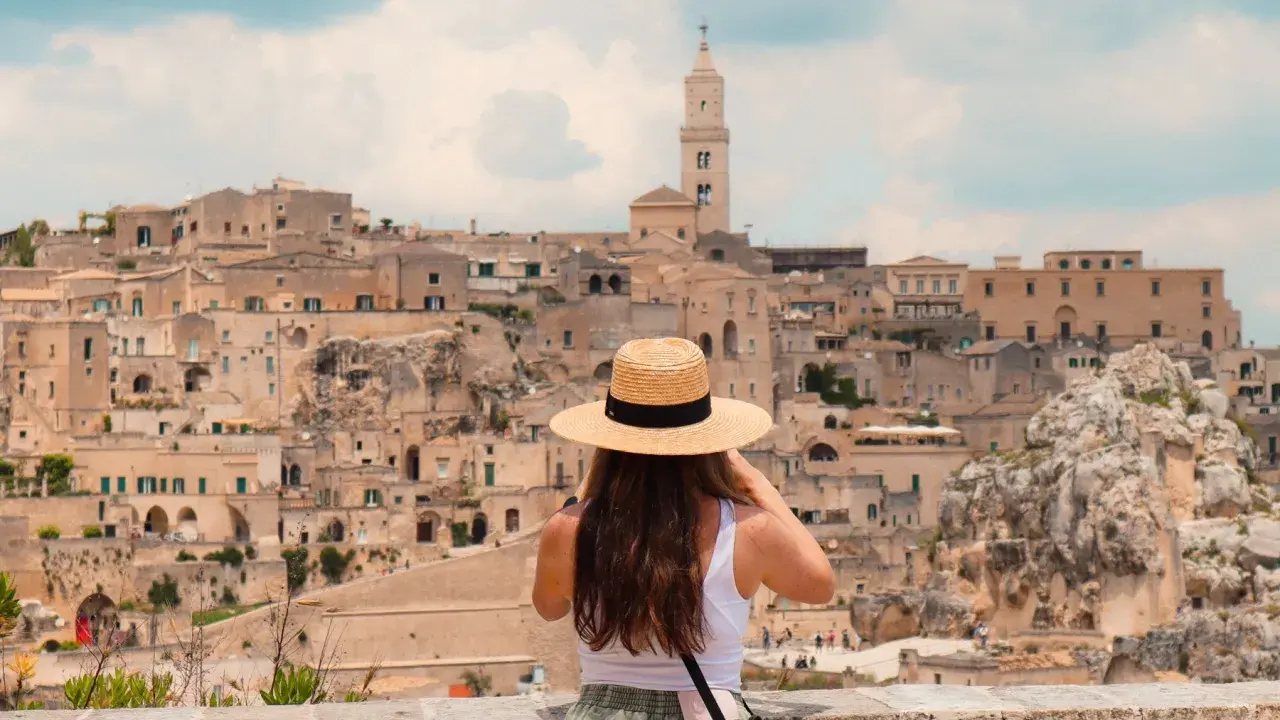
| 5 | Matera | Transfer inland and spend the afternoon in the cave district. | Matera changes the rhythm of the trip and adds a striking contrast. |
| 6 | Matera | Take a longer walk, visit viewpoints, and slow down. | The city is best when it is not treated as a quick photo stop. |
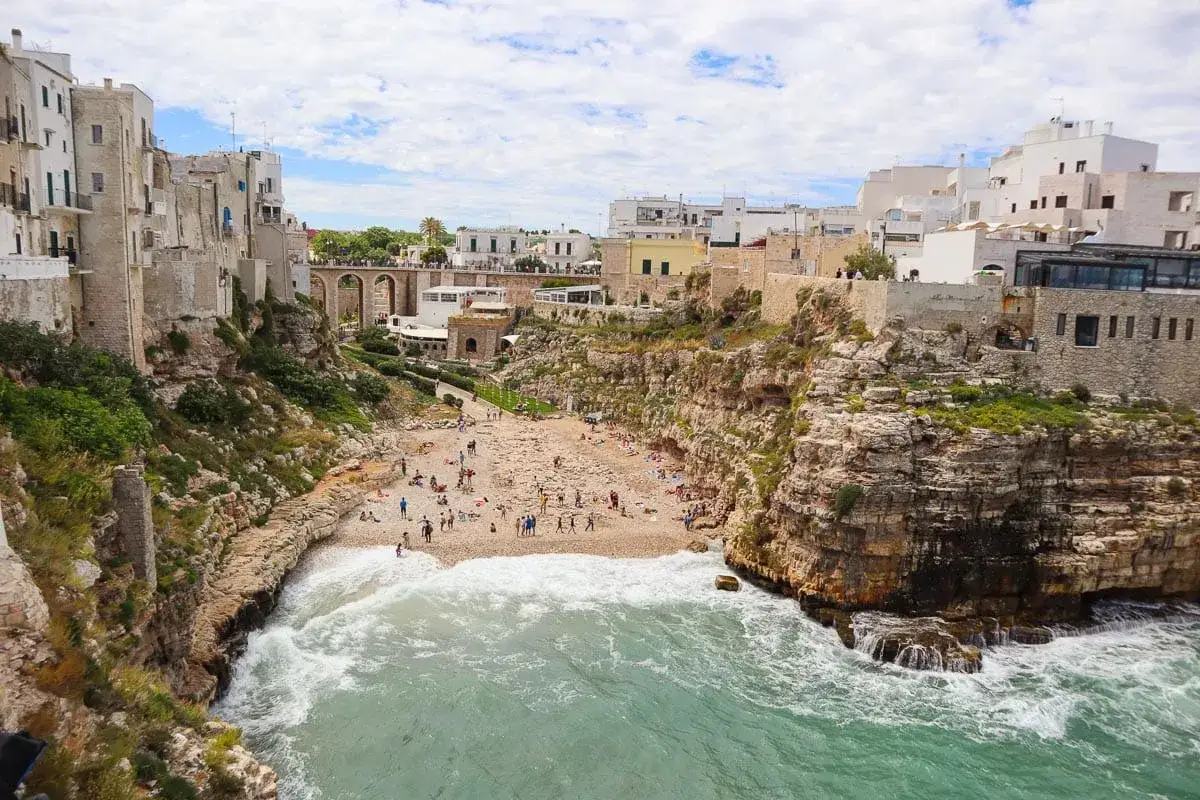
| 7 | Monopoli or Polignano a Mare | Drive to Puglia and settle into a coast-and-town base. | This gives you an easy launch point for the Valle d'Itria. |
| 8 | Puglia | Explore Alberobello, Locorotondo, or Ostuni. | These towns work well together because the distances are short. |
| 9 | Lecce or Monopoli | Head south for Baroque streets, beaches, or a countryside stay. | You finish with a slower, more local-feeling day. |
| 10 | Departure city | Leave from Bari or Brindisi if possible, ideally with an open-jaw ticket so you fly into one city and home from another. | You avoid backtracking and save a travel day. |
The logic here is simple: I want one famous coast, one inland surprise, and one region where the trip finally breathes. That structure gives you a memorable journey without forcing every day to compete with the next one, and it sets up the bigger question of how the weather and season will shape the route.
When to go if you want the coast without the worst crowds
I normally steer people toward April to early June or September to mid-October, the shoulder season, meaning the stretch just before and after peak summer. You get enough warmth for ferries, walks, and terrace lunches, but you avoid the pressure that makes the Amalfi Coast feel like a queue with a view.- April and May are best for sightseeing and long walks; the sea can still feel cool.
- June is a strong month if you book coastal stays early and keep expectations realistic.
- July and August bring the highest prices, the most traffic, and the least flexibility. If you go then, keep the route short.
- September and October usually give the best balance of warmth, light, and manageable crowds.
- November to March works for city-heavy or food-focused trips, but some ferry and beach options thin out.
If your dates are fixed, this matters more than almost anything else, because the same route can feel relaxed in shoulder season and compressed in midsummer. With that timing set, the number of days becomes much easier to judge.
How to adapt the route when your trip is shorter or longer
I usually tell travelers to cut by region, not by attractions. When the schedule gets tight, the problem is rarely that you missed one museum; it is that you tried to cover too many separate areas in too little time.
| Trip length | Best structure | What to leave out | Why |
|---|---|---|---|
| 7 days | Naples, Pompeii, and either the Amalfi Coast or Puglia | Matera and any second coastal region | You need to protect your time from transfer days. |
| 10 days | Naples, Amalfi Coast, Matera, and one Puglia base | Sicily and extra island detours | This is the most balanced first-trip version. |
| 14 days | Add Sicily, Calabria, or the Cilento coast, depending on your interests | Constant hotel changes | Two weeks is when a second region finally feels earned. |
For a 7-day trip, I would choose either Naples plus the Bay of Naples or Naples plus Puglia. That keeps the journey coherent. For 14 days, a flight to Sicily can make sense, but I would only do it if the island is a real priority rather than an afterthought. The next constraint is transport, because southern Italy rewards the right mix of train, car, and ferry, but punishes the wrong one.
Getting around without turning the trip into a logistics puzzle
The biggest mistake I see is assuming every part of southern Italy behaves like the same kind of road trip. It does not. Naples is a city best handled on foot and by rail, the Amalfi Coast is often better by ferry or private transfer, and Puglia is where a car finally starts paying for itself.
- Use trains for the main corridor. Naples, Salerno, and Bari connect well enough that rail can save a lot of energy.
- Rent a car once the road trip begins. Puglia and inland Basilicata reward flexibility, especially if you want hill towns and countryside stays.
- Avoid driving in city centers. Many historic areas use ZTL zones, or restricted traffic zones, where cameras can issue fines quickly.
- Lean on ferries where they save time. They are especially useful for Capri, Ischia, and some Amalfi Coast transfers in season.
- Build a buffer into departure days. Ports, parking, and road traffic can all eat more time than people expect.
Compact-car rentals in shoulder season often run around $45 to $90 a day before fuel, parking, and one-way fees, and the price climbs quickly in summer. That is why I only rent when the map truly benefits from freedom, not just because a road trip sounds easier than public transit. Once you have that transport framework in place, the next decision is where to sleep and what it should cost.
Where to stay and what it usually costs
I like to choose bases that reduce friction, not just the places that sound the prettiest on paper. In southern Italy, the right hotel location can save you an hour of climbing, parking stress, or backtracking every single day.
| Place | Best use | Typical nightly range (USD) | My note |
|---|---|---|---|
| Naples | Arrival base and food-focused city stay | $110-$220 | Best value if you want energy and easy transport. |
| Sorrento or Salerno | Bay of Naples or Amalfi Coast access | $150-$350 | Sorrento is easier for ferries; Salerno can be quieter and cheaper. |
| Matera | One dramatic inland stop | $130-$280 | Cave hotels are part of the experience, but book early. |
| Monopoli, Polignano a Mare, or Lecce | Puglia base | $120-$260 | Masserie, the traditional farmhouse estates common in Puglia, can be the best mix of space and atmosphere. |
| Capri or Positano | Splurge night | $250-$600+ | Beautiful, but the price often reflects the view and the crowd level. |
For the trip as a whole, I would plan roughly $120 to $180 per person per day for a lean but comfortable trip, $220 to $350 for a solid mid-range trip, and $450+ if you want prime coastal rooms, private transfers, and better dining on most nights. The biggest cost jump usually comes from the coast, not from the interior, so if you want to save money without flattening the trip, shift one or two nights inland and spend them in a good agriturismo, a farm stay that often includes meals and more space than a city hotel. In 2026, I would lock the coastal nights first, then build the inland legs around them.
That cost structure matters because the wrong booking choices usually create the next set of mistakes, and that is where southern Italy trips start to feel unnecessarily hard.
The planning mistakes that create unnecessary friction
When southern Italy feels stressful, it is usually because the itinerary asks too much of the geography, not because the region is difficult. I see the same errors again and again, and they are all avoidable.
- Trying to cover too many regions. Amalfi, Puglia, Calabria, and Sicily can all be fantastic, but they do not belong in a one-week route.
- Changing hotels too often. Every extra move costs time, energy, and at least one meal.
- Driving where walking is better. Naples, Positano, and some old-town centers are better handled on foot, by train, or with a transfer driver.
- Leaving ferry bookings to the last minute. This matters most in peak season and on high-demand routes.
- Ignoring heat and midday pace. In summer, a long lunch and a slower afternoon are not lazy choices; they are how you keep the trip enjoyable.
- Skipping buffer time before flights. A road delay on the way to Bari, Brindisi, or Naples airport can erase a perfectly planned last day.
The fix is not to over-engineer the schedule. It is to reduce the number of moving parts so the scenery, food, and slower pace can do the work they are supposed to do. From there, the only remaining question is which version of the trip I would actually book first.
The version I would book first in 2026
If I were building the trip from scratch this year, I would choose a 10-day route with Naples, Matera, and Puglia, then add the Amalfi Coast only if the dates fall outside the busiest summer weeks. That combination keeps the food, scenery, and historic stops strong while avoiding the worst of the coastal crowding and the most exhausting transfers.
If your priority is dramatic coastlines, keep the Bay of Naples and Amalfi, but accept that the trip will be more expensive and more tightly timed. If your priority is more space, fewer tourists, and easier driving, shift emphasis toward Matera and Puglia and treat the coast as a bonus instead of the whole point. If you care more about outdoor time than famous names, the Cilento coast is one of the cleanest swaps. That is the version that tends to feel rich rather than rushed, and it is the one I would recommend for most first-time travelers.