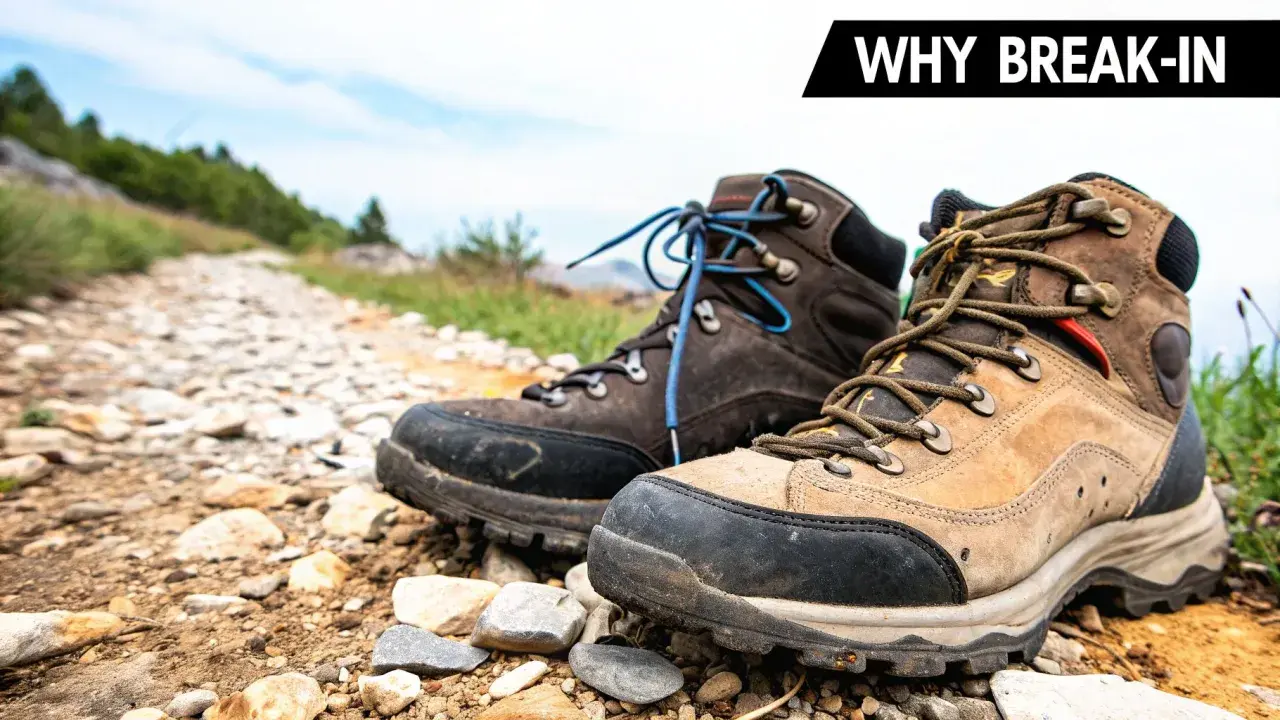
The fit that matters is the one you can trust on the descent
- Trail-ready footwear should feel snug, not tight, with no heel slip and enough toe room for downhill movement.
- Measure and test shoes in the late afternoon, wearing the socks you will actually hike in.
- Trail runners, hiking shoes, and boots solve different problems; the heaviest option is not automatically the best one.
- Wet, rocky, steep, or loaded hikes demand more support and traction than flat, well-kept paths.
- Width, arch length, and foot volume matter as much as size, and sizing up cannot fix every bad fit.
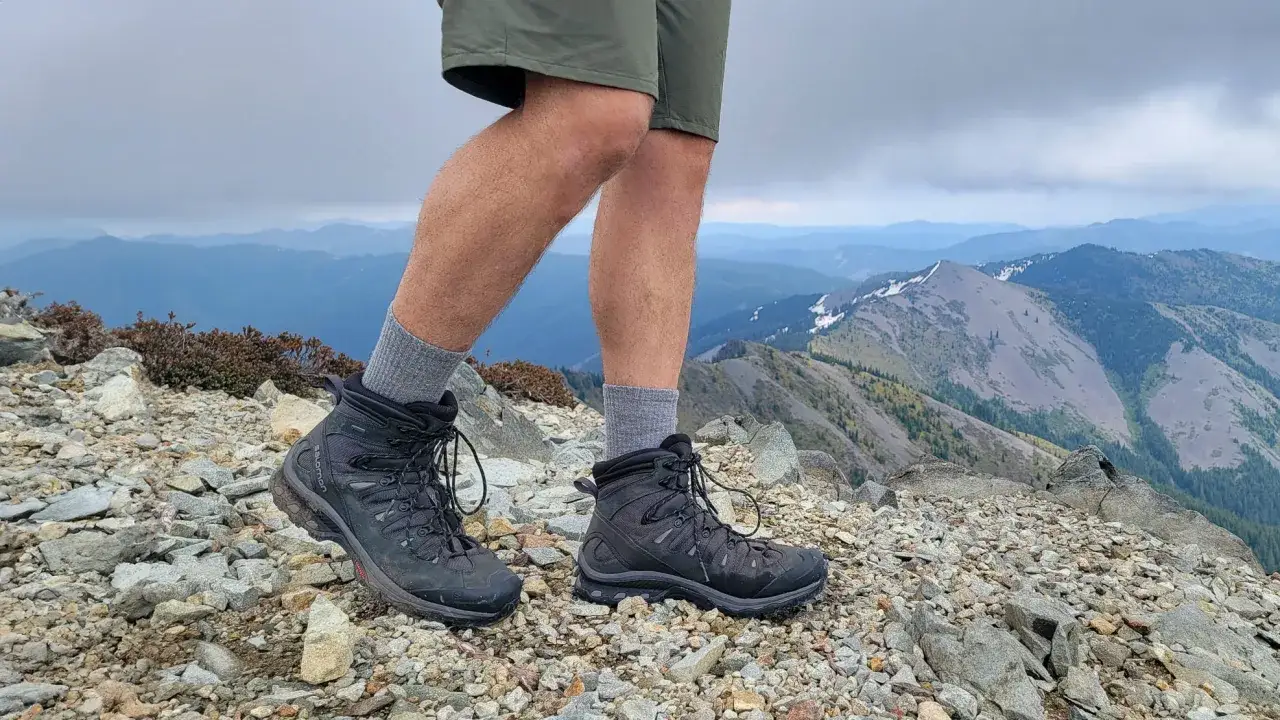
What a real hiking fit should do
When I judge whether footwear is truly trail-ready, I look past comfort-at-rest and ask how it behaves after an hour of climbing and descending. A proper pair should hold the foot firmly without pinching, keep the heel from lifting, and leave enough space in the toe box so your toes do not jam into the front on downhills. That balance matters because the trail changes your foot posture constantly, and a shoe that feels fine in a store can turn hostile on wet stone or a long descent.
The easiest way to think about it is this: the shoe should disappear in motion, not remind you it exists every few minutes. I want support under the midfoot, room at the front, and enough structure that the upper does not collapse when the terrain gets sloppy. If the pair only feels good when you are standing still, it is not a hiking fit I would trust for real miles.
How I check fit before a hike
Fit testing is where most people either save themselves a miserable hike or talk themselves into the wrong size. I always test footwear late in the day, when feet are naturally a little larger, and I bring the socks I plan to hike in. Thin everyday socks can make a shoe seem better than it really is, while thick hiking socks can expose pressure points you would otherwise miss.
I also pay attention to more than length. Width, arch length, and foot volume all affect how the shoe behaves once the laces are tightened. Foot volume is the amount of space your foot occupies vertically through the instep and midfoot; if that is wrong, you may get pressure on top of the foot even when the length looks correct.
| What you feel | What it usually means | What I do next |
|---|---|---|
| Toes touch the front when you walk downhill | The shoe is too short or the shape is wrong | Try a half size up or a different model |
| Heel lifts when you step | Fit is too long, too wide, or the heel cup is wrong | Try a narrower heel, different lacing, or a different last |
| Foot slides side to side | Too much width or too much internal volume | Try another width option before sizing up again |
| Pressure on the top of the foot | Low instep clearance or tight lacing | Adjust lacing and check whether the upper has enough volume |
| Pinching at the toes or forefoot | Narrow toe box or a shape that does not match your foot | Look for a wider build rather than hoping it will stretch enough |
A small amount of space at the front is normal and useful. I like to see about a thumb's width between the longest toe and the end of the shoe, because feet move forward on descents even when lacing is good. At the heel, I want almost no movement at all; if I see more than a tiny lift, the shoe is not locked in well enough for repeated downhill use. That fit check is the difference between a pleasant two-hour outing and a hike you spend thinking about your toes.
Trail runners, hiking shoes, and boots compared
Not every trail demands a boot, and this is where a lot of buyers overcorrect. I see plenty of people default to heavy boots when a lighter shoe would actually give them better comfort, less fatigue, and faster drying after stream crossings or coastal spray. The right answer depends on terrain, pack weight, and how much support you genuinely need.
| Type | Best for | Main strengths | Trade-offs | My rule of thumb |
|---|---|---|---|---|
| Trail runners | Fast day hikes, maintained trails, light packs | Lightweight, breathable, quick-drying, flexible | Less ankle structure, less protection on rough rock | I reach for them when the trail is well-kept and the pack is light |
| Hiking shoes | Mixed terrain, moderate mileage, everyday trail use | More support than runners, less bulk than boots | Can be a compromise if the hike is very technical or very steep | This is the sweet spot for many hikers |
| Hiking boots | Rocky routes, steep descents, wet conditions, heavier loads | More structure, more protection, more stability | Heavier, warmer, often slower to dry | I choose them when terrain or weight makes support more important than speed |
That comparison matters even more on European-style routes with slick stone steps, loose gravel, or long traverses, where the wrong shoe can feel fine for the first mile and tiring by the third. On a smooth riverside path, a boot can be overkill. On a wet coastal cliff walk or a steep mountain descent, a light shoe without enough grip and structure can feel underbuilt. The real decision is not “boot or no boot”; it is “what will stay stable after repeated impact and descent?”
Match the shoe to terrain, weather, and load
Terrain is the first filter I use. For flat, well-maintained trails, a good trail runner or light hiking shoe usually does the job. For rough, uneven, or technical ground, I want more traction underfoot and more control through the upper. For backpacking or long days with real weight on my back, I move toward a sturdier platform because fatigue makes sloppy foot placement more likely. Weather changes the equation too. Waterproof membranes can be a smart choice for muddy shoulder-season hikes, wet forest trails, or unpredictable mountain weather, but they also tend to breathe less. On hot summer hikes, especially in humid conditions, I often prefer fast-drying mesh because sweaty feet can become blister-prone feet very quickly. If you hike where rain is common but temperatures are mild, waterproofing can be worth the trade-off. If your hikes are hot and dry, breathability usually wins.Load matters in a very practical way. A light daypack does not need the same footwear as a fully loaded multi-day trip. The more weight you carry, the more you feel every weakness in the shoe: soft heels, vague midfoot support, or an unstable platform. That is why I treat footwear as part of the system, not a standalone purchase. The same shoe can be excellent for a two-hour walk and mediocre for a long approach with a full pack.
Common fit mistakes that turn a good shoe into a bad one
Most bad hiking experiences start with one of a handful of avoidable errors. The first is buying by size alone. Two shoes with the same size label can feel completely different because lasts, widths, and toe box shapes vary by brand. If the shape is wrong, a half-size adjustment may help, but sometimes it just wastes time.
The second mistake is trying shoes on too early in the day. Feet often swell during normal activity, and a pair that feels roomy at 10 a.m. can feel cramped by late afternoon. The third mistake is assuming more room is always better. Too much internal space lets the foot slide, and sliding is what causes hot spots, blisters, and bruised toenails.
Other problems show up when people ignore the details that matter most:
- Wearing thin socks in the store and thicker socks on the trail
- Sizing up to create toe room while accidentally destroying heel lock
- Choosing a narrow shoe and hoping the upper will stretch enough
- Assuming waterproofing will fix poor fit or weak traction
- Ignoring arch support when the foot shape clearly needs it
I also see people give up on fit too fast or wait too long. Some materials soften a bit with use, but a shoe that is obviously wrong in length, width, or volume usually stays wrong. If a pair only improves because you lace it in a fragile, overly specific way, that is not a dependable trail solution. It is a workaround.
The final checks I use before trusting a pair on the trail
Before I commit to a new pair, I walk in them on a slope, use stairs if I can, and deliberately test a downhill posture. I am not looking for luxury; I am looking for silence. No toe bang, no heel lift, no pressure building across the top of the foot, and no side-to-side wobble when I change direction. If I feel any of those problems in a shop or at home, they usually become worse after the first long climb.
If the shoe has removable insoles, I check whether an insole swap improves support without making the fit too tight. If I use orthotics, I bring them during the fitting instead of guessing later. And if I am choosing between two pairs, I usually take the one that feels slightly more precise rather than the one that feels extra roomy. Room can be useful; sloppiness rarely is.
The simplest rule I follow is this: a shoe earns its place on the trail when I can stop thinking about my feet. If a pair passes that test in the shop and still feels calm after a short walk on mixed ground, it is probably ready for longer miles. If it needs constant adjustment before I have even left home, I keep looking.