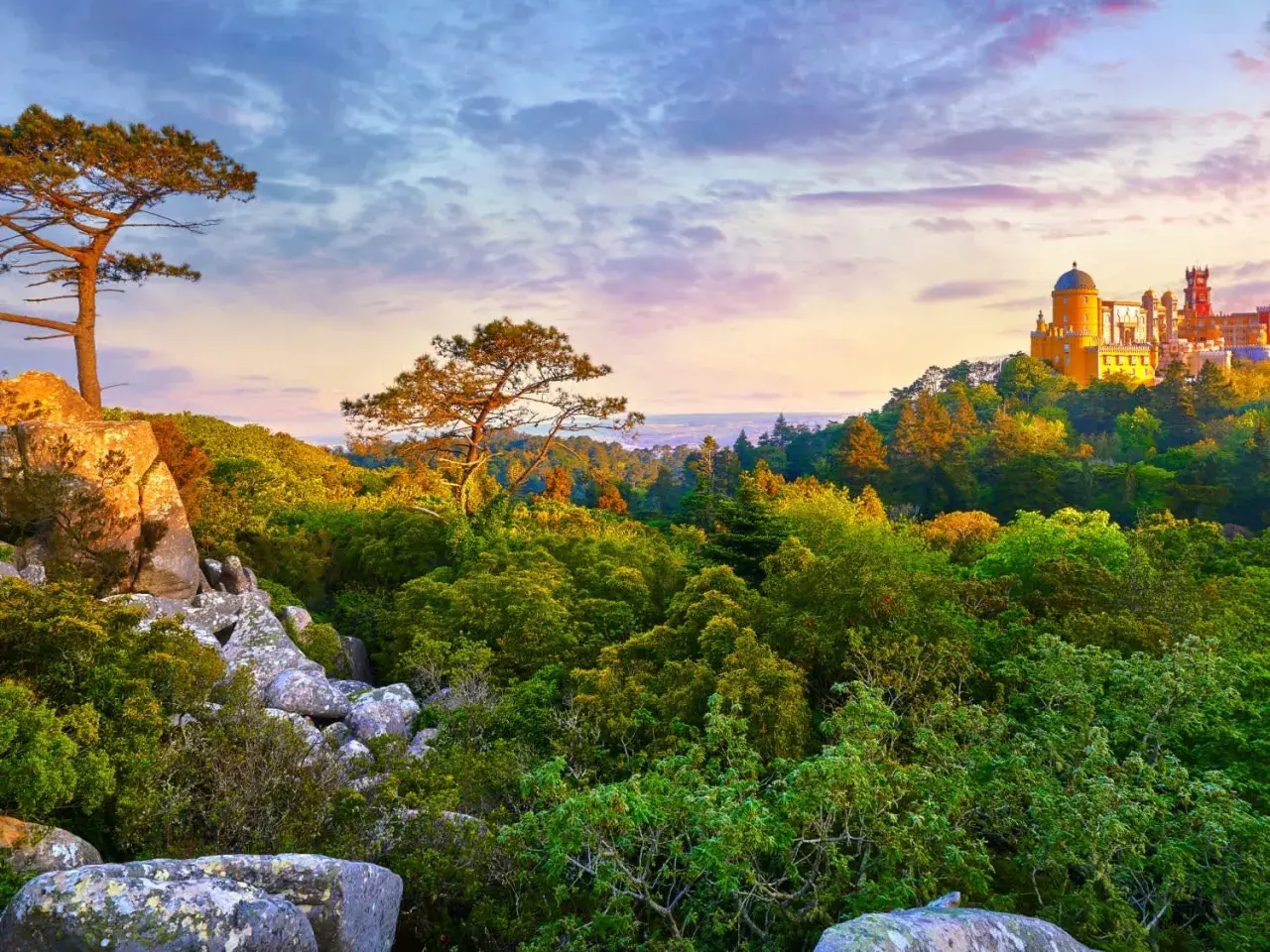
Sintra hiking is one of the most rewarding ways to experience Portugal’s hills because it blends forest paths, steep ridgelines, and palace views without requiring a full alpine effort. The best routes here are short on paper but surprisingly layered in practice, so the real challenge is choosing the right walk, timing it well, and linking it to the monuments you actually want to see. In this guide I focus on the routes that matter, how hard they really feel, and the logistics that make the difference between a smooth day and a frustrating one.
What matters most before you set out on Sintra’s trails
- The main routes around Pena, the Moorish Castle, and the historic center are compact, but several still involve steady climbs and uneven ground.
- Santa Maria and Vila Sassetti are the easiest ways in; Seteais is the better choice if you want a more demanding walk.
- Private cars are not the right way to reach the upper monuments, so public transport and footpaths matter more than usual.
- Start early if you want clearer views, cooler air, and fewer bottlenecks on the narrow sections.
- Check same-day access notices before you go, because fire-risk restrictions still affect this area at short notice.
- The best Sintra day is usually one good hike plus one monument stop, not a race to tick off everything on the map.
The trails I would put at the top of the list
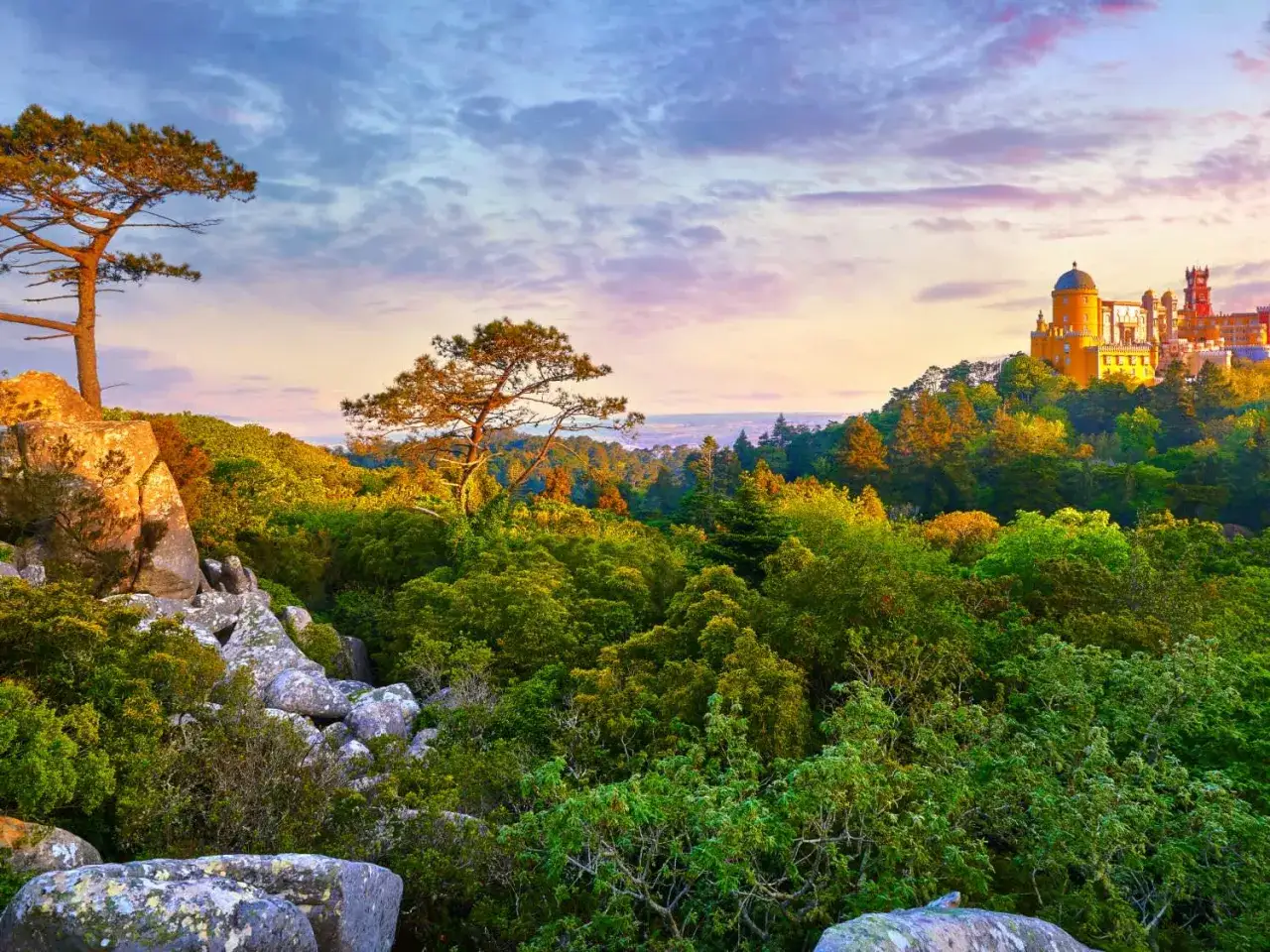
The walking network in the hills is small enough to understand quickly, but varied enough to reward a little planning. According to Parques de Sintra, the main managed routes are Santa Maria, Seteais, Vila Sassetti, and Lapa, and each one solves a different problem: access, descent, connection, or a more serious climb.
| Route | Distance | Typical time | Difficulty | Best for |
|---|---|---|---|---|
| Santa Maria | 1.77 km / 1.1 mi | About 1 hour | Easy | A straightforward climb to the Moorish Castle and Pena with mostly even surfaces |
| Vila Sassetti | 1.85 km / 1.15 mi | About 45 minutes | Moderate | A scenic connector from the historic center with forest sections and steps |
| Lapa | 1.45 km / 0.9 mi | About 45 minutes | Moderate | A practical return route or a softer uphill option to Pena |
| Seteais | 2.41 km / 1.5 mi | About 1.5 hours | Challenging | A stronger workout with forest cover and bigger views |
My short version is this: Santa Maria is the most useful first walk, Vila Sassetti is the most elegant connector, Lapa is the most practical return, and Seteais is the one I would save for a fitter day. That simple ranking keeps the area from feeling confusing, which matters because Sintra rewards momentum more than raw mileage.
How to choose the route that fits your day
Most visitors do not need the “hardest” trail in Sintra. They need the one that matches their pace, their time window, and how much uphill walking they are willing to trade for views. I usually think about the routes in three buckets.
If you want the easiest introduction
Choose Santa Maria. The surfaces are mostly paved or even, the gradients are gentle most of the way, and the route still gives you the classic payoff: forest, monument access, and wide views without committing to a long mountain effort. It is the route I would send to a first-time visitor who wants a real walk, not a transport puzzle.
If you want a balanced hike
Choose Vila Sassetti or Lapa. Vila Sassetti feels more atmospheric because it links the historic center to the upper hills through gardens, steps, and woodland. Lapa is useful in the opposite direction: it is a smart way back down or a calmer ascent if you want to reduce the stress on your legs while still staying on foot.
Read Also: Hiking in Greece - Plan Your Perfect Trail Adventure
If you want more of a workout
Choose Seteais. It is the most demanding of the main routes and the one most likely to expose how steep the Sintra hills can feel when you are climbing them in warm weather. It is not long, but the gradient and uneven sections make it a better fit for confident walkers than for casual strollers.
The mistake I see most often is treating every route as if distance alone tells the story. In Sintra, elevation, surface, and route linking matter just as much. That is why the next issue is not just which trail to walk, but how to connect it to transport and monuments without wasting energy.
How to connect the trails without wasting time
Sintra works best when you plan the route as a chain, not as a loose collection of separate walks. The practical entry point is usually the historic center, where you can start on foot and then climb toward the Moorish Castle or Pena. If you are coming from Lisbon, the train is the cleanest option, and the 434 bus is the most common link up from the station to Pena.
Parques de Sintra’s one-day walking itinerary starts at 9:30 am and is priced at around €55 per person, including tickets, a light meal, and a snack. The same guidance also makes the access logic clear: private vehicles are not authorized up to Pena, so walkers should rely on the marked paths or public transport instead of trying to drive from stop to stop.- Start in the historic center early, before the upper slopes get crowded.
- Use one uphill route, such as Vila Sassetti or Santa Maria, to reach the monuments.
- Choose a single main payoff, either Pena or the Moorish Castle, rather than forcing both into a rushed schedule.
- Descend by a different route if your legs still feel good, which keeps the day from becoming repetitive.
If you are driving, park in the historic center or in peripheral car parks and then continue on foot. That one decision reduces friction immediately, because the upper roads are not designed for casual hop-on-hop-off hiking access. With the route structure sorted out, the next question is timing, because Sintra can feel completely different from one month to the next.
When to go and what conditions change the game
Sintra is never a bad idea on paper, but the conditions can change the mood of the walk dramatically. Spring and early autumn are usually the sweet spot because temperatures are easier to manage and the hills still feel green. Summer can be beautiful, but it is also the period when heat, crowding, and fire-related restrictions become more relevant.
I would be especially careful on days when the air is hot, dry, or unstable. The hills can be closed or partially restricted during very high fire-risk periods, and those changes are not the kind of thing you want to discover after you have already reached the station. Rain creates a different problem: steps, dirt sections, and wooded paths become noticeably slick, especially on the steeper connectors.
The safest habit is to check access notices on the morning of the hike, then choose your route based on the actual conditions rather than the romantic version in your head. That is especially true if you are mixing walking with monument visits, because a beautiful route is not much help if a closure turns it into a dead end. Once you know the timing, the remaining variable is what you carry on the day.
What to pack so the hills feel manageable
Sintra is not a place where I would overpack, but I also would not travel light in the casual city-walk sense. The routes are short enough to seem harmless, yet the combination of incline, humidity, and uneven terrain can make a small mistake feel bigger than it should.
- Grippy walking shoes rather than smooth sneakers, especially if there has been recent rain.
- At least 1 to 1.5 liters of water per person for a half-day, more if you are walking in summer.
- A light layer or shell, because the hills can feel cooler and foggier than the town below.
- Offline maps, since signal and battery are useful only if you remember to preserve them.
- Small snacks so you do not let hunger decide your pace on the steeper sections.
- Sunscreen and a cap, even when the walk begins under cloud cover.
The biggest packing mistake is underestimating the climb because the route looks short. The second mistake is forgetting that the day is half walk, half sightseeing, which means your legs, camera, and timing all need a little margin. That margin is exactly what makes the first full day in the hills feel relaxed instead of frantic.
A simple first-day plan that leaves room for the views
If I had one day for the hills, I would keep it simple: start in the historic center, climb by Vila Sassetti or Santa Maria, spend time at either the Moorish Castle or Pena, and then return by the route that feels easiest on the legs. That gives you the essential Sintra experience without turning the day into a checklist.
For most visitors, sintra hiking works best as a sequence of one strong walk and one clear destination. That is enough to get the scenery, the atmosphere, and the sense of place that makes the area memorable, while still leaving you energy for the town itself. If you want the cleanest possible first visit, choose a moderate route, start early, and let the hills decide the rhythm instead of fighting them.