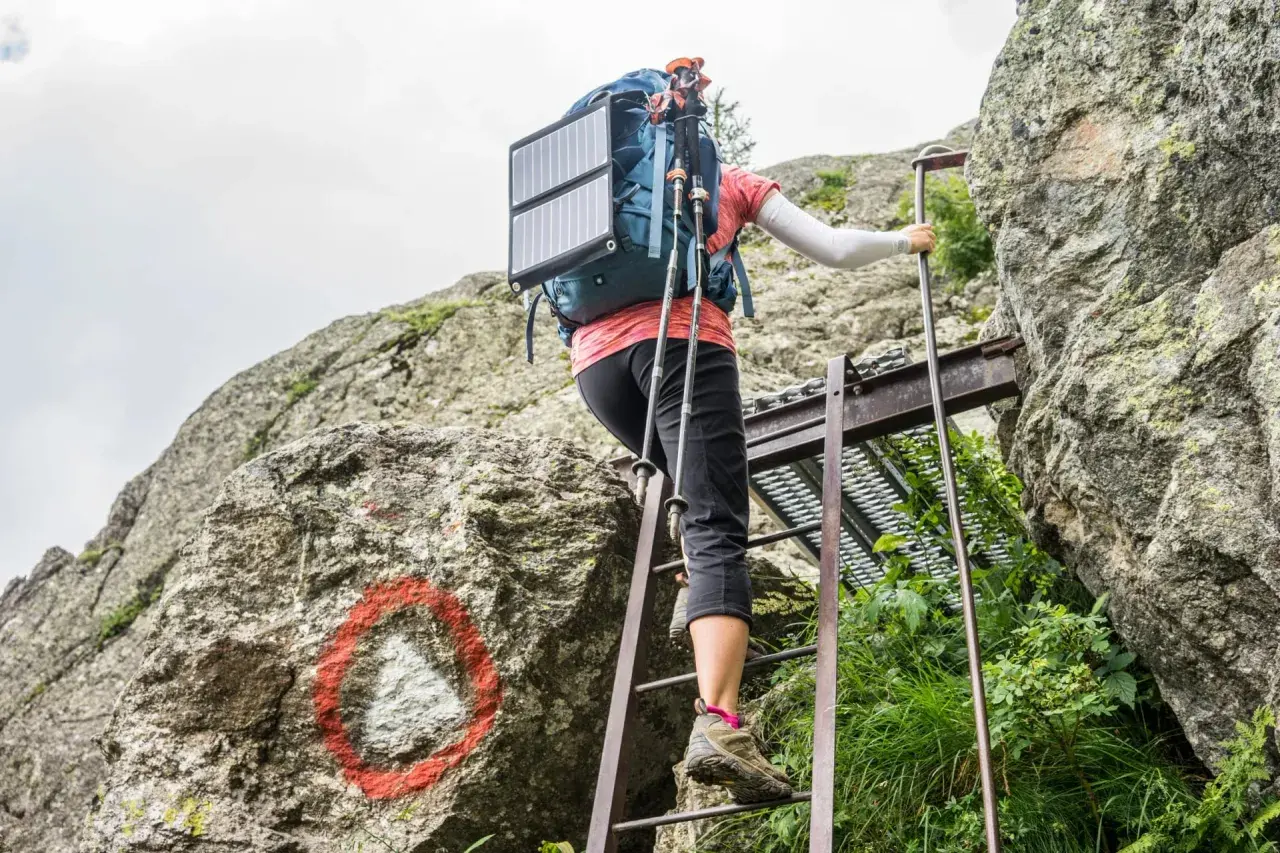
What you need to know before you reach the ladder section
- The famous ladders are on the standard counter-clockwise TMB day between Tré-le-Champ and La Flégère, near Lac Blanc.
- They are short, fixed metal aids on steep rock, not a continuous climbing route.
- Most hikers manage them comfortably in dry weather, but wet rock, ice, wind, and fatigue change the picture fast.
- A signed bypass via Col des Montets lets you skip the exposed section without losing the overall TMB experience.
- Start early, keep your pack light, and decide based on conditions rather than reputation.
Where the ladders sit on the route
On the classic TMB itinerary, the ladder section appears on the Chamonix-side stage that runs from Tré-le-Champ toward Lac Blanc and La Flégère. That is the stretch hikers usually mean when they talk about the famous ladder day, and it comes after a steady climb rather than right at the trailhead. In practice, you reach the exposed rock once you are already warmed up and above the forest, which is helpful if your legs need a little rhythm before the more airy ground begins.
The key landmark is the Aiguillette d'Argentière, a dramatic rocky pinnacle that tells you you are close. From there, the route weaves across steep slabs and into a protected section where the trail is reinforced with metal aids. The important thing to understand is that this is not a random set of bolted ladders dropped into the mountain for drama. It is a practical way through terrain that would otherwise be awkward or inaccessible for ordinary hikers.
There is also some confusion because people use the word “ladders” loosely. On the standard route, they refer mainly to the exposed ladder-and-handrail stretch above Tré-le-Champ. On Lac Blanc variants, you may also encounter smaller ladder pieces or steep, assisted sections elsewhere. So when someone says the ladders on the TMB, I always ask which variant they mean before I give advice.
Once you know where they sit, the more useful question is how steep and exposed they actually feel under your boots.
What the climb feels like in real life
The best way to describe the section is a protected alpine scramble rather than a true climbing pitch. A protected route means the exposure is managed with fixed metal handholds, rungs, platforms, and steps, so you are not improvising on raw rock. The trail still feels steep, but you have enough structure to move carefully and steadily instead of guessing every foot placement.
In practice, the ladder section is broken up. You climb a few steps, move across a short ledge, use a ladder, then continue on normal rocky trail before the next aided piece. That rhythm matters. It is why many hikers are surprised that the section is shorter and less continuous than the photos suggest. The whole sequence typically takes about 30 to 45 minutes once you reach it, not half a day.
| Feature | What to expect |
|---|---|
| Structure | Short metal ladders, fixed handrails, footholds, and a few platforms |
| Exposure | Noticeable enough to feel airy, but usually manageable for fit hikers |
| Flow | Not continuous; there are regular trail sections between the aids |
| Time | Roughly 30 to 45 minutes through the full assisted section |
| Main limiter | Fear of heights, slick rock, wind, or fatigue more than pure fitness |
Fitness helps, but confidence on exposed terrain matters more. I would not treat this as a strength test; I would treat it as a calm-footwork test. That difference is exactly why the bypass exists, and why the weather should shape the decision.
When I would take the bypass instead
I would skip the ladders any time the rock is wet, the forecast looks unstable, or I can feel that my balance is already off. The bypass is not a failure route. It is the sensible line when exposure, weather, or fatigue make the assisted section more stressful than it needs to be. On a mountain day, that is a better standard than trying to be brave for the sake of a trail reputation.
| Situation | Better choice | Why |
|---|---|---|
| Dry, clear weather and you are comfortable with heights | Take the ladders | The section is short, well equipped, and usually enjoyable in good conditions. |
| Wet rock, ice, or gusty wind | Take the bypass | Metal aids lose their charm quickly when footing becomes slick or uncertain. |
| You already feel tired or shaky | Take the bypass | Fatigue reduces balance and makes exposure feel sharper than it really is. |
| Heights make you tense before you even start | Take the bypass | Anxiety can turn a manageable stretch into a miserable one. |
| You are hiking with a guided group | Let the guide decide | A good guide will read the weather, the group’s pace, and the terrain better than a general plan can. |
The bypass usually runs via Col des Montets and rejoins the main route farther on, so you still stay within the TMB system rather than abandoning the day. If the point of your trip is the mountain scenery, not collecting bragging rights, the bypass is often the smarter choice. That leads directly to the part many hikers neglect: how to prepare so you are not making the decision from a place of stress.
How to prepare if you do want the views
If you plan to take the ladder line, I would prepare for it the same way I prepare for any short exposed section: keep the pack light, move deliberately, and avoid arriving there already flustered. The section is much easier when you are not fighting a heavy load or rushed trail pace. A compact day pack, stable footing, and a calm tempo make more difference than people expect.
- Stow trekking poles before the first rung so your hands stay free.
- Keep three points of contact as your default: two hands and one foot, or two feet and one hand.
- Leave space between hikers so nobody feels pressured to move faster than they want.
- Wear shoes with trustworthy grip and enough edging to settle on rock.
- Skip the section if the surface is wet, icy, or freshly rained on.
- Start early enough that you are not battling queues or daylight anxiety.
That last point matters more than most people admit. The ladder day can become awkward simply because of crowding. If you arrive when several groups are bottlenecked together, the section feels tighter and more exposed than it really is. In my view, the cleanest strategy is to move early, keep your rhythm, and let the mountain stay the only thing demanding your attention.
How the route choices affect the rest of your day
The ladder section is not isolated from the rest of your itinerary. It comes near the end of a substantial day on the standard loop, which means your legs, patience, and attention are already partly spent when you reach it. That is one reason I keep saying this is less about courage and more about timing. A hiker who feels fresh at 10 a.m. may feel very different after several hours on rocky trail.
If you are hiking self-guided, build some margin into the day. That margin gives you room to choose the bypass if the weather shifts, or to pause and let a busy section clear before you commit to the ladders. If you are on a guided trip, pay attention to the guide’s pacing and the same-day weather call. The right decision can change quickly once the rock cools, the wind picks up, or the group starts moving unevenly.
There is also a practical logistics point: if your day ends with a cable car descent from La Flégère, verify the operating hours before you set off. In the Alps, lift schedules are seasonal and can shift with maintenance or weather. I would never assume I can simply appear at the bottom and expect the same timing every day of the season.
Seen that way, the ladders stop being a separate problem and become just one part of a bigger mountain day that needs pacing, daylight, and a little flexibility.
The check I would make before I step onto the first rung
Before I commit to the ladder line, I ask myself four things: is the rock dry, are my legs fresh, am I comfortable with exposure, and do I have enough daylight to move without rushing? If the answer to any of those is no, I take the bypass without hesitation. That is not me being cautious for the sake of it; it is me protecting the rest of the hike.
The best thing about this part of the Tour du Mont Blanc is that it does not demand one perfect choice. It offers a memorable assisted climb, a legitimate alternative, and a beautiful alpine reward either way. If you go up the ladders, do it because the conditions suit you. If you go around them, do it because you want a calmer day in the mountains. Either choice is consistent with good hiking judgment, and that is the standard I would keep for the rest of the loop as well.