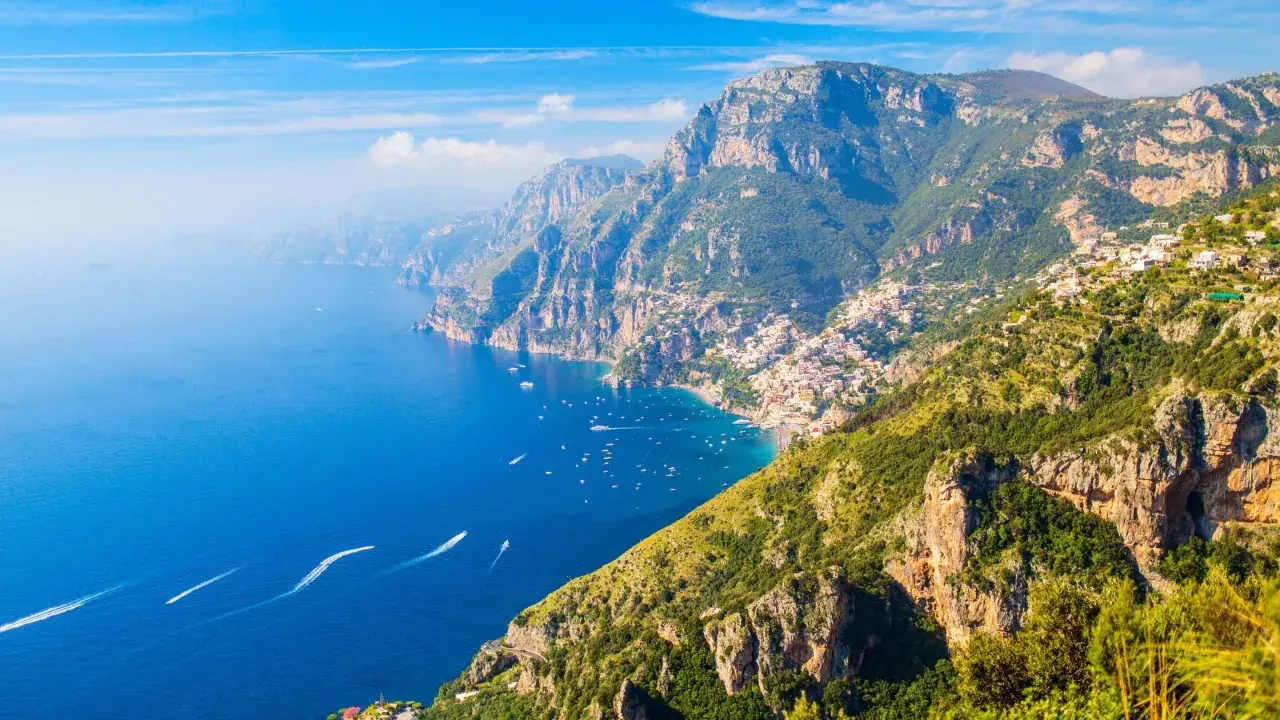
The distance is short on paper, but the full hike is longer in practice
- The official Path of the Gods trail is about 5.3 km from Bomerano to Nocelle.
- If you finish in Positano, the hike is closer to 7 km or about 4.3 miles.
- Most hikers should plan on 2 to 3 hours for the core trail and 3 to 5 hours for the full outing.
- The route is usually rated moderate, not technical, but sun, stairs, and rough footing matter.
- Starting in Bomerano is the most practical choice for first-time hikers.
How the trail’s length is counted
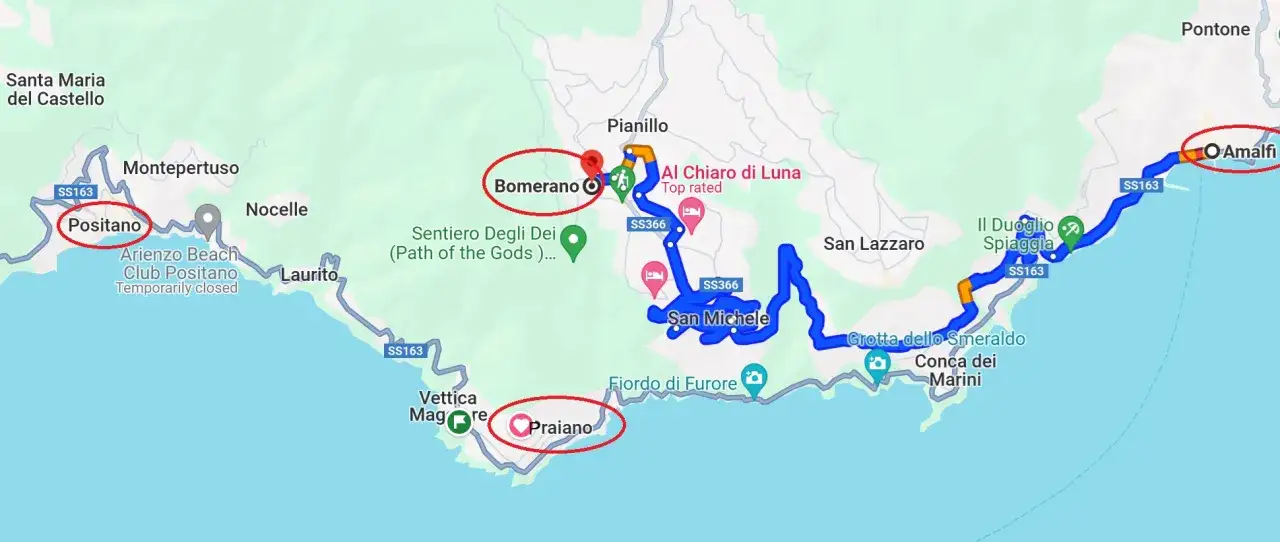
The numbers you see online are not always wrong; they are just measuring different versions of the same hike. The official trail listing from CAI Monti Lattari places trail 327 at 5.3 km between Bomerano and Nocelle, with an estimated walking time of about 2 hours one way. Another local trail guide, amalfi.com, gives the route as 7 km and about 3 hours because it treats the hike as extending all the way to Positano.
That difference is the key to understanding the search intent here. Most hikers are not asking for a map measurement in the abstract; they want to know how much of their day the walk will take. In practice, I would treat the 5.3 km figure as the ridge trail itself and the 7 km figure as the more useful planning number if you want the classic Bomerano-to-Positano experience.
There is also a higher variant, known as 327a, that avoids the most exposed section before rejoining the main route. It is useful if you are uneasy with heights, but it is still part of the same broader hiking day, so it does not really change the planning logic. That leads directly to the next question: how long does the walk actually take at hiking pace?
How long it takes in real hiking time
For a trail like this, mileage alone is a poor predictor. The surface is uneven, the views keep pulling you into stops, and the final stretch can slow people down more than they expect. Here is the practical time breakdown I would use when planning the day.
| Hiking pace | Time | What it usually means |
|---|---|---|
| Fast and efficient | 1.5 to 2 hours | For fit hikers moving steadily on the Bomerano-to-Nocelle section with few stops. |
| Typical day-hike pace | 2 to 3 hours | Most first-time visitors who pause for photos, water, and a short break. |
| Leisurely scenic pace | 3 to 4 hours | For walkers who stop often, take the higher variant, or want to enjoy the route without rushing. |
| Full outing to Positano | 3 to 5 hours | Includes the extra descent, steps, and the slower finish into the village. |
The official CAI estimate of 2 hours for the trail is realistic if you are walking purposefully. Once you add the last section toward Positano, a half-day window is more honest, especially if you want lunch or a long pause for the views. I would not build this into a tightly timed itinerary unless you are comfortable hiking quickly.
Why the hike feels longer than the distance suggests
This is the part that trips people up. The Path of the Gods is not long in the classic mountain-hike sense, but it is rarely flat, and it does not let you settle into an easy rhythm for very long.
- Uneven footing: The trail mixes dirt, stone, and worn mountain path, so your pace naturally drops.
- Exposure: Some sections feel airy and open, which is beautiful but mentally tiring if you are uneasy with heights.
- Sun: There is limited shade, so the heat can be a bigger issue than the distance itself.
- Downhill stress: The walk into Nocelle and beyond can be easier on breathing but harder on knees and quads.
- Photo stops: This is one of those trails where everyone stops, and for good reason.
The terrain is one reason I would call this a moderate hike rather than an easy stroll. It is also why people who normally move quickly on trails sometimes feel slower here. If you have knee issues or a fear of exposure, the route still makes sense, but you should plan it with a little more caution than the distance alone would suggest. That naturally raises the most useful planning question: which direction is smartest?
Which direction makes the most sense
For most hikers, the best choice is still the classic route from Bomerano to Nocelle. It gives you the cleanest logistics, the most natural flow, and the most satisfying downhill finish. Starting from Positano is possible, but it usually means more effort for less reward unless you specifically want a tougher workout.
| Direction | Best for | Main drawback |
|---|---|---|
| Bomerano to Nocelle | First-time hikers, better trail rhythm, easier route planning | You still need a plan for getting from Nocelle down to Positano if that is where you want to end. |
| Nocelle to Bomerano | Hikers who want to avoid a rushed descent and prefer to finish high | The return climb feels less natural, especially in heat. |
| Positano to Bomerano | Experienced hikers looking for a harder day | More strenuous and less beginner-friendly. |
If I were doing it for the first time, I would start in Bomerano. It is the most sensible starting point, and CAI Monti Lattari notes that the trail begins in Piazza P. Capasso there, with access by car or the Amalfi-Agerola bus line. That matters because the hike is easier to enjoy when the transport plan is already settled.
What to carry and when to go
The trail is famous for its view, but the right timing and gear decide whether the day feels smooth or mildly miserable. I would plan this hike for spring or early autumn, then start as early as possible in the morning to beat the sun and the crowds. Summer is still doable, but only if you respect the heat.
- Water: Carry at least 1.5 liters per person in mild weather and closer to 2 liters in hot months.
- Shoes: Wear proper hiking shoes or trail runners with good grip; flat city sneakers are a bad trade here.
- Sun protection: Bring a hat, sunscreen, and sunglasses because the trail is exposed for long stretches.
- Navigation: Download the route offline before you go.
- Small first-aid basics: Blister protection is more useful than most people think on this hike.
- Knee support or poles: Optional, but genuinely helpful if you know descents bother you.
What matters more than mileage on this trail
On paper, the Path of the Gods is a compact hike. In real life, it is a route where the terrain, heat, and final descent matter more than the raw distance. That is why people come back with very different impressions of the same trail: one hiker remembers a relaxed 2-hour walk, another remembers a 4-hour coastal effort that felt much bigger than the map suggested.
If you only want one number, use 5.3 km for the actual Sentiero degli Dei and about 7 km if you are finishing in Positano. If you want the more useful planning answer, budget half a day, start in Bomerano, and treat the hike as a scenic ridge walk rather than a race against the clock. That is the version that gives the trail enough room to do what it does best: turn a short walk into one of the most memorable outdoor experiences on the Amalfi Coast.