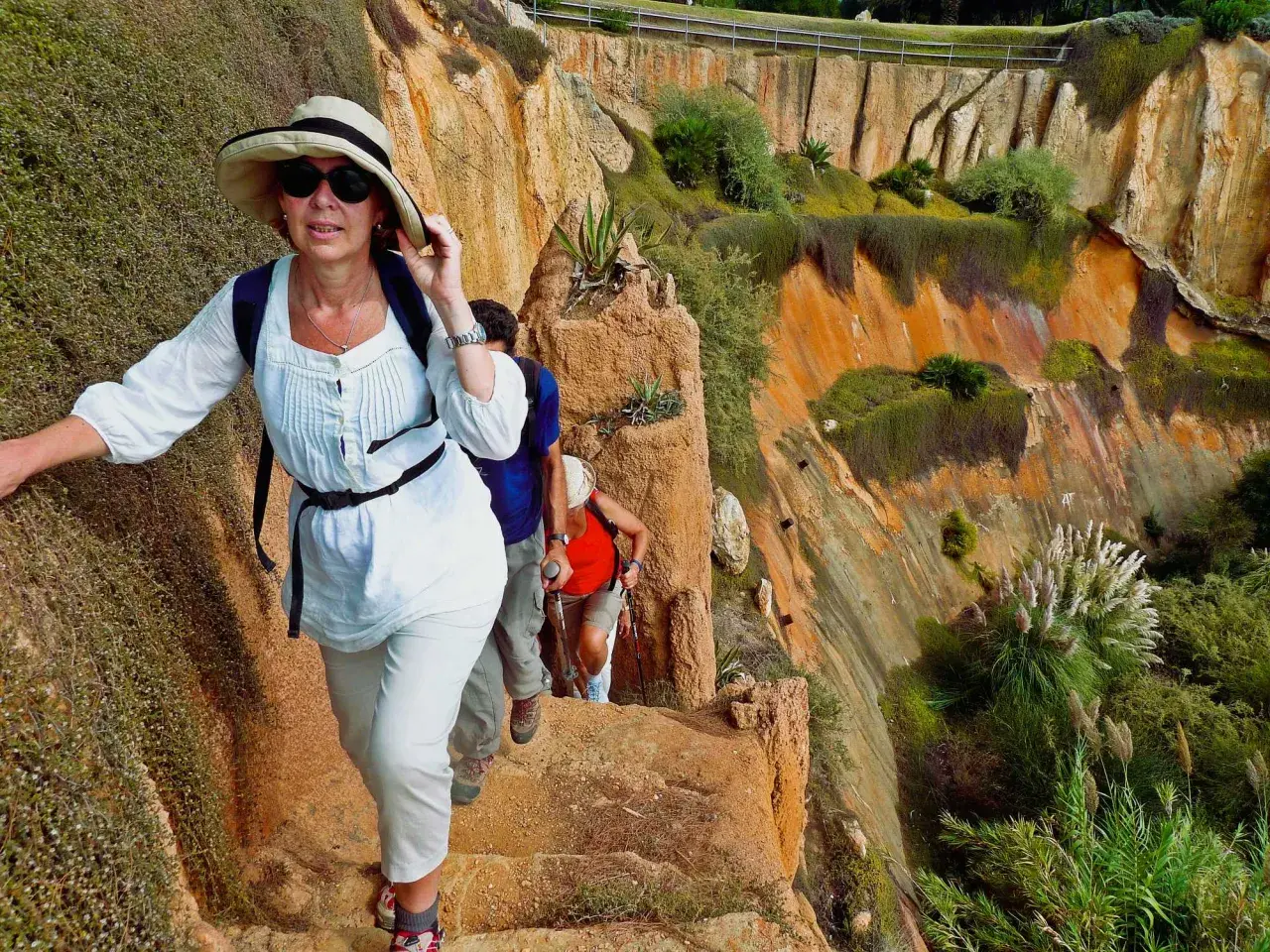
Portugal works especially well for hiking because the terrain changes fast: you can walk sea cliffs in the morning, vineyard ridges after lunch, and volcanic or mountain paths later in the week. The best hiking trips in Portugal are the ones that match trail style to your pace, budget, and how much logistics you want handled for you. In this guide, I break down the main trip formats, the regions that are actually worth your time, the costs you should expect in 2026, and the small booking details that make a big difference on the ground.
What matters most before you book
- Guided and self-guided trips solve different problems: one handles local decision-making, the other handles logistics.
- The coast, Madeira, the Azores, and Peneda-Gerês each deliver a very different hiking experience.
- For most travelers, the right trip is defined by terrain, daily distance, and transfer support, not just total kilometers.
- 2026 pricing ranges widely: simple day hikes can start around $53-$115, while week-long self-guided trips often begin around €900.
- Madeira’s classified trails require reservations, and some coastal routes publish live alerts, so check trail status before you lock in dates.
How organized hiking trips usually work
I usually separate Portugal's organized walking market into three products: guided group hikes, self-guided itineraries with luggage transfer, and private or custom excursions. The right one depends less on how far you want to walk and more on how much planning, navigation, and transport you want handled for you.| Format | Best for | What is usually included | Main trade-off |
|---|---|---|---|
| Guided group hike | First-time visitors, remote terrain, travelers who want local insight | Guide, route pacing, transport on some departures, sometimes lunch or snacks | Fixed schedule and group pace |
| Self-guided walking holiday | Independent walkers who still want the logistics handled | Route notes or GPS tracks, accommodation, luggage transfers, booking support | You still walk on your own and manage the day-to-day pace |
| Private or custom excursion | Couples, families, photographers, mixed fitness groups | Tailored pace, private transport, custom start times, optional guide | Highest price, especially with private transfers and premium hotels |
That distinction matters because a 12-kilometer coastal stage, a 12-kilometer levada walk, and a 12-kilometer vineyard loop can feel completely different. In practice, the smartest trip is the one that matches terrain, transfers, and trail status to your travel style. If you want a city-based add-on, a short guided hike near Lisbon, Porto, or Faro can work well; if you want the trail to be the trip, a multi-day package is the better shape.
Once you know the format, the next decision is where to walk. That is where Portugal becomes more interesting than most people expect.
Where to go for the kind of walk you want
Portugal is not one hiking destination. It is several very different walking regions packed into one country, and I would choose them based on the atmosphere you want, not just the photos.
| Region | Best for | Why it stands out | Watch-outs |
|---|---|---|---|
| Rota Vicentina and the southwest coast | Long coastal walks, dramatic cliffs, fishing villages | The Fishermen’s Trail runs for about 226 km and gives you one of the country’s most recognizable Atlantic walking experiences | Wind, erosion, and occasional route changes can affect stages |
| Madeira | Shorter but more dramatic hikes, ridge walks, levadas | Classified trails, strong scenery, and a dense trail network in a compact island | Steep sections, slick surfaces, and mandatory trail reservations on classified routes |
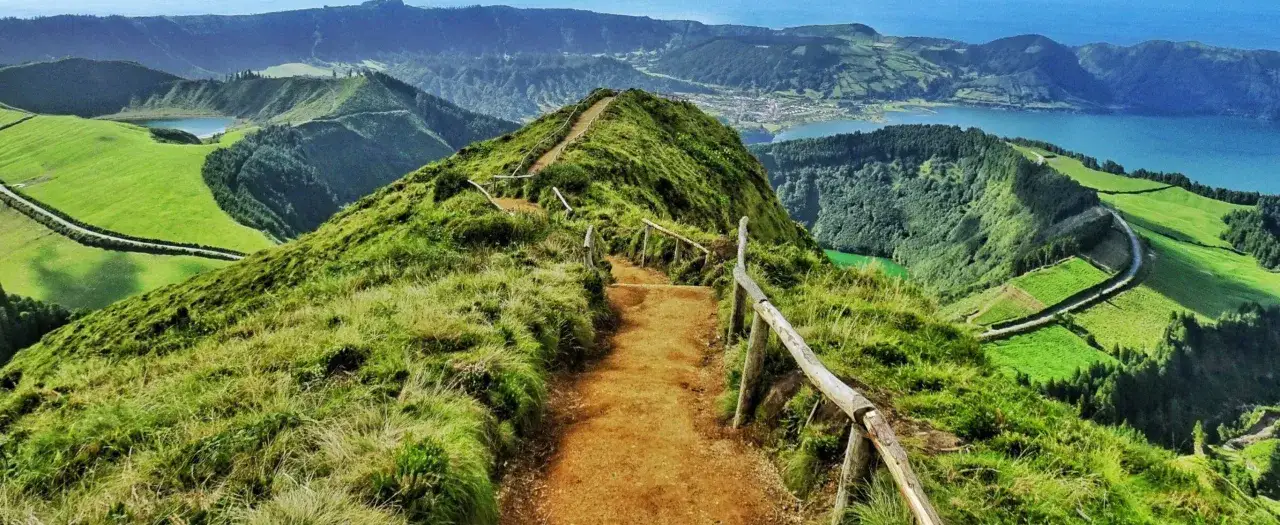
| The Azores | Volcanic lakes, crater rims, lush green landscapes | A government-classified trail network across multiple islands gives a reassuring structure for walking holidays | Weather can shift quickly, and fog can change the feel of a hike in minutes |
| Peneda-Gerês | Mountain scenery, waterfalls, forests, quieter villages | Portugal’s only national park feels wilder and less polished than the coastal regions | More remote logistics and more variable weather |
| Douro and the north | Vineyard walks, culture, food and wine travel | Great for combining hiking with historic villages and landscape-driven travel | Summer heat can make exposed climbs tougher than they look on paper |
| Sintra, Arrábida, and the Algarve | Day hikes from a city base or a beach-focused itinerary | Easy to slot into a wider Portugal trip, especially if you do not want a full walking holiday | Popular routes can be crowded in peak season |
If I had to narrow it down fast, I would say this: choose the southwest coast for the classic Atlantic walk, Madeira for compact but intense scenery, the Azores for volcanic variety, and Peneda-Gerês if you want a quieter mountain feel. Madeira deserves special caution because the short distances can be misleading; for example, Levada das 25 Fontes is about 4.3 km and takes roughly 3 hours, while Levada do Rei is 5.3 km each way and usually takes around 3.5 hours. The numbers are manageable, but the terrain and moisture can make those hikes feel more demanding than the distance suggests.
Once the region is right, the next question is whether the trip length and difficulty actually fit the way you like to walk.
How to choose the right difficulty and trip length
I find that most booking mistakes come from judging a trip by distance alone. In Portugal, surface type, sun exposure, and elevation gain can matter as much as the kilometer count.
Half-day walks
These work well if you are building a broader city trip or if you want a gentle first day after arriving from the US. A half-day hike usually lands somewhere around 4 to 8 km and 2 to 4 hours, which is enough to feel the landscape without spending the whole day in transit. This is the right choice when the point is scenery and storytelling, not endurance.
Full-day hikes
Full-day trips usually range from about 10 to 15 km and 4 to 6 hours, though cliff paths, sand, and long ascents can push the effort up fast. This format makes the most sense if you want one strong walking day rather than a series of short outings. I like it for coastal regions, where the route itself is the main attraction and the day feels complete without needing another activity.
Read Also: Best Hiking in Portugal - Trails, Tips & Planning Guide
Multi-day walking holidays
Multi-day itineraries are the best fit when you want the trip to feel immersive rather than incidental. On self-guided or guided walking holidays, daily distances often sit around 10 to 20 km, but the total experience is shaped by the pace, the transfers, and the overnight stops. This is where luggage transfer becomes valuable: carrying only a daypack changes the whole trip, especially on point-to-point routes like the Fishermen’s Trail or the longer island itineraries.
- Ask for total ascent, not only distance.
- Check the surface: sand, rock, boardwalk, cobbles, or mud can change the effort dramatically.
- Confirm the pace if you are joining a fixed departure, especially if you like to stop for photos.
- Do not assume a coastal route is easy; cliffs and wind can make it more demanding than a forest trail.
For an experienced hiker, a moderate trail with some elevation may feel comfortable. For a traveler who hikes only occasionally, the same route can be a hard day if the weather is warm or the footing is rough. That is why good trip design matters more than most marketing copy suggests, and it leads directly to price, because support level and comfort are what move the bill.
What these trips cost in 2026
Pricing varies a lot, but the market is clear enough to give practical ranges. I would budget by format, not by destination alone, because a self-guided week in the north can cost less than a premium guided week on the coast.
| Trip type | Typical 2026 price | Usually includes | Best for |
|---|---|---|---|
| Standard guided day hike | About $53 to $115 | Guide, route management, and sometimes pickup or transport | Travelers who want one strong hiking day without planning the route |
| Short self-guided break | About €540 to €810 | Accommodation and route support, sometimes with transfers | Shorter escapes from Lisbon, Sintra, or the coast |
| Week-long self-guided holiday | About €910 to €1,650 | Hotels, luggage transfers, route notes or GPS files, and booking support | Travelers who want flexibility without handling all the logistics |
| Premium guided multi-day trip | From about $5,099 per person | Guides, hotels, transport, and often several meals or support services | Travelers who want a turnkey experience and do not want to think about details |
The biggest price drivers are simple: season, room type, transport, and whether luggage transfers are included. Single supplements can change the total sharply, especially on smaller self-guided departures. Private guides, airport transfers, and higher-end hotels push prices up fast, but they also remove friction for travelers who want the trip to feel seamless from day one.
If a package looks cheap, I check three things immediately: whether breakfast is included, whether luggage moves for you, and whether trail reservations or permits are extra. A trip that seems expensive at first can become good value once you add up transfers, hotels, and the time saved on planning.
For US travelers, one practical rule is worth following: if the route is remote or weather-sensitive, paying more for support usually makes more sense than trying to assemble the trip yourself from scratch. That is especially true on island terrain, where weather can change quickly and logistics are harder than they look on a map.
What I check before I book
The worst walking holidays usually fail for boring reasons, not dramatic ones. The route was matched to the wrong season, the group pace was unrealistic, or the operator buried a cost that should have been obvious from the start. I avoid that by checking a short list before paying.
- Trail status - confirm whether the route is open, restricted, or affected by closures, especially on coastal or island trails.
- Reservation rules - in Madeira, classified trails require reservation, so this is not a detail to leave until the last minute.
- Daily ascent and terrain - elevation and footing matter more than the headline distance.
- Transfers - make sure pickup, drop-off, and airport connections are clear if you are not renting a car.
- Group size - smaller groups are usually better if you care about pace flexibility, quiet, or photography stops.
- Weather and cancellation policy - important in coastal regions and on the islands, where wind, fog, or storms can alter the day.
Once those basics are clear, the final step is not to search for the fanciest package. It is to line up the trail, the support level, and the pace you can actually enjoy.
The simplest way to narrow the trip down
If I were planning a Portugal walking holiday from the US, I would choose the trail first and the format second. That order keeps the trip honest, because a beautiful route can still be the wrong trip if it is too remote, too hot, or too demanding for the time you have.
- Choose the southwest coast if you want a classic point-to-point coastal walk with strong scenery and good structure.
- Choose Madeira if you want compact island hiking, but only if you are happy to check trail status and work around reservations.
- Choose the Azores if you want volcanic landscapes and a slower, greener pace.
- Choose Peneda-Gerês if you want a quieter, more rugged mountain environment.
- Choose a Lisbon, Porto, or Algarve day hike if walking is part of a wider city-and-coast itinerary rather than the whole purpose of the trip.
My rule is simple: match the route to the season, then match the support level to your comfort with logistics. That keeps the experience rewarding instead of merely ambitious, and it is the most reliable way I know to make a Portugal hiking trip feel worth the time and money.