Naples works best as a base when you understand the surrounding towns as a set of connected trip rings rather than one flat circle on a map. A towns near Naples Italy map is most useful when it helps you separate quick rail hops from longer coastal escapes, because the area mixes dense suburbs, Roman ruins, royal estates, and some of the most dramatic shoreline in southern Italy. In this guide, I focus on which places are genuinely close, which ones deserve a half-day or full day, and how I would plan the route if I had limited time.
The quickest way to use this map for planning
- Think in travel time, not just distance, because Naples traffic and coastal roads change the picture fast.
- The closest useful stops are Torre del Greco, Ercolano, Pozzuoli, and Caserta, all close enough for easy day trips.
- Pompeii is the classic archaeological outing, while Sorrento works better as a base for the Amalfi Coast than as a quick stop.
- Short local rail fares are usually low, often in the roughly €1 to €4 range on the nearest routes.
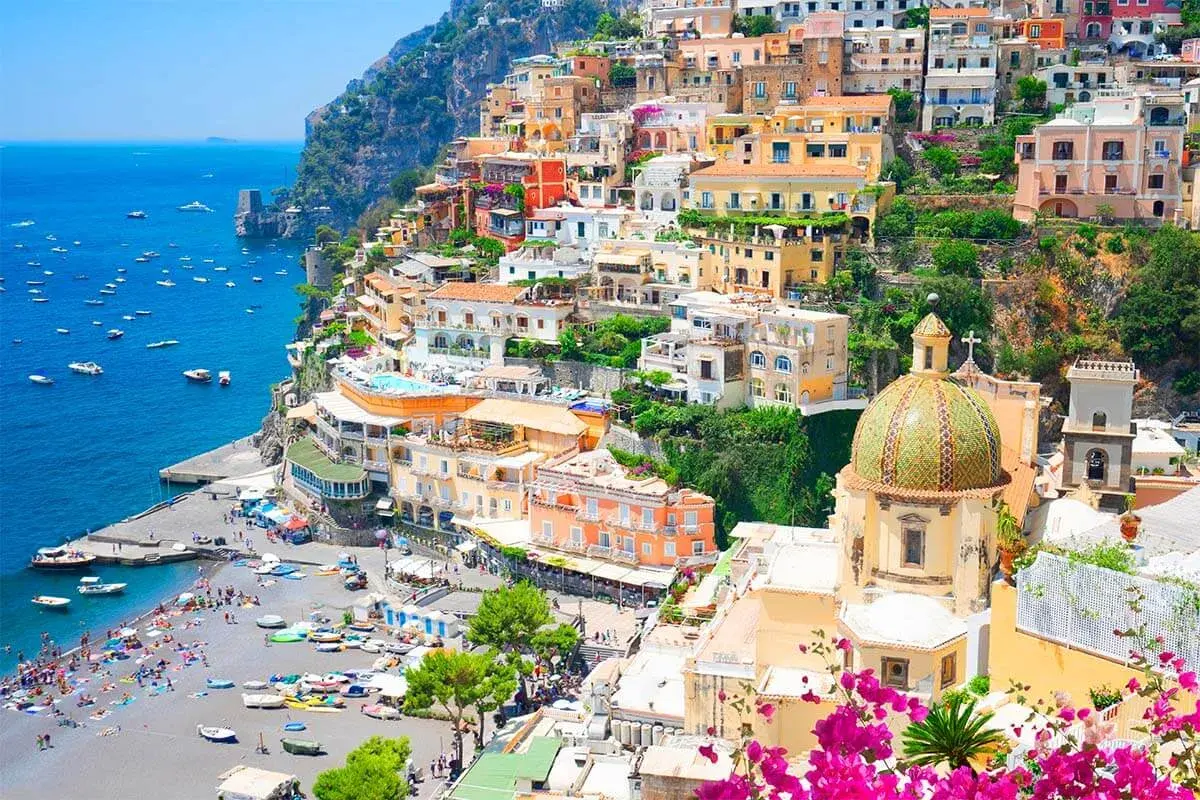
- Coastal places like Positano and Amalfi can look close on a map, but they usually take much longer than first-time visitors expect.
How I would read the Naples area map
I usually divide the Naples area into four directions: north toward Caserta, west toward Pozzuoli, east and southeast toward Herculaneum and Pompeii, and south toward Sorrento and the Amalfi Coast. That mental map is more useful than a simple radius, because the bay, the hills, and the rail network shape how the region actually works.
Travelmath’s nearby-city list is a helpful first check for the urban fringe, but I care more about rail lines, ferry departures, and road patterns than about straight-line distance. A place that looks close on paper can become a slow outing if it sits behind coastal traffic or requires multiple connections. I also pay attention to the natural anchors: Mount Vesuvius on one side, the Bay of Naples in front of the city, and the flatter inland corridor that leads toward Caserta.
The practical takeaway is simple: if you are planning only one or two day trips, choose towns that sit on direct rail lines or have very clear ferry logic. Once you think that way, the map stops being decorative and starts acting like a decision tool. That makes the next step much easier, because the nearest towns are not all equally useful.
The closest towns worth marking first
When I build a real itinerary, I start with the places that are close enough to feel effortless but still interesting enough to justify leaving Naples. The table below is the shortlist I would actually use.
| Town | Typical time from Naples | Why I would mark it |
|---|---|---|
| Torre del Greco | About 8 to 22 minutes by train | A fast coastal stop with easy access to the Vesuvius side of the bay. |
| Ercolano | About 15 to 20 minutes by train | The best short-hop base for Herculaneum and a lighter archaeological visit. |
| Pozzuoli | About 22 to 29 minutes by train or metro | Good for Roman remains, a working port feel, and a less tourist-heavy coastal scene. |
| Torre Annunziata | About 25 to 35 minutes by train | Useful if you want a quieter stop near the ruins and local neighborhoods. |
| Pompeii | About 30 to 40 minutes by train | The obvious full-day archaeological choice, and still one of the best day trips from Naples. |
| Caserta | About 31 to 48 minutes by train | The Royal Palace and gardens justify a dedicated excursion, not a rushed add-on. |
| Sorrento | About 50 to 70 minutes by train | Better as a base for the peninsula than as a quick same-morning detour. |
| Casoria and San Giorgio a Cremano | Very close urban suburbs | These belong on the map if you care about the city fringe, but they are more practical than scenic. |
My rule of thumb is that the closest names on the map are not automatically the best trip ideas. Some are useful only if you are staying nearby, while others, like Pompeii or Caserta, are worth the transit time because the payoff is substantial. That distinction matters even more once you start choosing towns by the kind of trip you want.
Which towns fit the kind of trip you want
Once the map is reduced to a few real options, I sort the towns by purpose rather than by distance alone. That keeps the planning honest and prevents the common mistake of picking a place because it looks close while ignoring what you actually want to do there.
For archaeology and ancient history
- Ercolano is the lighter, faster choice. Herculaneum is smaller than Pompeii, so it works well if you want a shorter visit without losing historical depth.
- Pompeii is the heavyweight option. It deserves more time, and I would not try to squeeze it into a casual half-day unless the rest of the itinerary is very light.
- Torre Annunziata is useful if you want to move beyond the most obvious tourist pattern and keep the day a little calmer.
For coast, views, and an easier pace
- Pozzuoli gives you sea views, volcanic landscape, and a more local rhythm. It is a good option when you want atmosphere without the Amalfi Coast premium.
- Torre del Greco is practical and well placed for the eastern side of the bay, especially if you are combining coastline with Vesuvius-area plans.
- Sorrento works best as a base if you want to spread out toward Positano, Amalfi, or Capri without constantly returning to Naples.
Read Also: Naples to Ravello - Your Best Transfer Options Revealed
For one standout excursion
- Caserta stands apart from the coastal towns. The Royal Palace and gardens make it a strong cultural day trip, especially if you want a break from ruins and seaside views.
If I had to choose only one of these categories for a short break, I would usually pick archaeology plus one coast-facing town. That gives the itinerary contrast without making it feel rushed, which is where a lot of Naples-area plans fall apart. From there, the next question is how many days you actually have.
Sample itineraries that match the map
Good trip planning around Naples is less about collecting names and more about combining them sensibly. I prefer itineraries that match the geography, because the region rewards a clear route more than a scattered wish list.
- Half-day from Naples - Choose Pozzuoli or Ercolano if you want the shortest possible outing. Both work when you want a break from the city without turning the day into a logistics exercise.
- One full day - Pick Pompeii if history is the priority, or Caserta if you want architecture and gardens. In both cases, I would plan a real meal stop rather than trying to race back immediately.
- Two days - Use one day for Pompeii and Herculaneum, then another for Sorrento or a coastal stretch. This is the point where the region starts feeling balanced instead of crowded.
- Three days or more - Add Naples city, a palace or ruins day, and one slower coastal base. That mix gives you the strongest sense of Campania without burning too much time in transit.
In practice, I also build a time buffer into every route. A 30-minute train is rarely just 30 minutes once you include walking, platform changes, and the small delays that add up in real life. That becomes especially important once you move beyond the easiest towns and into the places where roads and ferries shape the day.
What can distort the map once you leave the city center
The biggest trap around Naples is assuming that map distance equals trip difficulty. It does not. Coastal roads curve, traffic builds quickly, and some of the prettiest places are slower to reach than the geometry suggests.
Here is what I keep in mind when I plan:
- Road traffic can be the real bottleneck. Even a modest road journey can become much longer in summer or at peak commute times.
- Train routes are usually the safer bet. The regional lines are cheap and frequent enough for short hops, and they remove a lot of uncertainty.
- The more scenic the road, the slower it often is. That is especially true on the Sorrentine Peninsula and the approaches to the Amalfi Coast.
- Ferries add flexibility, but not certainty. They depend on schedules and sea conditions, so I never build an entire day around a last-minute boat plan.
- Comfort can be worth paying for. On the Pompeii-Sorrento axis, a more comfortable service can make sense if you value a smoother ride over the cheapest fare.
This is why I would not treat Positano or Amalfi as casual “near Naples” stops, even though they belong on the wider map of the region. They are beautiful, but they sit in a different planning category. Once you accept that, the final shortlist becomes much cleaner.
The shortlist I would save before booking anything
If I were building a first-time Naples-area plan, these are the names I would keep in front of me:
- Ercolano - best for a short archaeological visit that still feels substantial.
- Pompeii - the essential ruins day trip, and still the most obvious anchor on the map.
- Pozzuoli - ideal when you want a closer, more local coastal alternative.
- Caserta - the inland choice that adds architectural scale and a different pace.
- Sorrento - the strongest base town if the wider Amalfi Coast is part of the plan.
That is the core of how I would use a map of towns near Naples: start with the towns that are genuinely easy, then add only the longer trips that give the itinerary real contrast. If you keep that filter in place, the region feels organized instead of overwhelming, and the best days come together much faster.