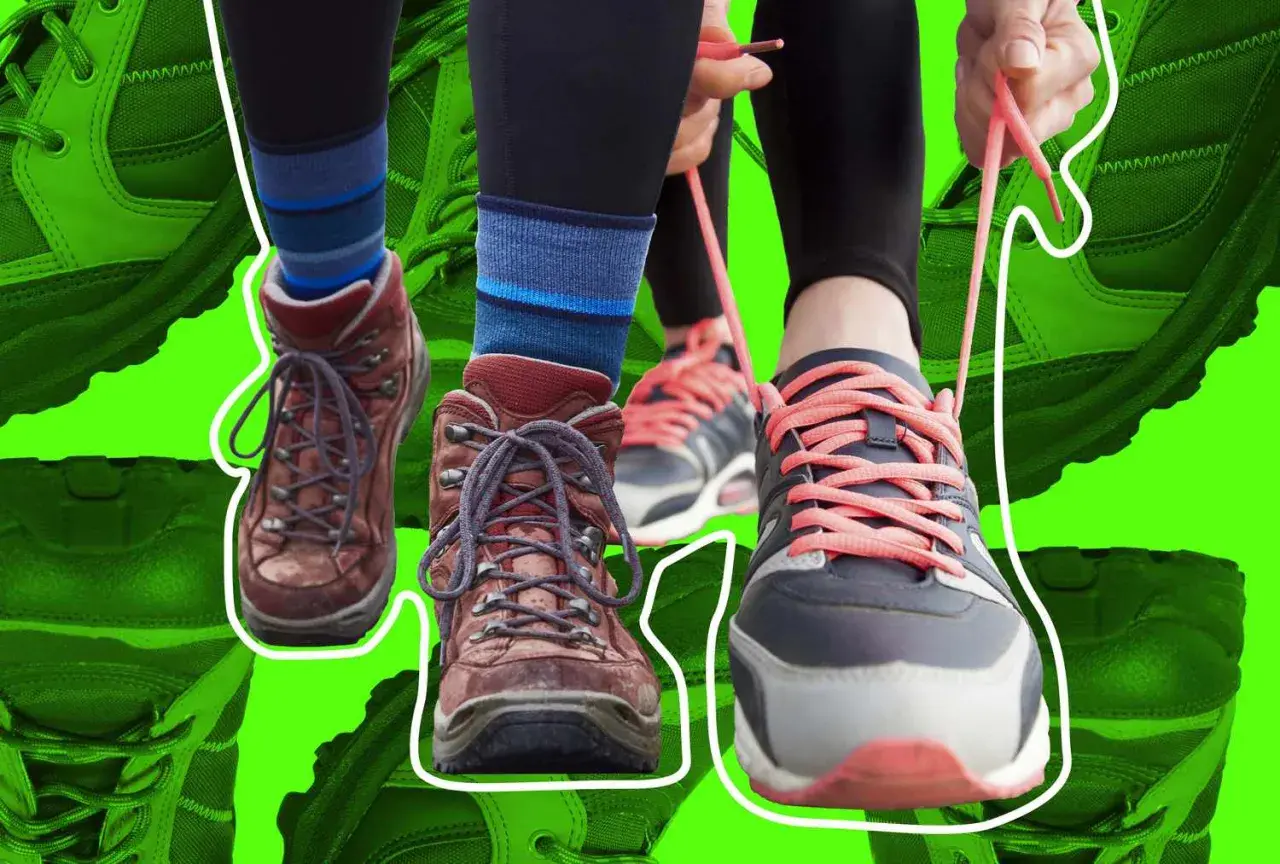
The fastest way to choose the right pair
- Pick approach shoes when the walk-in is rocky, steep, or includes scrambling, slabs, or via ferrata sections.
- Pick hiking shoes when the day is mostly trail miles, especially on dirt, gravel, and mixed-but-nontechnical ground.
- Approach models usually give better edging, more precise toe placement, and stickier rubber on rock.
- Hiking shoes usually feel more cushioned, more breathable, and less tiring over 5 to 15+ miles.
- If your day is half trail and half rock, a hybrid approach shoe can be the best compromise.
- Price is often similar enough that fit and terrain matter more than the sticker alone.
What each shoe is built to do
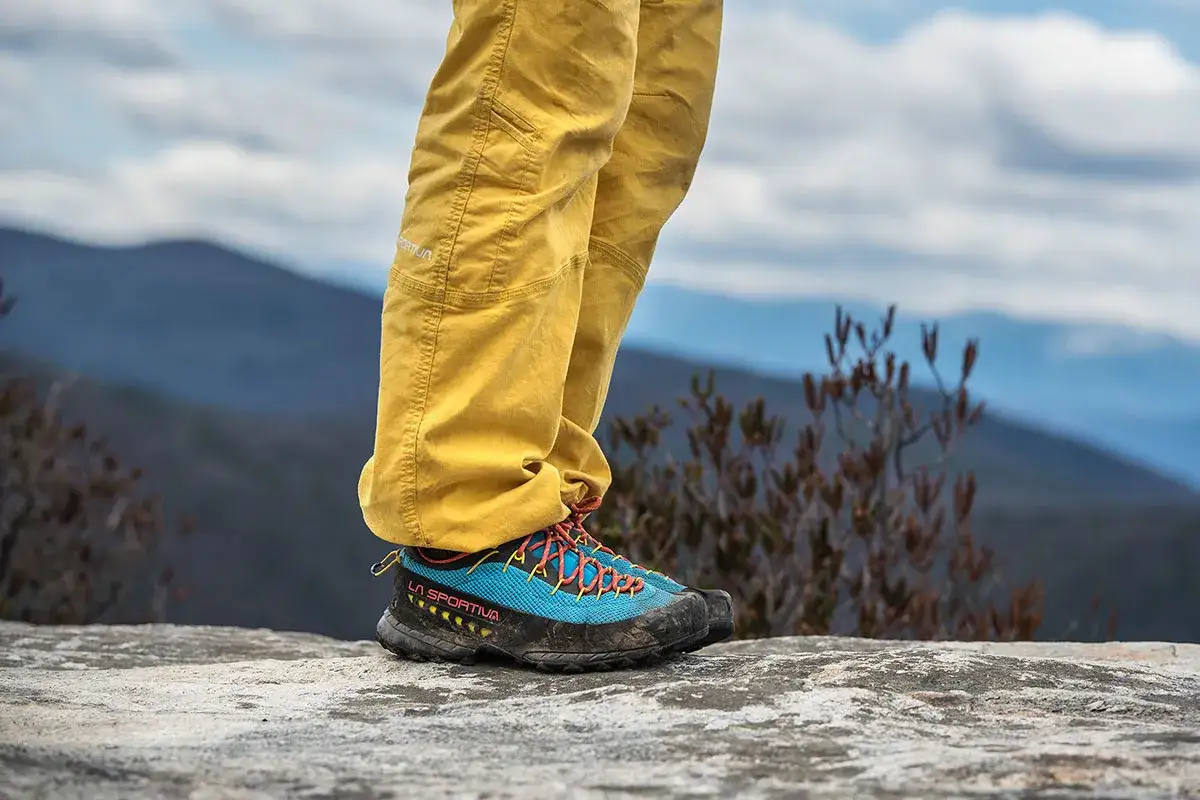
Approach shoes are made for getting to the climb, but they do more than that. The good ones are close-fitting, stable on the toe, and fitted with sticky rubber so you can trust small edges, smear on slabs, and move through broken rock with more precision than a typical hiking shoe. Hiking shoes, by contrast, are designed to make distance feel easier: lighter underfoot, more flexible through the forefoot, and usually more forgiving when the trail keeps rolling on for hours.
I think of it this way: approach shoes prioritize control, while hiking shoes prioritize efficiency. That difference sounds subtle until the terrain turns steep. Then the shoe under your foot starts deciding whether you feel composed or vague. Once you see that, the rest of the comparison gets much simpler.
Where approach shoes earn their place
Approach shoes make the most sense when the walk-in is part of the problem, not just the preamble. Think rocky alpine paths, talus fields, steep forest approaches, ridge scrambles, or a via ferrata where secure footing matters more than soft cushioning. On these routes, the shoe needs to do two jobs at once: let you hike efficiently and let you trust your feet on rock.
The details matter. A stiffer midsole helps the shoe hold an edge on small ledges instead of folding under your weight. A climbing-inspired toe box keeps the front of the shoe accurate enough for smears and cracks, and a wraparound toe rand protects the upper when you drag, jam, or scrape the shoe against stone. That is why technical models often feel more locked in than hiking shoes.
The trade-off is comfort on long approaches. After several miles, that same stiffness can feel tiring, especially if the route is mostly dirt or uneven trail rather than rock. In practice, approach shoes shine when the technical section is significant enough to justify that sacrifice. Next comes the part most buyers get wrong: what hiking shoes actually give up, and what they do better.
Where hiking shoes are the smarter choice
Hiking shoes are the easier answer for most non-technical trail days. They are usually lower cut, lighter, and more flexible, with enough traction and support to handle day hikes, weekend loops, and moderate backpacking with lighter loads. That flexibility is not just about comfort; it helps your foot move naturally over long distances, which matters more than people expect when the miles start adding up.
For U.S. hikers who spend most outings on well-maintained trails, this is often the better tool. A hiking shoe will usually breathe better, break in faster, and feel less abrupt when you are descending for an hour on gravel or dry dirt. It also tends to be more forgiving if your pace changes a lot during the day. On current U.S. retail shelves, many hiking shoes sit around the $130 to $200 range, with lighter models sometimes lower and waterproof builds a bit higher, so the decision usually comes down to fit and purpose more than price alone.
There is a limit, though. Once the trail turns into hands-on scrambling or exposed rock, hiking shoes can feel less precise on the edges. That is where the next set of buying cues becomes useful, because the difference is not just marketing language.
The features that actually change how they feel
When I compare these categories, I ignore the labels first and look at five physical traits. Those traits predict how the shoe will behave far better than the name on the box.
| Feature | Approach shoes | Hiking shoes | What it means on trail |
|---|---|---|---|
| Midsole stiffness | Usually stiffer | Usually more flexible | Stiffness helps on rock; flexibility helps over long miles. |
| Rubber | Stickier, climb-friendly compounds are common | Durable trail rubber is more common | Sticky rubber grips rock better; hiking rubber often lasts longer on dirt and gravel. |
| Toe shape and protection | More precise toe, often with a rand | Roomier and less aggressive | Precision helps on ledges and cracks; room helps comfort on long walks. |
| Upper | More structured, sometimes reinforced | More breathable and forgiving | Reinforcement protects in rock contact; breathability matters in heat and long days. |
| Best terrain | Rocky approaches, scrambling, via ferrata | General hiking, mixed trail, lighter backpacking | The closer you get to climbing, the more approach shoes make sense. |
One technical term worth knowing is edging, which means standing on the edge of a small foothold instead of the whole sole. Approach shoes usually handle that better because the platform is more stable and the toe is more precise. Once you understand that, the gray zone starts to make sense too.
When a hybrid shoe is enough
Not every trip fits neatly into one category, and that is where modern hybrid models exist for a reason. Some approach shoes borrow enough hiking comfort to work for long walk-ins, while some hiking shoes borrow enough structure and grip to handle occasional scrambling. I see these as compromise shoes, and that is not a criticism. Compromise is exactly what you want when the day is mixed.
On current approach-shoe pages, brands like La Sportiva and Black Diamond describe models that are still technical enough for climbing routes but more comfortable for the hike in than older, harder-edged designs. That matters if you are traveling in places like the Dolomites, the Picos de Europa, or any rocky alpine zone where the approach may be long but the climbing is still the highlight. A hybrid can save you from carrying a second pair or from overbuying a shoe that is too specialized for your actual trips.
The downside is that hybrids often do neither job as completely as a pure specialist. If you mostly hike, you may be paying for climbing features you rarely use. If you mostly scramble, you may still wish for a more precise toe and a stiffer platform. The right question is not “Is it versatile?” but “Does the compromise match my usual day?”
How I would choose for real-world routes
If I were deciding in the store, I would start with the route profile and work backward from there.
- Mostly trail, occasional rocks - I would choose a hiking shoe. Comfort and fatigue resistance matter more than climbing precision here.
- Short approach, steep or technical finish - I would choose an approach shoe, especially if the route includes slabs, loose stone, or easy climbing.
- Long rocky approach with light scrambling - I would look for a hybrid approach shoe with more cushioning and a less aggressive fit.
- Hot, dry, and mostly non-technical - I would lean hiking shoe for breathability and lower foot fatigue.
- Wet rock, slabby terrain, or via ferrata - I would lean approach shoe with sticky rubber and good toe precision.
The part people underestimate is fit. Approach shoes often fit closer to the foot, almost like a performance shoe, and that can feel great on rock but cramped on a long descent. Hiking shoes are usually more relaxed, which is kinder over distance but less confidence-inspiring when the terrain gets exacting. If you are between sizes, think about where the pain will happen: at the toes on the climb, or under the arches after mile eight.
That last detail leads into the most useful closing rule, because the smartest choice is usually simpler than the marketing makes it sound.
The route-first rule that keeps the choice honest
The cleanest way to choose is to ask what your feet will do for the majority of the day. If they will spend most of their time walking, hiking shoes deserve the nod. If they will spend enough time on rock that precision and grip start to matter, approach shoes become the better tool. I would rather own one pair that matches my common terrain than two pairs I almost never use correctly.
For most readers, that means hiking shoes are the default and approach shoes are the specialist. The exception is anyone whose hike regularly includes rocky scrambles, technical walk-ins, or alpine travel where the trail keeps turning into the start of a climb. In that case, the extra stiffness and grip are not a luxury; they are the reason the shoe exists. Choose for the terrain you actually see, not the terrain you hope to see, and the decision gets much easier.