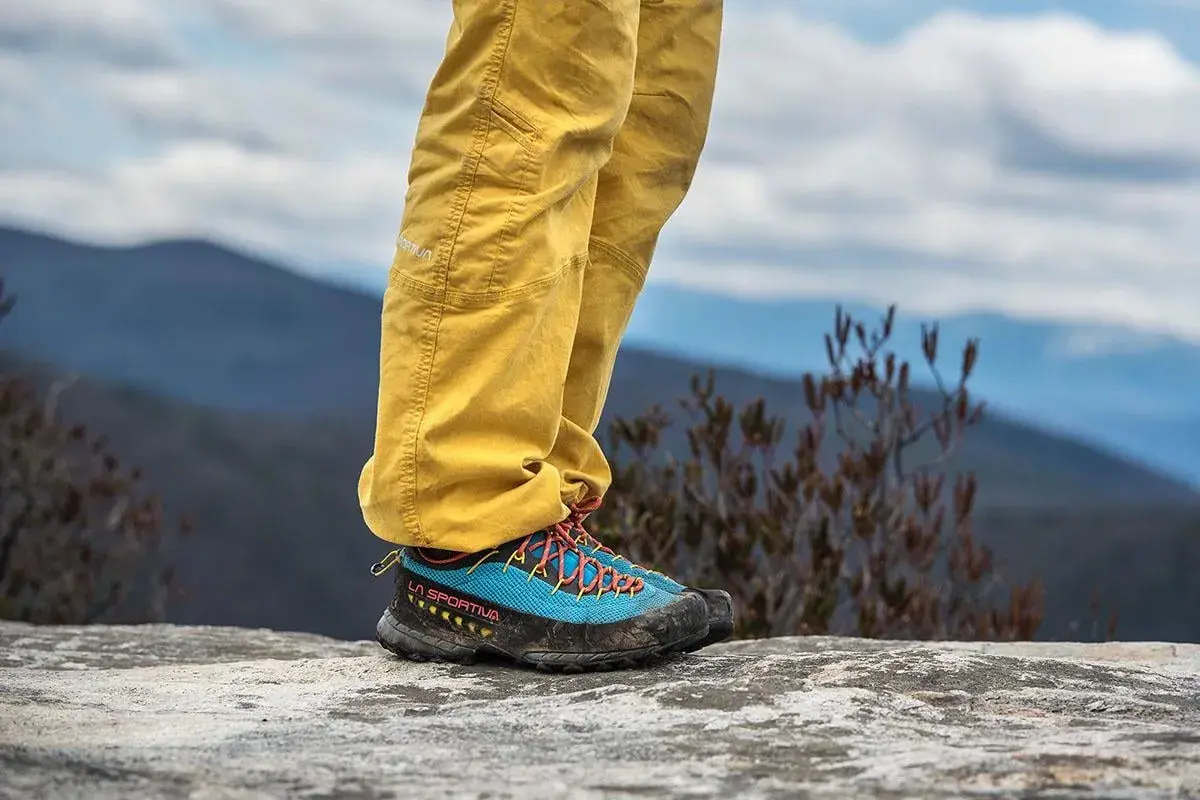
I am writing this for the kind of day that starts in a mountain town, climbs onto stone, and never fully becomes a pure trail walk. That mix is common on trips through Asturias, the Alps, or any itinerary that blends hiking with a bit of climbing, and it is exactly where the distinction starts to matter.
The quickest way to choose the right pair
- Hiking shoes are the safer default for most trail days: lighter, more breathable, and easier to live with over miles of walking.
- Approach shoes make more sense when the route includes rock, edging, smearing, or a scramble before the climb.
- If your day is mostly trail with only a short technical section, hiking shoes usually feel better.
- If the hardest part of the day is rocky footwork, approach shoes usually perform better.
- Waterproof versions can help in wet weather, but they usually give up some breathability.
- Fit matters more than branding: heel hold, forefoot shape, and toe comfort decide whether the shoe works in practice.
What each shoe type is built to do
REI currently describes hiking shoes as lower-cut footwear with durable uppers and moderately flexible midsoles, aimed at day hiking and light to moderate terrain. I think of them as the easiest shoe to trust when the route is mostly trail, because they balance comfort, protection, and simplicity without getting too specialized.
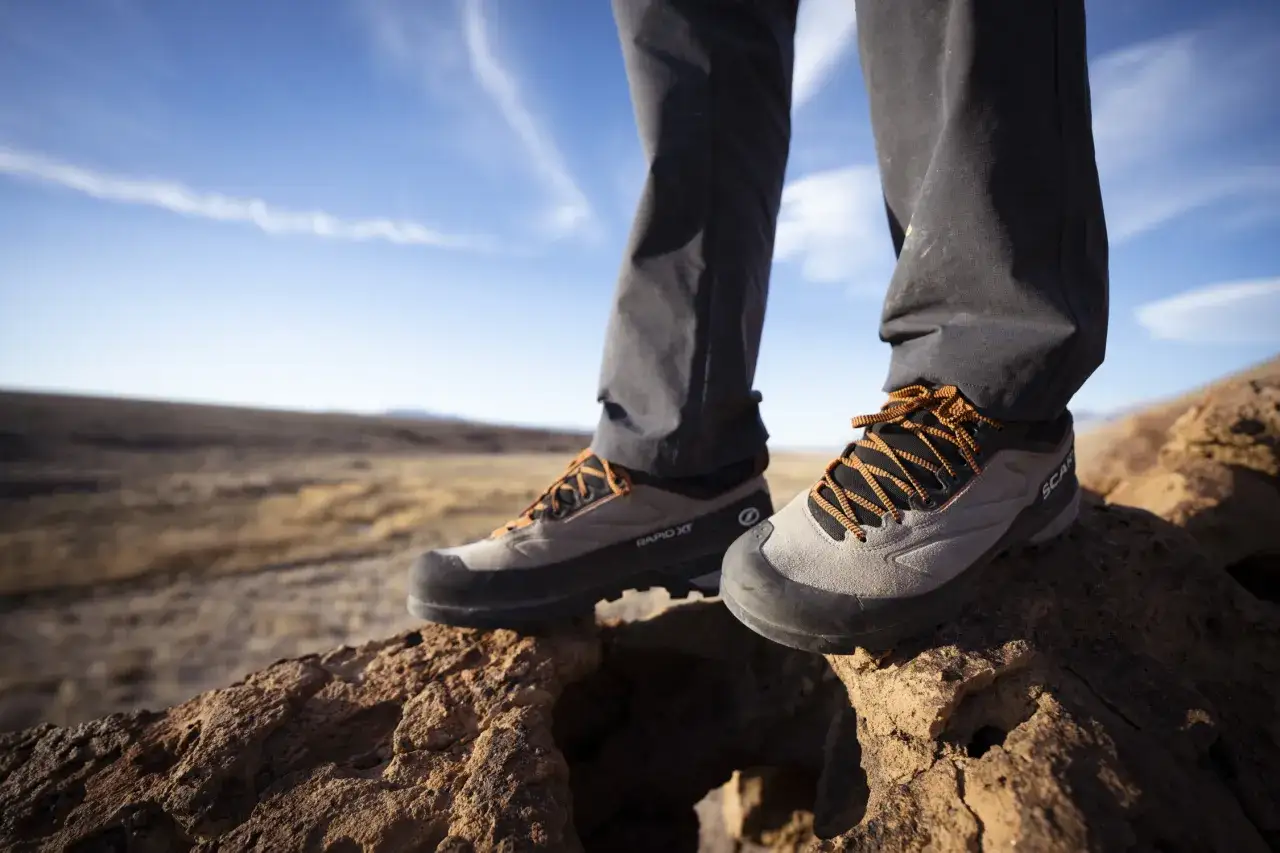
Approach shoes are a different animal. SCARPA frames them around toe precision and forefoot stability on rocky sections and technical passages, which is exactly what you want when the “approach” to a climb includes slabs, ledges, and awkward foot placements. In plain English, they borrow just enough from climbing shoes to help on stone, but still need to walk like a real shoe for the hike in.
That difference sounds subtle on paper. On the mountain, it is not subtle at all.
The differences that change how they feel on real ground
| Feature | Approach shoes | Hiking shoes | What it means for you |
|---|---|---|---|
| Grip on rock | Sticky rubber and a climbing zone at the toe | Trail-focused lugs and general-purpose traction | Approach shoes usually feel better on slabs, smears, and small edges |
| Forefoot precision | Higher | Moderate | Approach shoes reward exact foot placement; hiking shoes are more forgiving |
| Flex and ride | Often firmer and more controlled | Usually moderately flexible | Approach shoes feel sharper on stone; hiking shoes feel easier on long walks |
| Support under load | Good for light to moderate packs | Better suited to general trail use and longer walking days | Hiking shoes usually handle repetitive mileage more comfortably |
| Breathability | Good in non-waterproof models, lower in waterproof ones | Often better overall, especially in lighter synthetic versions | Hiking shoes tend to feel cooler in warm weather |
| Durability focus | Reinforced for rock contact and abrasion | Built for trail abuse, but not as rock-specific | Approach shoes shine when you are scraping against stone more than soil |
| Typical feel | More precise, more technical | More relaxed, more all-purpose | The right pair depends on whether you value control or comfort first |
The weight gap is often smaller than people expect. One current REI-listed approach shoe, the adidas Five Ten Guide Tennie, is listed at 13.4 oz per half pair, while a low hiking shoe such as the HOKA Anacapa 2 Low GTX comes in at 1 lb. 14.7 oz per pair. That does not settle the choice by itself, but it shows why the category matters even when the shoes look similar on a shelf.
That is the part many buyers miss: the label is not the story. The terrain is.
When approach shoes earn their place
I reach for approach shoes when the hike is really the first third of the day and the rock is the part that matters most. They are the better tool when the route asks for precise foot placement, not just comfortable walking.
- Rocky approaches to climbs are the obvious use case, because the shoe is built for the walk in and the scrambling that follows.
- Via ferratas and technical mountain paths benefit from the extra forefoot control and sticky rubber.
- Scrambly ridge days are where approach shoes often feel safest, especially when the rock is wet or the footholds are small.
- Mixed mountain itineraries are a good fit if you want one pair that can handle town walking, trail miles, and a short climb without a shoe change.
- Light packs pair well with approach footwear, because the shoe is not trying to be a heavy-load support system.
On a route like a damp granite access path in the Picos de Europa or a steep scramble in the Dolomites, that extra precision matters more than plush comfort. The tradeoff is real, though: approach shoes can feel stiffer and less forgiving when the day turns into a long, repetitive trail walk. If your trip is mostly mileage with only one short technical section, I would not force this category.
When hiking shoes are the better buy
For most hikers, most of the time, hiking shoes are the sensible default. They are designed to make walking easier over trails, dirt paths, groomed routes, and the kind of moderate terrain that fills up most outdoor days.
- Day hikes are the natural habitat of hiking shoes, especially when the ground is not particularly technical.
- Light to moderate terrain is where they feel balanced instead of overbuilt.
- Long walking days are usually easier in hiking shoes because the ride is friendlier and less aggressive underfoot.
- Moderate loads are more comfortable when the shoe is built for steady trail support rather than climbing precision.
- Travel use is a strong argument for hiking shoes if you want one pair that can move from airport to trail without feeling too specialized.
REI’s current guide puts hiking shoes in the “lower-cut, breathable, lighter weight” lane, and that tracks with how they behave in real life. They may or may not be waterproof, but even the waterproof versions tend to be easier to live with on straightforward trails than a more technical approach model. The main drawback is simple: they are not as confidence-inspiring on rock, and they do not reward delicate footwork the way approach shoes do.
If the route is a forest hike, a coastal path, or a long walk through rolling hills, I would usually choose the hiking shoe and not think twice.
The details that matter more than the marketing
Outsole and rubber
Approach shoes usually use stickier rubber and often add a climbing-style toe zone, which helps when you are edging on rock or smearing on slabs. Hiking shoes lean more heavily on lug pattern and all-around trail traction, which is better for dirt, mud, and mixed trail surfaces. If the ground is loose and soft, deep lugs matter. If the ground is hard and technical, sticky rubber matters more.
Midsole stiffness
A firmer midsole gives you more control on rock and helps the shoe feel stable on small footholds. A more flexible midsole usually feels better when you are walking for hours on non-technical ground. This is one of those differences you can feel within the first ten minutes of wearing the shoe, especially on descents.
Upper, protection, and weather
Reinforced uppers, toe caps, and abrasion-resistant overlays are common in both categories, but approach shoes tend to be more focused on rock contact and toe protection. Waterproof models exist in both groups, yet a membrane always reduces airflow to some degree. In warm, dry conditions, I usually prefer non-waterproof shoes because feet that dry quickly are often happier than feet sealed inside a hot shell.
Read Also: How to Rough Up Slippery Shoes - Get Grip Back Safely
Fit and volume
This is where people get in trouble. Approach shoes often fit more precisely, with a heel that locks down and a forefoot that feels controlled rather than roomy. Hiking shoes are usually more forgiving for walking comfort. If your heel lifts, your toes hit the front on descents, or the forefoot feels pinched, the category no longer matters much. The shoe is wrong for your foot.
As a rule, I would rather have a slightly less dramatic shoe that fits perfectly than a technically impressive shoe that causes hot spots by mile three.
The choice gets easier when you match the shoe to the hardest part of the day
The simplest way to decide is to match the shoe to the most demanding part of the route, not the easiest part. That keeps the decision honest and avoids buying for the fantasy version of the trip.
- Mostly trail hiking calls for hiking shoes.
- Trail plus short scrambling leans toward approach shoes.
- Light backpacking with no climbing is usually better in hiking shoes.
- Rocky alpine approaches and via ferratas make approach shoes the stronger pick.
- One shoe for walking, sightseeing, and light trails usually points back to hiking shoes.
If I were packing for a European mountain trip with one pair only, I would choose the shoe that handles the hardest surface I expect to meet. That is the cleanest rule I know, and it usually produces the least regret once the trail turns rough.