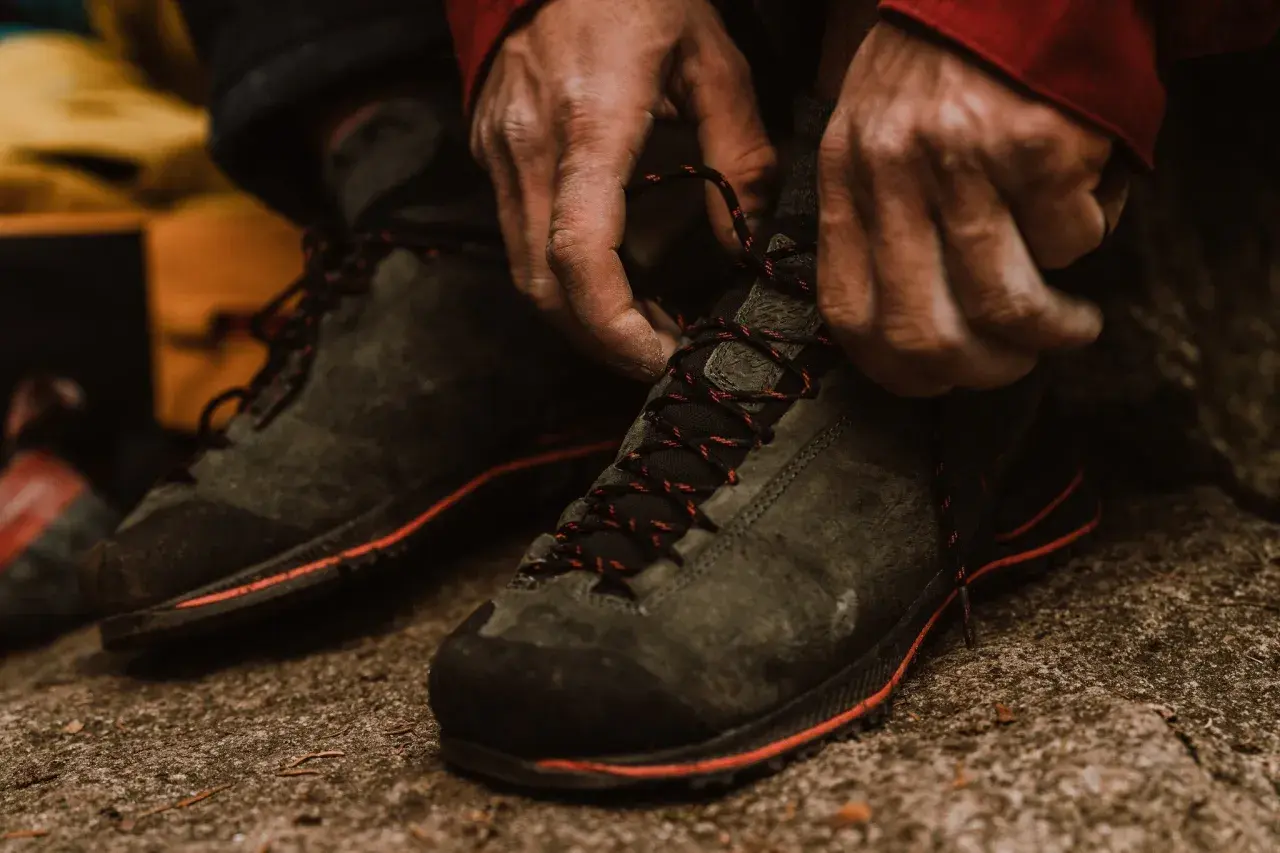
Fit cues that matter most
- Heel: minimal lift when you walk uphill or down stairs.
- Midfoot: firm hold without numbness, pinching, or lace bite.
- Toe box: enough room to wiggle your toes, but not so much that your foot slides forward.
- Length: roughly a thumb's width in front of your longest toe when you are standing.
- Feel: more precise than a hiking shoe, less compressed than a climbing shoe.
- Testing: try them late in the day, with the socks you actually hike in.
What a good fit actually feels like
When I fit approach shoes, I want the shoe to disappear once I start moving. The heel should stay planted, the midfoot should feel wrapped rather than squeezed, and the toes should have enough space to spread naturally. That gives you the control you need on rock without turning the shoe into a pressure chamber.
There is a big difference between snug and small. A good pair will feel more precise than your everyday walking shoe, especially around the forefoot and instep, yet it should not create hot spots or force your toes into a hard curl. If you can stand, bend, and descend a stair without your foot sliding forward, you are in the right zone.
| Area | What it should feel like | Red flag |
|---|---|---|
| Heel | Secure and quiet, with very little lift | Blisters, rubbing, or a loose rearfoot |
| Midfoot | Wrapped and stable without being crushed | Numbness, lace bite, or pressure on the top of the foot |
| Toes | A little room to move and flatten out | Toe jam on descents or cramped toes after a short walk |
| Forefoot | Precise enough for edging and smearing on rock | Sloppy movement inside the shoe |
| Instep | Even pressure from the laces | Hot spots or a gap that the laces cannot close |
That baseline matters because approach shoes are built for a different compromise than either hiking shoes or climbing shoes, and the next comparison makes that clearer.
Why approach shoes fit differently from hiking shoes and climbing shoes
Approach shoes are made for technical trails, rocky scrambles, and the mixed walking-climbing movement you get on the way to a route. They need enough support for the walk in and enough precision for the rock. That is why they should feel more exact than a hiking shoe, but not as aggressively tight as a climbing shoe.
| Category | Fit priority | How it should feel | What goes wrong if it is off |
|---|---|---|---|
| Hiking shoe | All-day comfort and swelling room | Roomier, more forgiving, easier to wear for long miles | Too snug means blisters, black toenails, and fatigue |
| Approach shoe | Precision plus control | Secure heel, calm midfoot, moderate toe room | Too loose means sliding, poor edging, and heel lift |
| Climbing shoe | Maximum contact on small footholds | Very close fit, minimal dead space, strong toe engagement | Too roomy means poor sensitivity and loss of power on steep ground |
For European mountain terrain, that middle ground is the whole point. On limestone, talus, and exposed rock steps, the shoe has to hold your foot still when the terrain gets awkward. At the same time, you still have to walk back down in it, sometimes for hours. I would always choose control first, but never at the cost of actual pain.
That balance is easiest to judge once you start testing the shoe in motion, not just by standing around in a shop.
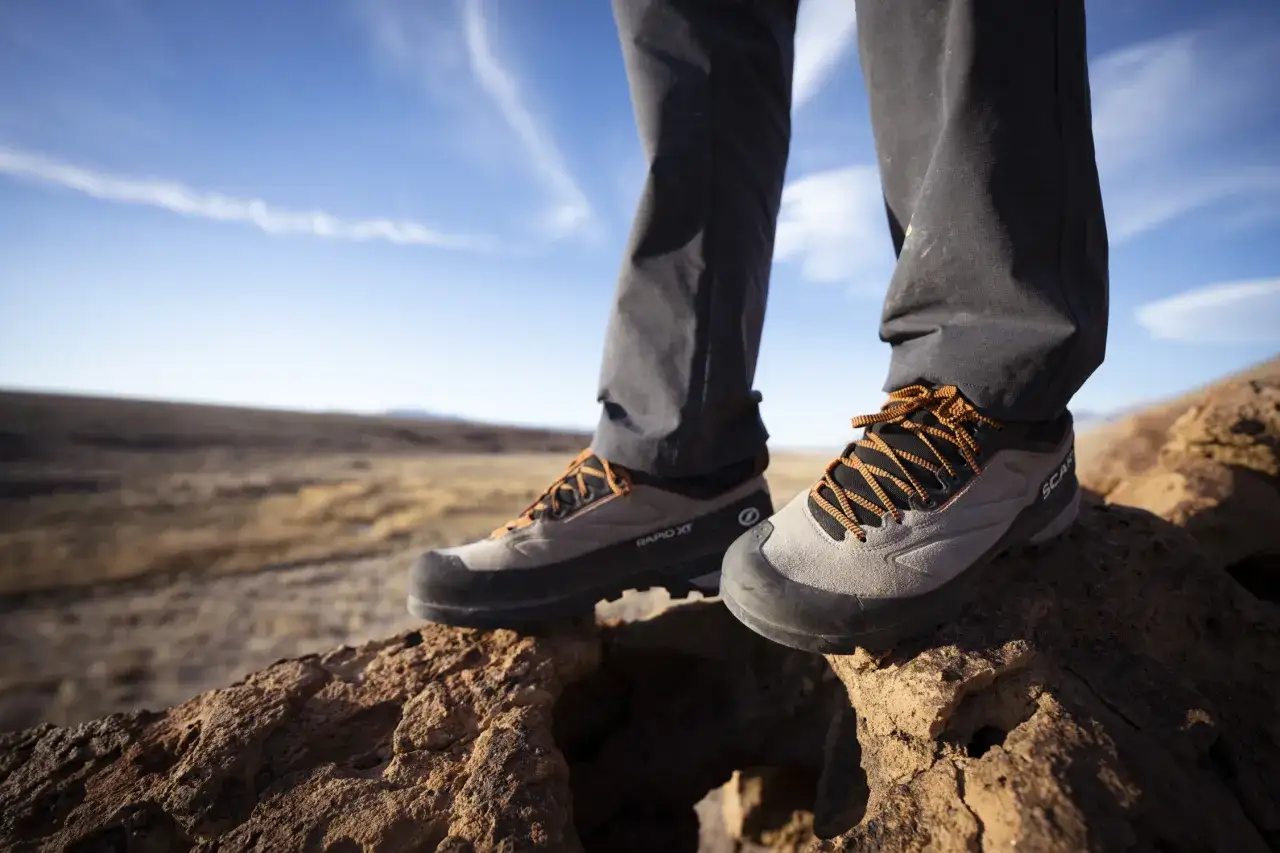
How to test the fit before you buy
Standing in place tells you almost nothing. I always test approach shoes in motion, because that is where the weak spots show up.
- Lace them the way you will actually use them. Do not crank them down so hard that the upper warps; aim for firm, even hold.
- Walk on an incline if you can. The heel should stay put and the toes should not slam the front.
- Check the downhill feel. Lean forward and make sure your longest toe is close to the front, but not jammed there.
- Flex and twist the shoe. You want resistance, not a shoe that folds too easily through the arch.
- Use the socks you plan to hike in. Sock thickness changes volume more than many people expect.
- Try them late in the day. Feet swell after walking, so the pair that feels fine in the morning may feel tight later.
If you can, pull the insole out and stand on it. I like to see roughly a thumb's width of space beyond the longest toe, then I check that the heel cup still matches my foot shape. That quick check catches a lot of wrong sizes before they become expensive mistakes. From there, sizing becomes less about guesswork and more about foot shape and terrain.
When to size up, size down, or switch the model
There is no universal number that works across all approach shoes, because lasts and volumes vary a lot by brand and model. In practice, many people land true to size or half a size up from their casual shoe, but the better question is whether the shape matches your foot and your route.| Situation | What usually works | Why it helps |
|---|---|---|
| Long approach, hot weather, or a heavy pack | True to size or half a size up | Feet swell and need a little extra room on descents |
| Steep scrambling or lots of edging on rock | Snugger fit, sometimes half a size down | More precision and less movement inside the shoe |
| Wide forefoot, narrow heel | Try a different last before changing size | The right shape usually beats the wrong size every time |
| Leather upper | Start slightly snug | Leather usually eases a bit with wear |
| Synthetic or mesh upper | Do not rely on stretch | The fit normally stays closer to the box |
| Custom orthotics or thick aftermarket insoles | Leave more volume in the shoe | Added thickness changes both length feel and instep pressure |
My rule is simple: if the heel feels secure but the toes are fighting pressure on every descent, I change the model before I keep changing sizes. A different last often fixes the problem better than forcing the wrong pair to work. That leads straight into the mistakes that make a good shoe feel wrong in the first place.
Mistakes that make a good shoe feel wrong
- Buying for the climb, not the walk in. If the approach is long, a cramped shoe becomes miserable fast.
- Chasing climbing-shoe tightness. Approach shoes need precision, but numb toes are a mistake, not a feature.
- Ignoring heel lift. A little movement in the shop becomes a blister on the trail.
- Testing with the wrong socks. Thin socks can make a borderline shoe seem fine, then the same pair feels cramped on trail.
- Assuming break-in will fix everything. Materials soften, but the wrong volume or last usually stays wrong.
- Skipping descent testing. A shoe that feels fine walking forward may still crush toes on a downhill.
The fit check I trust on a real approach
My final test is simple. I want the heel secure, the midfoot calm, and the toes free enough to stay useful after an hour of climbing over rock and another hour walking back down. If the shoe passes those three checks, it is usually a good approach-shoe fit, not just a comfortable store fit.
- Heel test: no obvious slipping when I step uphill or downhill.
- Toe test: toes can move, but they do not hit the front hard on descents.
- Rock test: the forefoot feels precise, not mushy or floating.
- End-of-day test: the shoe still feels acceptable when my feet are slightly swollen.
For crag approaches, via ferratas, and rocky mountain paths, that balance usually beats the idea of a perfectly tight shoe. I would rather have a pair that gives me control on technical ground and still lets me keep walking at the end of the day. That is the fit standard I trust, and it is the one I would use anywhere from the Picos de Europa to a steep alpine approach.