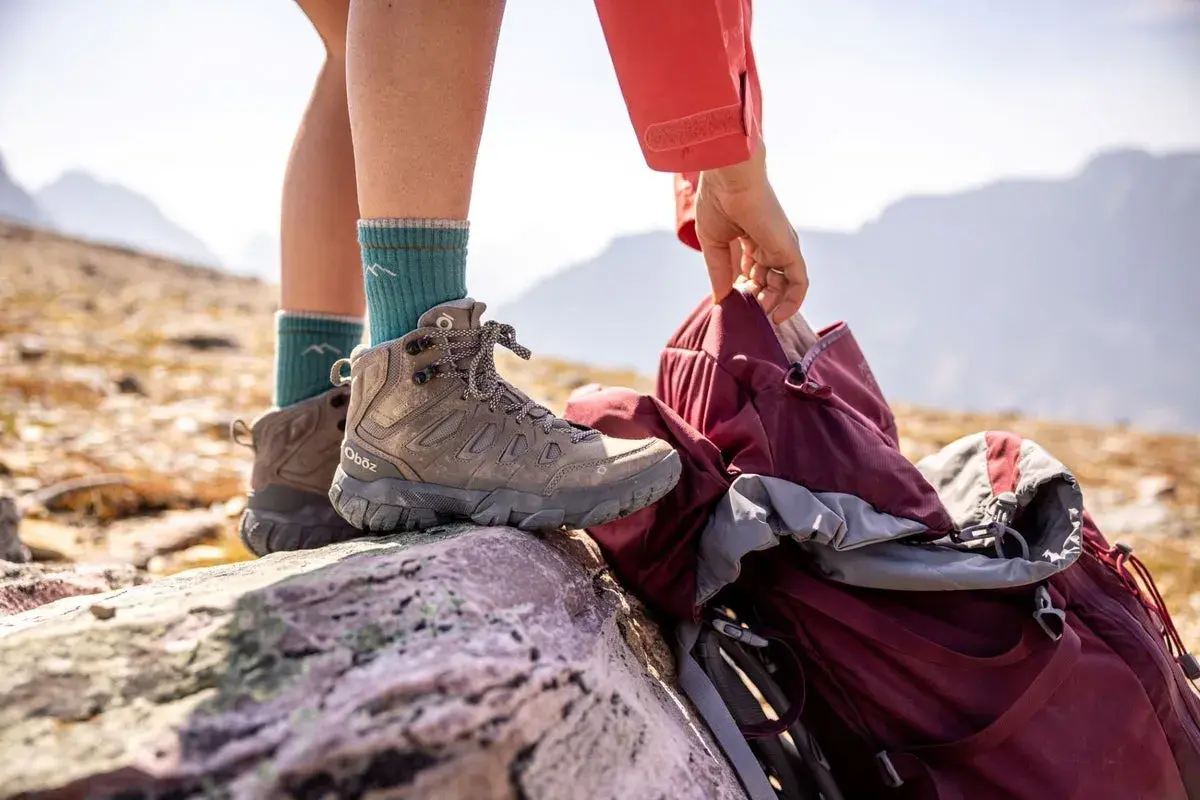
Choosing between low-cut and mid-cut hiking shoes comes down to how you move, how much you carry, and how rough the trail really is. The real choice in low vs mid hiking shoes is not about one style being universally better; it is about matching the shoe to the kind of hiking you actually do. In this guide, I break down the practical differences, where each option works best, and the fit details that matter just as much as the collar height.
The right cut depends on terrain, pack weight, and how much protection you actually need
- Low-cut shoes are usually lighter, more flexible, and better for warm weather, faster pace, and groomed trails.
- Mid-cut shoes add coverage and a more structured feel, which helps on rocky, steep, or uneven terrain.
- Collar height is only one part of stability. Fit, heel lockdown, and midsole stiffness matter just as much.
- Waterproof shoes can help in wet conditions, but they usually dry slower and run warmer.
- If you hike mostly on day trips with a light pack, a low-cut model is often the most versatile starting point.
- If your routes are rough, loose, or loaded with gear, a mid-cut shoe usually earns its extra weight.
What the trail is actually asking from your footwear
When I choose hiking footwear, I start with the trail, not the label. A smooth forest path, a ridge full of loose rock, and a muddy shoulder-season route all demand different things from the shoe, even if they are the same distance on paper. The questions I ask are simple: how technical is the terrain, how much am I carrying, how much time will I spend on my feet, and how often will the trail be wet or cold?
That matters because low-cut and mid-cut shoes solve slightly different problems. One prioritizes freedom and efficiency; the other leans toward coverage and structure. Once you frame the decision that way, the trade-off becomes much clearer and much less marketing-driven. From there, it helps to see what those differences look like in the shoe itself.
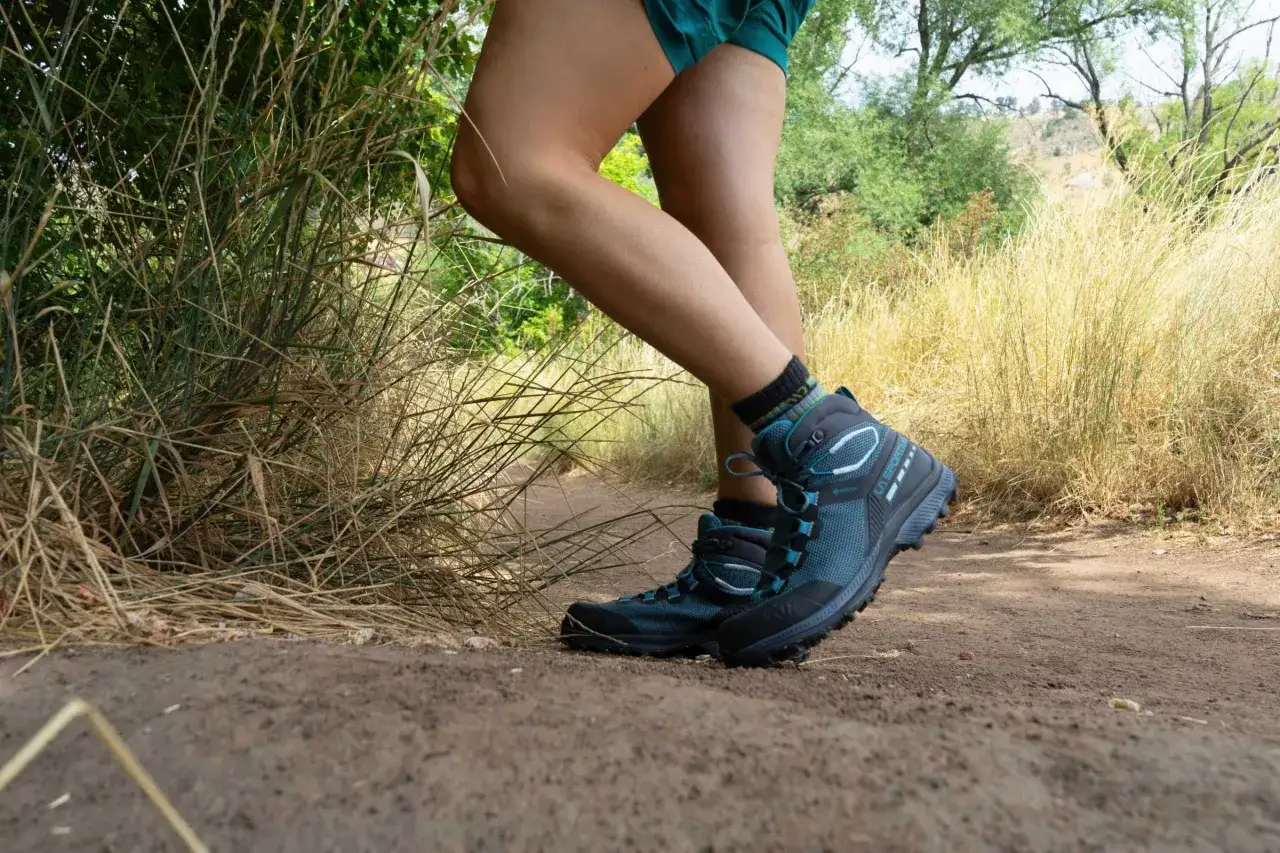
How low-cut and mid-cut shoes feel different on the trail
In the shop, the difference can look minor. On the trail, it is more noticeable. Here is the practical version I use when comparing them:
| Factor | Low-cut shoes | Mid-cut shoes |
|---|---|---|
| Ankle coverage | Sits below the ankle for freer movement | Rises over the ankle bone for more coverage |
| Feel | Lighter, quicker, more sneaker-like | More structured and more boot-like |
| Breathability | Usually better | Usually a bit warmer |
| Protection | Less coverage from rocks, brush, and debris | More upper coverage and a more enclosed feel |
| Drying time | Typically faster | Typically slower |
| Best use | Day hikes, travel, light packs, steady mileage | Steeper ground, uneven terrain, heavier loads |
I would be careful with one common assumption: a taller collar does not automatically mean dramatically better injury protection. What a mid-cut shoe usually gives you is more coverage, a little more structure, and often a stronger sense of confidence on rough ground. That can matter a lot, but it is not magic. Next, I look at the situations where the lighter option genuinely makes more sense.
When low-cut shoes are the smarter choice
Low-cut hiking shoes shine when the trail is predictable and you want to move without feeling boxed in. If I am hiking well-maintained trails, rolling hills, or dry dirt paths, I usually prefer the lower collar because it keeps my stride natural and my feet less tired over time. They also make more sense for travel days, because they wear comfortably beyond the trail and do not feel overbuilt for a short outing.
- You hike mostly on groomed or lightly technical trails.
- You carry a light pack and do not need extra structure.
- You value a quick, flexible feel over maximum coverage.
- You hike in warm weather and want better ventilation.
- You want one pair that can move from trail to town without feeling like overkill.
The trade-off is straightforward: once the route turns steep, rocky, muddy, or brushy, a low-cut shoe gives you less protection and less visual confidence on uneven ground. That does not make it a bad choice; it just means it is best used where speed and simplicity matter more than extra shielding. From there, the question becomes when the mid-cut starts paying for itself.
When mid-cut shoes earn their place
Mid-cut shoes make the most sense when the trail starts asking more from your feet and ankles. Rocky descents, rooty forest paths, loose scree, wet grass, and off-camber traverses all add little stressors that can make a lower shoe feel too exposed. If I am carrying a heavier pack, I also want the added structure because fatigue tends to show up first in sloppy foot placement, not just in sore legs.
- You hike steep, uneven, or rocky terrain regularly.
- You carry a heavier day pack or do longer outings.
- You hike in shoulder season, when weather changes fast.
- You want extra protection from brush, debris, and wet ground.
- You prefer a more locked-in, boot-like feel underfoot.
There are trade-offs, though. Mid-cut shoes usually weigh a bit more, feel warmer, and take longer to dry after rain or stream crossings. They can also feel restrictive if you like a lot of ankle freedom. I do not see that as a flaw; I see it as the cost of getting more coverage and structure when the trail justifies it. The next piece is important because a bad fit can erase most of that benefit.
Fit and lacing matter more than the label on the collar
A shoe that fits well will usually outperform a higher-cut shoe that fits badly. That is the part many hikers skip. If your heel slips, your toes jam on descents, or the forefoot feels pinched, the shoe is wrong no matter how supportive the collar looks in a product photo. I care a lot more about how the shoe locks onto the foot than about how high it rises around the ankle.
- Heel lockdown should be secure on uphill and downhill steps. If your heel lifts, the shoe is too loose or the volume is wrong.
- Toe room matters on descents. You want space to avoid smashing toes into the front of the shoe.
- Runner’s loop lacing, also called a heel lock, uses the top eyelets to reduce heel slip and improve hold.
- Sock thickness changes fit. A midweight hiking sock can make a shoe feel noticeably tighter than a thin synthetic sock.
- Foot volume matters as much as length. Some hikers need a wider or roomier build more than they need a different collar height.
- Break-in time is not the same for every shoe. Even comfortable hikers should be tested on short walks before a longer route.
That is why I never judge a shoe only by the collar line. A well-laced low-cut shoe can feel more secure than a sloppy mid-cut model, especially on a long descent. Once fit is sorted, weather becomes the next real deciding factor.
Weather, waterproofing, and drying time change the equation
Waterproof membranes can be useful, but they are not free. They usually add warmth, and they tend to slow drying once water gets inside the shoe. In wet climates, that can be a smart trade. In hot weather, it can be miserable. I tend to prefer more breathable low-cut shoes for dry summer hiking and more protective mid-cut models when rain, mud, or cold ground becomes a recurring part of the hike.That is especially true on trips where conditions shift quickly. A damp morning, a wet ridge, and a dry finish all ask different things from the same pair of shoes. If your hiking takes place in places like the Pacific Northwest, the Appalachian shoulder season, or a coastal route where weather turns fast, you may value drying time and debris protection more than you expected. In that situation, the collar height matters less than the whole weather system the shoe has to handle. With that in mind, the easiest way to decide is to match the shoe to the type of hiker you actually are.
My practical pick for different hikers and trips
When people ask me what to buy first, I usually answer with the trail scenario, not the brand. This is the simplest rule set I use:
| Hiker or trip type | Best starting point | Why |
|---|---|---|
| Day hikes on maintained trails | Low-cut | Lighter, cooler, and easier to wear for long, steady miles |
| Trail travel that mixes pavement, towns, and short hikes | Low-cut | More versatile off the trail and less bulky for all-day use |
| Rocky, steep, or root-heavy terrain | Mid-cut | More coverage and structure when footing gets awkward |
| Trips with a heavier pack | Mid-cut | Additional support helps when fatigue starts to build |
| Hot, dry climates | Low-cut | Better ventilation and less heat buildup |
| Wet brush, mud, or shoulder-season hiking | Mid-cut | More coverage from debris and a more protective feel |
| Hikers who want maximum freedom of movement | Low-cut | Less restriction around the ankle and a more natural stride |
If I had to reduce it to one sentence, I would say this: choose low-cut shoes for efficiency, comfort, and versatility; choose mid-cut shoes for rougher terrain, heavier loads, and more coverage. That rule holds up well for most hikers I talk to, and it is especially useful when a trip blends scenic town walking with actual trail time. The final step is deciding what I would buy if I were starting from zero.
What I would buy first if I were starting over
If I were buying one pair for most casual day hikes, I would start with a low-cut hiking shoe. It covers the widest range of easy-to-moderate outings, feels less tiring on longer walks, and is easier to use outside the trailhead. For a lot of hikers, that is the most practical first purchase because it does not lock you into a single style of hiking.
I would move to a mid-cut model only when my real hiking pattern demanded it: steeper ground, rougher surfaces, wetter conditions, or a pack that adds noticeable strain. If your trips often mix scenic travel, village walking, and short mountain routes, that decision matters even more because the same shoe needs to handle different surfaces without feeling wrong in town or on trail. The best choice is the one that matches your most common terrain, not your most ambitious one.