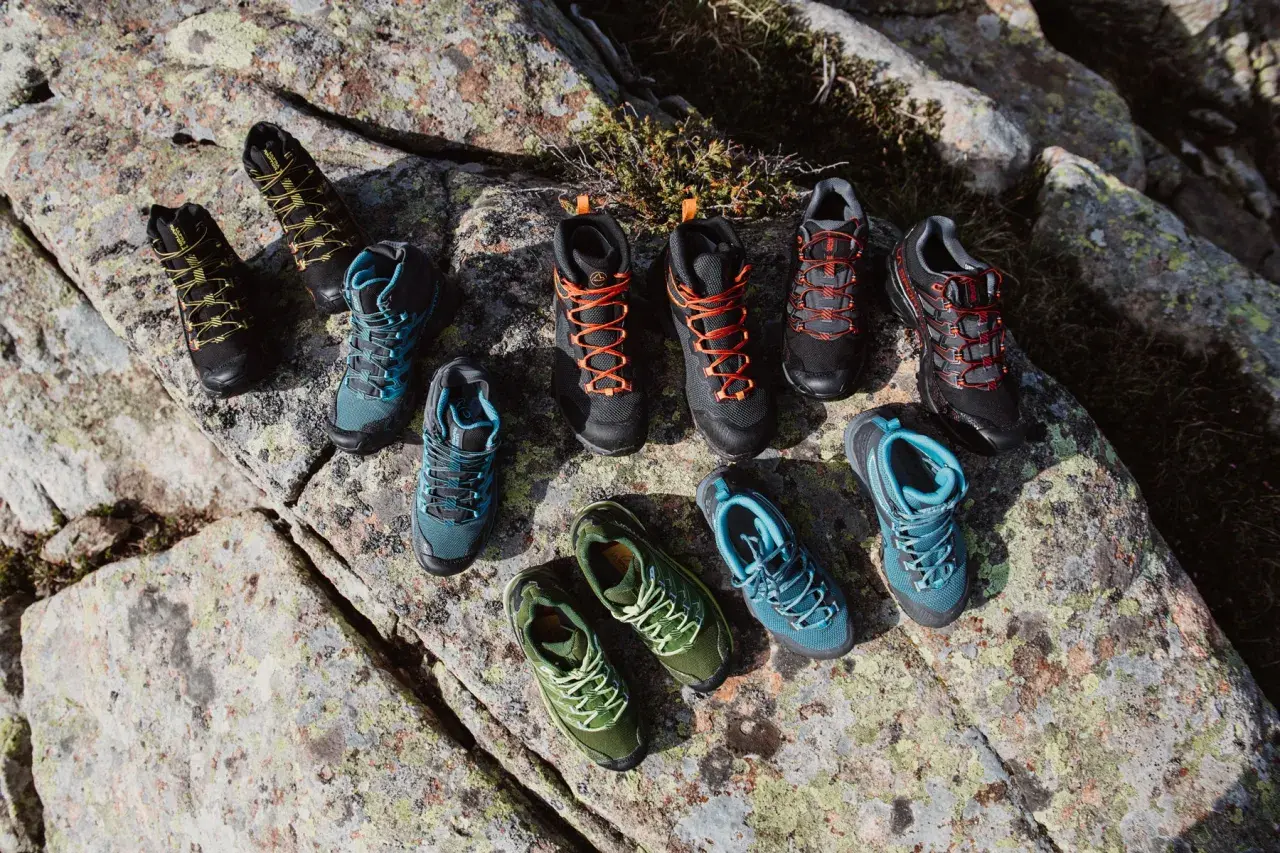
Unused hiking footwear can fail long before the tread is gone. In this article I break down what actually breaks down inside boots and trail shoes, why storage matters so much, which materials age first, how to spot early warning signs, and what I would check before trusting an old pair on uneven ground. The practical goal is simple: help you tell the difference between a boot that is merely dusty and one that is already past safe trail use.
The short version is that time attacks the boot from the inside
- Polyurethane midsoles are the most common reason hiking boots crumble while sitting unused.
- Heat, humidity, and poor ventilation speed hydrolysis and weaken glue bonds.
- Leather can dry out and crack even when the outsole still looks intact.
- A boot can look clean on the shelf and still have a failing midsole, so appearance alone is not a good test.
- A quick inspection every 2 to 3 months catches many problems before a trip does.
Why hiking shoes can fail while sitting still
The main answer is that shoes do not only wear out from steps. They also age chemically. In hiking footwear, the hidden weak point is often the midsole foam or the adhesive that holds the sole unit together, and both can degrade even if the pair has been sitting in a closet for years.
Polyurethane is the classic culprit. Over time, moisture in the air reacts with the material and the structure starts to break down from within, which is why an old boot can go from solid to crumbly without much warning. Leather ages differently: it loses oils, gets stiffer, and can crack at flex points. Glue joints are their own problem, because heat and humidity slowly weaken the bond between the upper, midsole, and outsole.
That is why I do not judge old hiking shoes by mileage alone. A lightly used pair stored badly can fail faster than a heavily used pair that was cleaned, dried, and kept in decent conditions. Once you understand that, the next question becomes which parts of the boot are most likely to fail first.
The materials that age first in hiking footwear
Different materials fail in different ways, and that matters when you are deciding whether to keep, repair, or retire a pair. In my experience, the upper may still look respectable long after the sole system has started to go. This is especially true in hiking boots, where comfort and structure depend on a mix of foam, rubber, leather, and adhesive.| Part | How it ages | What it looks like | Why it matters |
|---|---|---|---|
| Polyurethane midsole | Hydrolyzes over time, especially in humid storage | Cracking, crumbling, or a soft, mushy feel | It is the most common storage failure in older hiking boots |
| EVA foam midsole | Compresses and loses rebound | Flat cushioning, dead underfoot feel | Usually less crumbly than PU, but comfort and support fade |
| Leather upper | Loses oils and dries out | Stiffness, creases, surface cracking | A damaged upper can still let water in even if the sole is fine |
| Rubber outsole | Hardens slowly and can separate at the bond line | Less grip, lifting at toe or heel | Traction fails more slowly than midsoles, but separation is serious |
| Adhesive bond | Weakens with age, heat, and moisture cycling | Outsole peeling away from the upper | This is often repairable if caught early |
One detail is worth keeping in mind: a boot with stitched or more serviceable construction may outlast a fully molded, heavily glued one, but no construction style is immune to aging foam. If the midsole is failing, the rest of the boot usually does not get a second chance. That is why early warning signs are so important.
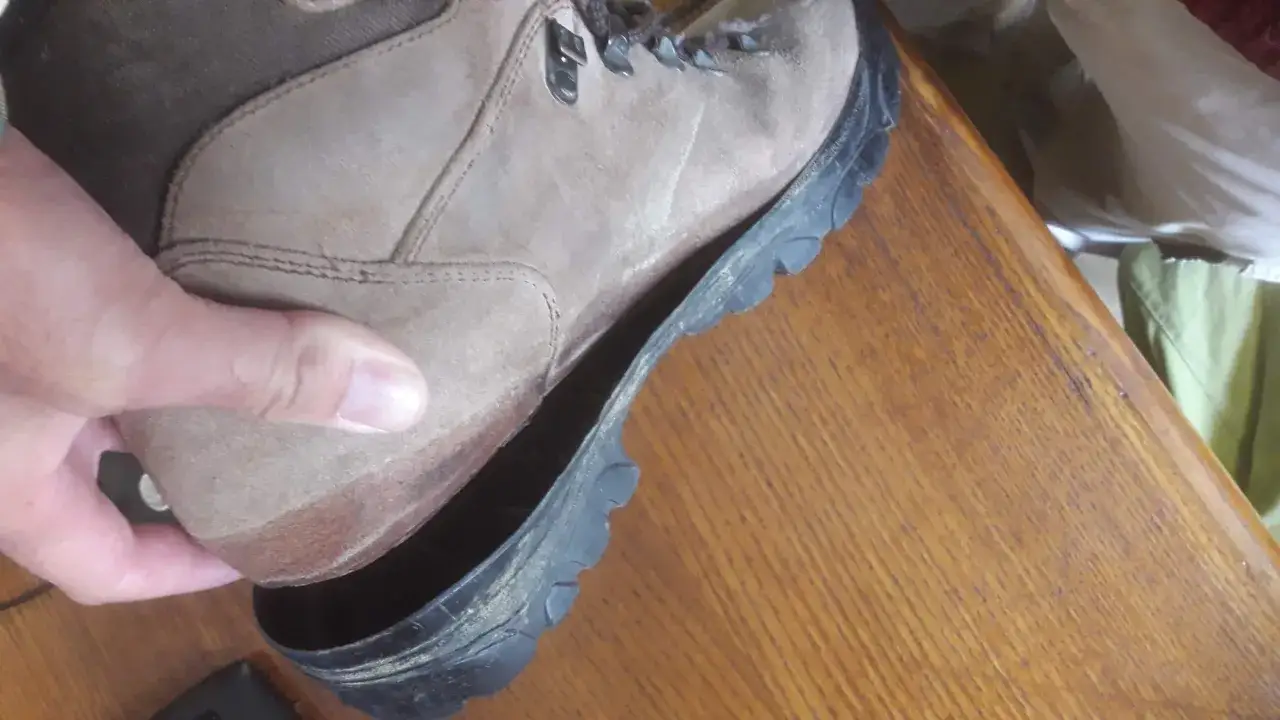
How to spot early warning signs before a hike
I would never take an older pair straight from storage to a long trail without a close inspection. The most obvious problems are not always the most dangerous. A tread can still look healthy while the foam underneath is already failing, and that is exactly how people get surprised on the first steep descent.
- Cracks at the flex point, usually near the ball of the foot or toe break.
- Soft, sticky, or chalky foam when you press the midsole with your thumb.
- Outsole separation at the heel, toe, or sidewall.
- Uneven collapse where one boot feels flatter or weaker than the other.
- Leather that has become stiff and shows fine surface cracks when bent.
- A dead underfoot feel even if the outsole still has tread left.
If the upper looks fine but the midsole fails the squeeze test, I treat the boot as suspect for any long, wet, or technical route. A pair like that might survive a casual walk in town, but I would not trust it for a mountain day. That leads directly to the conditions that make this damage happen faster in the first place.
Which storage conditions make the damage worse
Storage matters more than most people think. Heat, humidity, and sunlight all speed up aging, and they do it quietly. A hot garage, a stuffy attic, a damp basement, or the trunk of a car all create the kind of environment that shortens the life of hiking footwear even when no one is wearing it.
I also avoid sealed plastic bags for anything that still has trace moisture in it. If a boot goes into storage even slightly damp, the moisture has nowhere to go, and that trapped environment can be worse than normal room air. The same is true for shoes left compressed under other gear. They need air circulation, not pressure.
- Best: clean, fully dry, ventilated storage in a cool room.
- Bad: direct sun, a car trunk, an attic, or a heater vent.
- Worse: a damp bin or sealed bag that traps moisture.
In practical terms, a boot that sits in a climate-stable closet can age slowly, while the same model in a warm, humid room can start to fall apart much sooner. Once the environment is under control, the storage routine itself becomes the next line of defense.
How I store hiking boots to slow the breakdown
My goal with storage is not to make boots immortal. It is to keep them in a condition where age does not outrun use. The routine is simple, and it works best when the shoes are still in decent shape to begin with.
- Clean off dirt and salts after muddy, wet, or salty hikes. Grit holds moisture and scratches surfaces.
- Dry the boots naturally at room temperature. I keep them away from radiators, heaters, and direct sun.
- Remove the insoles and loosen the laces so air can move through the inside.
- Condition leather lightly when it starts to feel dry. Over-conditioning can soften structure that should stay supportive.
- Store them uncompressed in a breathable space, not stuffed into a tight plastic bin.
- Check them every 2 to 3 months if they are sitting unused. A quick flex test and visual inspection takes almost no time.
The inspection I use before an old pair goes back on a trail
Before I trust old hiking footwear on a real hike, I run a short inspection. It is not complicated, but it is honest. If a boot fails any of these checks, I keep it off long routes and wet terrain.
- Press the midsole at the heel and forefoot. It should feel firm, not spongy or crumbly.
- Bend the boot gently at the ball of the foot and look for cracks or lifting at the seam.
- Compare both boots side by side. If one feels softer, flatter, or more brittle, that is a warning.
- Look at the toe and heel bonds where separation usually starts first.
- Walk on a hard surface for a few minutes and listen for odd creaks, shifts, or rubbing that was not there before.
If the outsole is lifting but the rest of the boot is structurally sound, a cobbler may be able to help. If the midsole is crumbling, I usually retire the pair. For hiking, confidence underfoot is not a luxury, it is part of safety. The useful habit is to trust the materials in front of you, not the memory of how good the boots used to be.
That is the practical answer: shoes often fall apart when not worn because age, moisture, heat, and material chemistry keep working even in storage. For hiking footwear, the safest approach is to keep boots clean, dry, and ventilated, then inspect them regularly and retire anything that has started to soften, crack, or separate. If you treat stored boots as gear that still needs maintenance, you will catch most problems before the trail does.