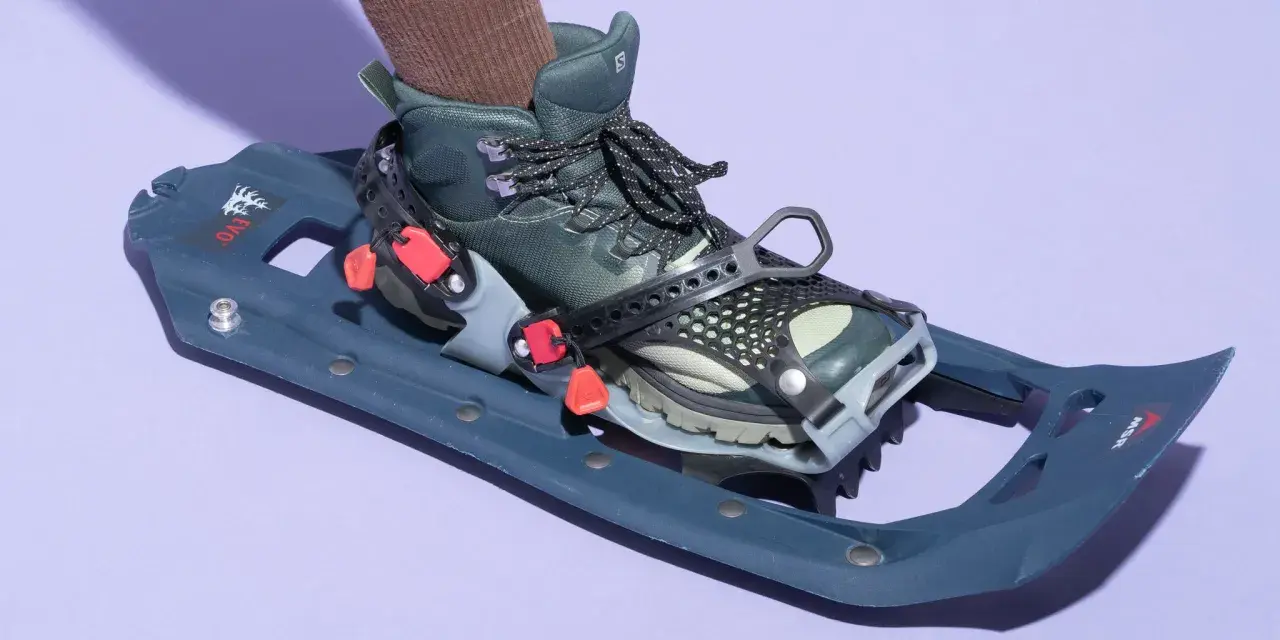
What matters most is warmth, waterproofing, and a secure fit
- Most snowshoe bindings accept regular hiking boots and winter boots.
- Waterproofing matters more than finding a boot labeled for snowshoeing.
- Mid-height hiking boots are usually the best all-around choice for U.S. winter trails.
- Very cold, slow outings favor insulation; faster, milder outings favor lighter boots.
- Good socks, gaiters, and proper binding tension matter as much as the boot itself.
Why snowshoes usually work with the boots you already own
Snowshoeing is refreshingly simple compared with ski boot setup. REI notes that snowshoe bindings accept a wide range of footwear, which is why most people can use a regular winter hiking boot without buying anything snowshoe-specific. The binding is doing the heavy lifting here: it holds your boot in place, spreads pressure across the foot, and gives you enough control to walk naturally.
That is also why I don’t chase a “snowshoe boot” category unless there is a clear reason. A boot that keeps your foot warm, dry, and secure will usually do the job just fine on groomed trails, packed forest paths, and moderate backcountry routes. The exception is when conditions get colder, wetter, or more technical, and that changes the kind of footwear I want on my feet. From there, the real decision becomes which boot style gives you the best balance of comfort and protection.
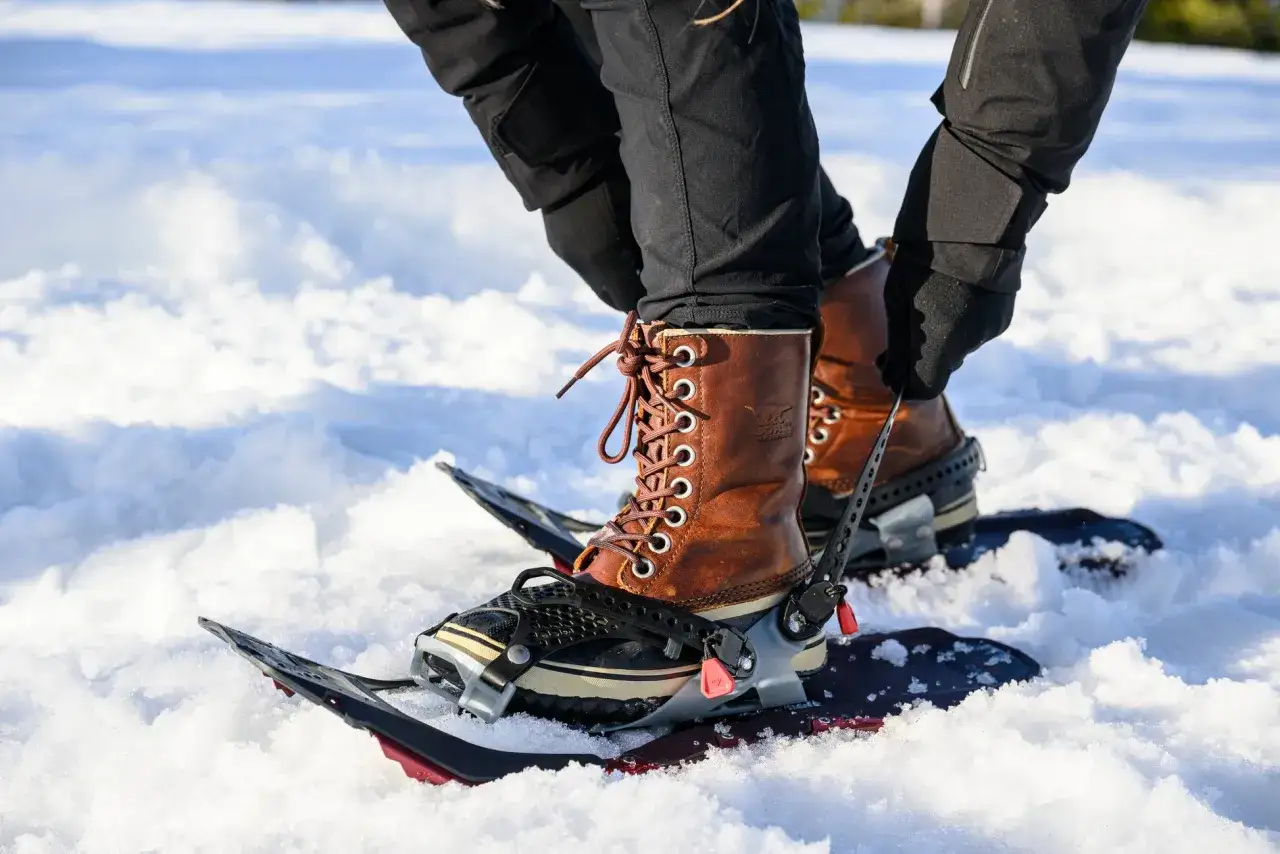
What kind of boots actually perform best
The boots that feel best on snowshoes are not always the warmest ones, and the warmest ones are not always the most useful. I usually start with the pace of the day, the temperature, and whether I expect to be moving constantly or stopping often to look around, take photos, or wait for a group.
| Footwear type | Best for | Why it works | Trade-off |
|---|---|---|---|
| Waterproof mid-height hiking boots | Most winter day hikes | Good balance of warmth, ankle support, and control inside the binding | Not as warm as insulated winter boots in deep cold |
| Insulated winter boots | Cold, slow outings and long stops | Protects toes when temperatures stay low or the wind picks up | Bulkier and can feel clumsy on longer walks |
| Lighter hiking shoes or trail runners with gaiters | Packed snow and mild conditions | Light, efficient, and comfortable when the snow is dry and the pace is brisk | Cold and wet feet arrive faster if conditions change |
| Very stiff mountaineering boots | Technical steep terrain | Strong support when the route is more demanding | Usually overkill for casual snowshoeing |
One useful detail that people miss: a boot that is slightly stiff usually snowshoes better than a very soft casual shoe, because the binding can hold it more securely and your foot rolls less inside the shell of the boot. That said, too much bulk can be a problem too, so the sweet spot is support without excess volume. Once you understand that balance, the next question is when heavier winter footwear is actually worth the extra weight.
When heavier winter footwear earns its place
This is where I separate “nice to have” from “actually useful.” If I’m heading out on a mild day with continuous movement, I don’t want a giant insulated boot simply because it sounds appropriate. But when I expect long pauses, very low temperatures, or wind that cuts through layers, insulation starts to matter more than lightness.
I would lean toward a more specialized winter boot when any of these are true:
- You will be moving slowly, taking photos, or waiting around a lot.
- The temperature stays well below freezing for most of the outing.
- The trail is deep, dry powder and your feet will sit in cold snow for hours.
- You have a history of cold toes even in decent winter footwear.
- You are hiking in conditions where wet slush or thaw-refreeze cycles are common.
That does not mean you need a dedicated snowshoe-only boot. It means the trail conditions have crossed into territory where insulation, waterproofing, and cuff height start to matter more than minimal weight. Once the weather gets harsher, fit and sealing details become just as important as the boot type itself.
Fit, socks, and gaiters change the experience more than brand names
When people tell me their feet were miserable on snowshoes, the boot brand is rarely the real problem. Fit usually is. I want the boot snug through the heel and midfoot, with enough room in the toe box to move my toes freely. A simple test I use is to stand in the boot with winter socks on and make sure I have about a thumb’s width of space in front of the longest toe.
Socks matter too. I prefer a single pair of wool or synthetic socks over thick, layered cotton socks, because moisture management is what keeps warmth consistent once you start sweating. Extra sock thickness can make a boot feel warmer in the shop while actually reducing circulation on the trail, which is the opposite of what you want.Gaiters are the other piece that earns more respect than they usually get. In loose powder, wet snow, or brushy terrain, gaiters keep snow from dropping into the top of the boot and soaking your socks. They also help seal the gap between your boot and your pants, which is useful on windblown ridges or in slush. If you have ever finished a winter walk with cold snow packed around your ankles, you already know why that matters.
REI’s fit advice for hiking footwear lines up with this: footwear should fit snugly without pinching, and you want room to wiggle your toes. That is exactly the standard I use for snowshoeing as well. Once the fit is right, the rest of the setup becomes much easier to trust.
Common mistakes that make a snowshoe day colder
The wrong boot choice is usually not catastrophic, but a few predictable mistakes can make a simple outing feel hard fast. I see these over and over:
- Choosing boots that are too big, then trying to solve it with thick socks.
- Wearing a soft, flexible shoe that twists around inside the binding.
- Buying way more insulation than the pace of the hike actually needs.
- Ignoring waterproofing and ending up with wet socks after the first hour.
- Skipping gaiters in deep or wet snow, then wondering why the boot keeps filling with powder.
- Overtightening the binding to compensate for poor boot fit, which can create pressure points.
The common thread is control. If the boot moves too much, gets wet too easily, or traps sweat without enough insulation balance, the day gets uncomfortable even if the snowshoe itself is fine. I would rather have a well-fitted, sensible boot than a flashy winter boot that solves one problem and creates three more.
The boot setup I would trust for most winter trails
If I were packing for a typical snowshoe day, I would start with a waterproof mid-height hiking boot, a single pair of merino or synthetic socks, and gaiters if the snow was loose, deep, or wet. That setup is simple, reliable, and versatile enough for most U.S. winter trails without forcing you into a niche boot you may only wear a few times a year.
If your feet stay warm, dry, and stable, you have the right answer already. The best snowshoe footwear is usually not special at all, just sensible winter hiking gear matched to the day in front of you.