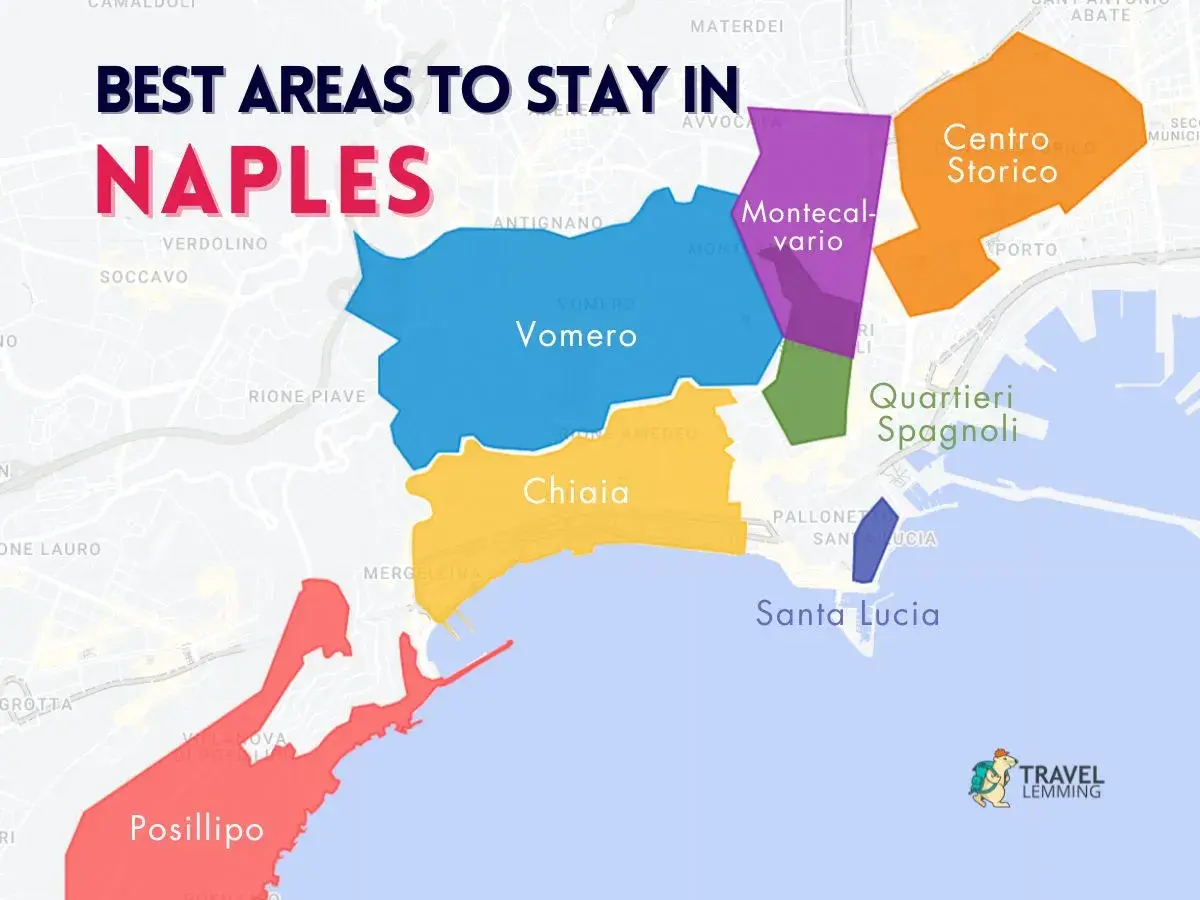
The fastest way to choose the right base is to match the district to your trip
- Centro Storico is the best all-around choice for first-time visitors who want food, history, and short walks between sights.
- Chiaia, Lungomare, and Santa Lucia are better if you want a calmer, more elegant stay by the sea.
- Vomero works well for families and travelers who prefer space, quieter nights, and a more residential feel.
- Molo Beverello and the Central Station area are practical if ferries, trains, or very short stays matter more than atmosphere.
- Quartieri Spagnoli and La Sanità can be great for character and value, but they reward careful hotel selection.
- On Booking.com, current weekend averages are roughly $146 for 3-star hotels, $229 for 4-star, and $505 for 5-star stays in Naples, so the premium districts do cost more.
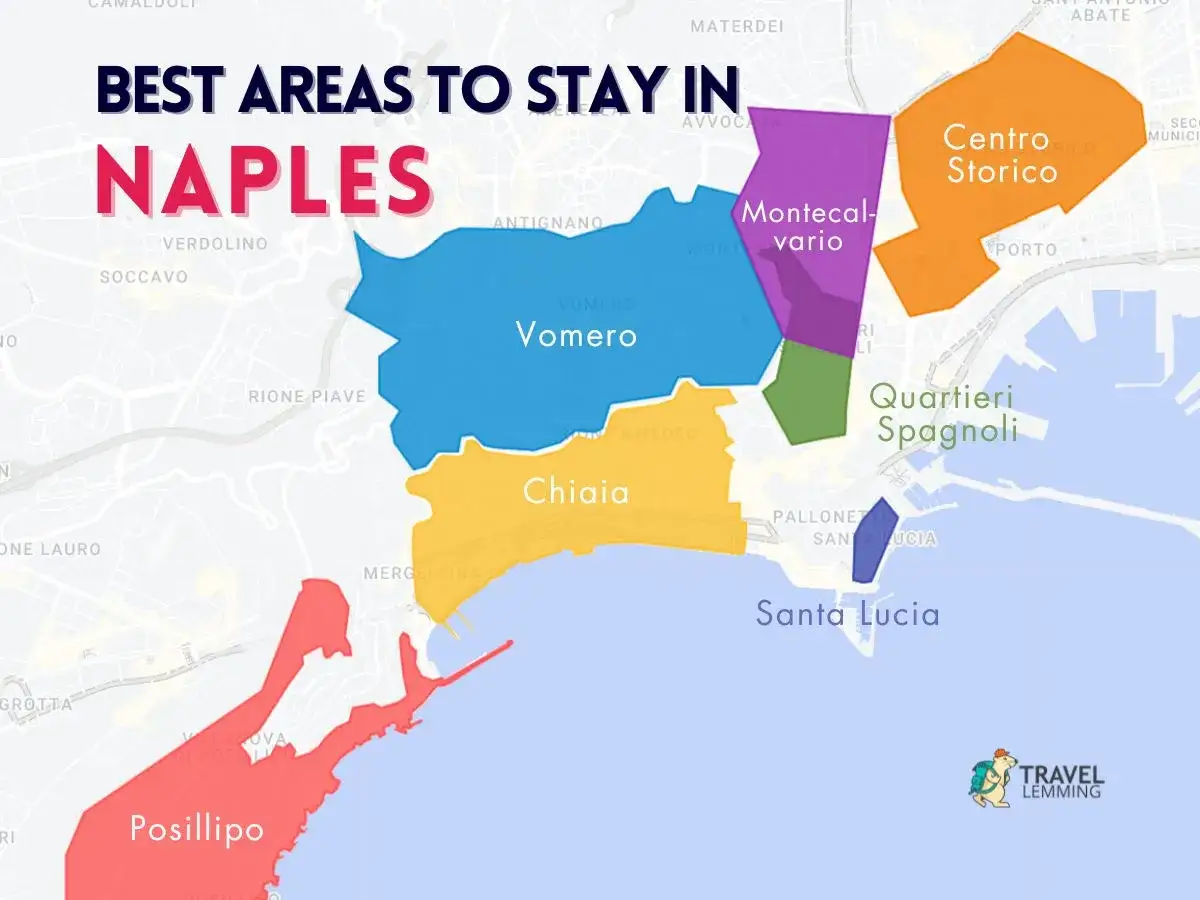
The quickest way to choose the right base
I usually split Naples into three decisions before I even look at hotels: how much walking you want, how much noise you can tolerate, and whether your trip depends on trains or ferries. That matters because Naples is not a flat postcard city. It is a mix of narrow historic streets, waterfront promenades, and hill districts that change the rhythm of your day.
If you want the simplest answer, I would send most first-time visitors to Centro Storico. If you want a softer, more scenic stay, I would point you to Chiaia or the waterfront. If you want calm and a more residential feel, Vomero is usually the cleanest compromise. The table below turns that into a practical comparison, because in Naples the neighborhood often matters more than the hotel brand.
| Area | Best for | Atmosphere | Trade-off | Typical nightly budget |
|---|---|---|---|---|
| Centro Storico | First-timers, food lovers, short sightseeing trips | Historic, busy, very walkable | Can be loud and chaotic at street level | $120 to $260 |
| Chiaia, Lungomare, Santa Lucia | Couples, slower trips, sea views, better hotels | Polished, scenic, relaxed | Higher prices and less old-city energy | $180 to $400+ |
| Vomero | Families, repeat visitors, quieter evenings | Residential, airy, orderly | Uphill location, so you rely more on transit | $110 to $240 |
| Molo Beverello and the port | Ferry days, overnight stopovers, island connections | Practical and transit-focused | Not the most charming place to linger | $130 to $260 |
| Central Station and Garibaldi | Train arrivals, early departures, budget stays | Busy, functional, urban | Choose carefully if you care about ambiance | $80 to $180 |
| Quartieri Spagnoli and La Sanità | Character, local energy, value seekers | Lively, authentic, uneven block by block | Noise and street-level variation matter a lot | $90 to $220 |
The table is the short version, but the real choice depends on how you want Naples to feel after dark. That is where the neighborhood details start to matter.
Centro Storico is the default choice for first-time visitors
If I had to recommend one district without knowing anything else about the trip, I would start with Centro Storico. It puts you close to the city’s main historic sights, some of the best pizza addresses, and the kind of street life that makes Naples feel immediate rather than staged.
This is the area where walking actually works in your favor. You can move between churches, museums, tiny bars, and old streets without treating every errand like a transfer. That said, it is not a quiet, polished neighborhood. Scooters, evening crowds, and late-night noise are part of the deal, so I would look for a room in a courtyard or on a side street if I were staying here.
For location, I like the zone around Piazza Dante, Piazza Bellini, and the western edge of the historic core because it keeps you central without placing you deep inside the noisiest lanes. If your trip is mostly sightseeing and eating well, this is the most efficient base. From here, the rest of the city still feels within reach, which is why I would choose this area before I would choose almost anything else. If your priority shifts from pure convenience to a more open, scenic stay, the waterfront is the obvious next place to look.
Chiaia and the waterfront suit slower, more polished trips
Chiaia, Lungomare, and Santa Lucia give Naples a different tempo. The streets are broader, the sea is part of the daily view, and the evening feel is calmer than in the old town. If I were planning a romantic trip, a summer stay, or a trip where I wanted to spend more time strolling than hopping between sights, I would seriously consider this side of the city.
This is also the part of Naples where the hotel experience tends to feel more refined. You will often pay more, but the trade-off is a more comfortable setting, better seafront walks, and an easier time unwinding after busy sightseeing days. The waterfront is especially good if you like ending the day with a long walk and dinner somewhere that feels a little more polished than the historic center.
Posillipo belongs in this conversation too, but I treat it as a luxury choice rather than the best practical base for a short first trip. It is beautiful, quieter, and more exclusive, yet it is less central for ordinary sightseeing. For most travelers, Chiaia or Santa Lucia is the better balance. If your instinct is to trade sea views for even more calm and more predictable logistics, Vomero is usually the smarter compromise.
Vomero is the calm choice when you want space and easier nights
Vomero sits above the city, both literally and emotionally. It feels more residential, more spacious, and less crowded than the center, which makes it a strong option for families, longer stays, or travelers who simply do not want to hear Naples at full volume all evening.
I like Vomero for people who want a hotel that feels straightforward. Streets are wider, there are parks and better breathing room, and you are not constantly threading your way through dense tourist traffic. The neighborhood is also convenient if you care about viewpoints, hilltop walks, and a slightly slower daily rhythm. Naples’ funiculars and Metro Line 1 make the area much easier to use than many visitors expect, so being uphill is not the inconvenience it sounds like on a map.
The main trade-off is that Vomero is less atmospheric in the classic Naples sense. You will spend more time moving in and out of the center, and that can be a disadvantage on a short trip. Still, if I were traveling with family, carrying a lot of luggage, or planning to sleep well, I would take Vomero over a charming but cramped room in a noisier district. Once you understand that trade-off, the transport-focused areas make even more sense for specific itineraries.
The station and port are practical, not pretty
There are two times when I would put logistics ahead of character: when I arrive late or leave early, and when ferry or rail connections drive the whole trip. In those cases, staying near the Central Station or Molo Beverello can save you time and friction that would otherwise disappear into transfers.
The airport connection is the main reason. Naples airport's Alibus links the airport with the Central Station and the Port of Naples, which makes these areas unusually efficient if you are landing, sleeping, and moving on again. If your plan includes Capri, Ischia, or a quick train ride onward, that convenience can be worth more than a prettier street view.
I would not choose either area for atmosphere alone. The station district is busy and functional, and the port area is more about departure boards than romantic wandering. But if you only have one or two nights, or if you want the easiest possible arrival and exit, the practical choice is often the right one. For travelers who care more about character than convenience, the final question is whether Naples’ more irregular neighborhoods are worth the trade-off.
Quartieri Spagnoli and La Sanità reward travelers who want character
Quartieri Spagnoli and La Sanità are the areas I would recommend with the most context. They can be excellent, but they are not for travelers who want everything to feel tidy and predictable. These districts are alive, local, and full of texture, which is exactly why some people love them.
Quartieri Spagnoli has become much more visible to visitors in recent years, but it still feels like a real neighborhood rather than a polished hotel zone. La Sanità has also changed fast, with a visible revival that has made it more interesting as a place to stay or explore. In both areas, the right property matters a lot more than the average street impression. A good guesthouse on a well-reviewed block can be a smart value; a weak one can feel tiring very quickly.If you stay here, I would be picky. Look for recent reviews, soundproofing, a lift if you are on higher floors, and an exact location that makes sense for your walking plan. These neighborhoods can be a good fit for travelers who value energy and lower prices over polish. They are not the easiest places for a first Naples visit, but they are often the most memorable. Once the district is chosen, the small booking details decide whether the stay feels smooth or annoying.
The booking details that matter more than the star rating
In Naples, I care more about a few practical details than I do about the hotel star count. A 3-star room in the right place can beat a prettier property in the wrong block, especially if you are planning to walk a lot or arrive with luggage after a long travel day.
- Choose a courtyard-facing room if you are a light sleeper, especially in Centro Storico or Quartieri Spagnoli.
- Check for a lift if you are staying in an older building, because stairs are common and not always friendly with suitcases.
- Prioritize access to Metro Line 1 if you want an easier time moving between the historic core, Vomero, and the waterfront.
- Book closer to the port if Capri or Ischia is part of the trip, because early ferries are much less stressful when you are nearby.
- Book closer to the station if you have an early train to Rome, Pompeii, or the Amalfi Coast region.
- Read the street-level reviews carefully, because a good building can still sit on a noisy or awkward street.
Pricing is another place where reality matters. The spread between mid-range and luxury is meaningful here. On Booking.com, current weekend averages are about $146 for 3-star hotels, $229 for 4-star stays, and $505 for 5-star options, so the jump in comfort can come with a real jump in cost. I would rather spend that money on location and quiet than on a room feature that I barely use. That logic leads to the clearest final answer of all.
What I would book for each travel style
If I were planning a first Naples trip today, I would keep the choice simple. For a first visit, I would book Centro Storico, ideally near Piazza Dante or the western edge of the old town, because it gives you the strongest mix of history, food, and easy walking. For a couple’s trip or a slower scenic stay, I would pick Chiaia or Santa Lucia. For families, I would move up to Vomero. For island connections or a one-night stop, I would stay near Molo Beverello. For lower prices and more neighborhood character, I would only choose Quartieri Spagnoli or La Sanità after checking reviews carefully.
The broader rule is this: Naples is best when your accommodation matches the way you move through the city. If you want to walk, stay central. If you want views, stay by the water. If you want calmer evenings, go uphill. That is the practical way I would approach any trip here, and it is the clearest answer to making Naples feel enjoyable instead of complicated.